Thousands may be due PAYE refunds — but 2022 claims expire this December
New reporting on unclaimed PAYE tax draws attention to Revenue's preliminary calculations. Here is how to check 2025, claim valid reliefs and meet the 31 December 2022 refund deadline.
 News / Wealth
Photo: William Murphy, Dublin Castle, 7 August 2006, via Wikimedia Commons, CC BY-SA 2.0 · Illustrative image.
Fresh reporting on PAYE overpayments has renewed a familiar question for Irish workers: does Revenue owe me a tax refund? Newspaper coverage on 9–10 November cites a parliamentary answer indicating that many taxpayer units have not yet finalised their 2025 tax positions. But the key distinction is between a preliminary indication of overpayment and a confirmed refund. Revenue’s explanation of preliminary results
One press report, citing figures provided in response to a parliamentary question, puts the number of 2025 taxpayer units potentially in an overpayment position at roughly 376,000, with an indicative average of €591. Those are reported, provisional figures, not 376,000 approved payments or a personal entitlement of €591. The original parliamentary response was not independently available for this article; readers should treat the reported aggregate as provisional rather than audited primary-source data. Contemporaneous report
What is directly confirmed by Revenue is how to check your individual position and an approaching deadline that could permanently remove older claims.
The 2022 deadline matters even if you have not checked 2025
Revenue’s four-year rule says that refund claims for the 2022 tax year must be made no later than 31 December 2026. Claims made after the relevant four-year window cannot be repaid. It is worth reviewing 2022 now rather than assuming that a later 2025 refund application also preserves older years.
This rule is about the tax year 2022, not a universal deadline for every 2025 claim. The 2023–2025 years have later statutory cutoffs. Do not rely on receiving a general reminder for each year.
How to see whether Revenue owes you money
- Go directly to revenue.ie and sign in to myAccount. Avoid links in unsolicited text messages or emails claiming an automatic rebate.
- Under PAYE Services, select Review your tax for the previous 4 years and choose the tax year.
- Request a Statement of Liability to see the preliminary result. It may show overpayment, underpayment or a balanced position.
- Complete the PAYE Income Tax Return for that year. Declare relevant additional income and claim credits or reliefs to which you are actually entitled.
- Read the final Statement of Liability. The preliminary figure can rise, fall, disappear or become tax owed once your complete circumstances are assessed.
Revenue explicitly states that an income tax return is required to receive a repayment arising from an overpayment. A preliminary notice alone is not a payment instruction. Revenue’s step-by-step guidance
What might change the final calculation?
Review legitimate medical expenses, qualifying remote-working costs, rent relief and any other applicable credits against official eligibility rules. Also disclose non-PAYE income when required. For a hypothetical worker with a provisional €300 overpayment and an additional valid €100 tax credit, the final result might increase, but only if the credit applies, the liability permits it and no further tax is due. This is an illustration, not a guarantee of €400.
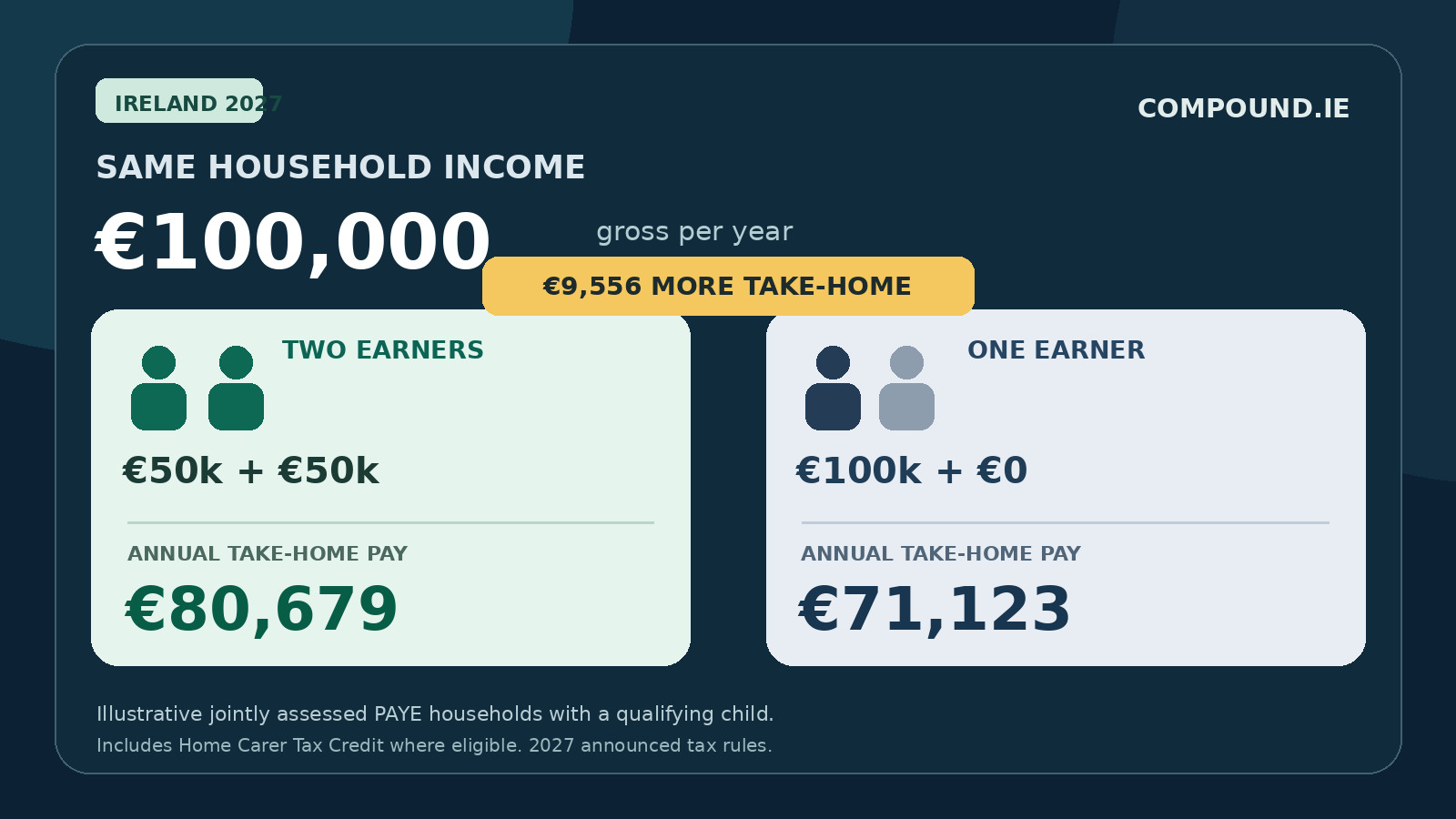
For people jointly assessed as a couple, Revenue says refunds are paid to each individual in proportion to the tax each actually paid. An aggregated household number may therefore not correspond to a single incoming transfer. Revenue refund and joint-assessment guidance
When would a confirmed refund arrive?
Revenue says that when a Statement of Liability confirms an overpayment, the repayment normally reaches the bank account held on your record in three to five working days. Check the IBAN shown in your Revenue profile. Where a transfer is not possible, Revenue says it can issue a cheque. This is the timing after confirmation, not an assurance that a new claim will be processed the moment it is submitted.
Revenue also warns that some completed tax reviews reveal an underpayment rather than a refund. If that happens, read the calculation and contact Revenue through authenticated myAccount channels before agreeing to payment requests from a third party.
Practical next step: If you have not reviewed your PAYE years, start with 2022 before 31 December 2026, then check 2023, 2024 and 2025 separately. Save the final liability statements for your records. For salary and tax context, Compound’s take-home pay calculator can help with gross/net comparisons, but it does not replace Revenue’s final assessment.
Cover: William Murphy, Dublin Castle, 7 August 2006, archival photograph, Wikimedia Commons, CC BY-SA 2.0. Cropped for web/social display. The image does not depict the November 2026 announcement.