EU Rwanda Deportation Centre: What Will the Return Hub Actually Cost?
Five EU countries plan a Rwanda migrant return hub in 2027. No budget has been announced. We examine who pays, the UK's £715m experience, Italy's €672m plan and a transparent cost-per-transfer model.
 News / Wealth
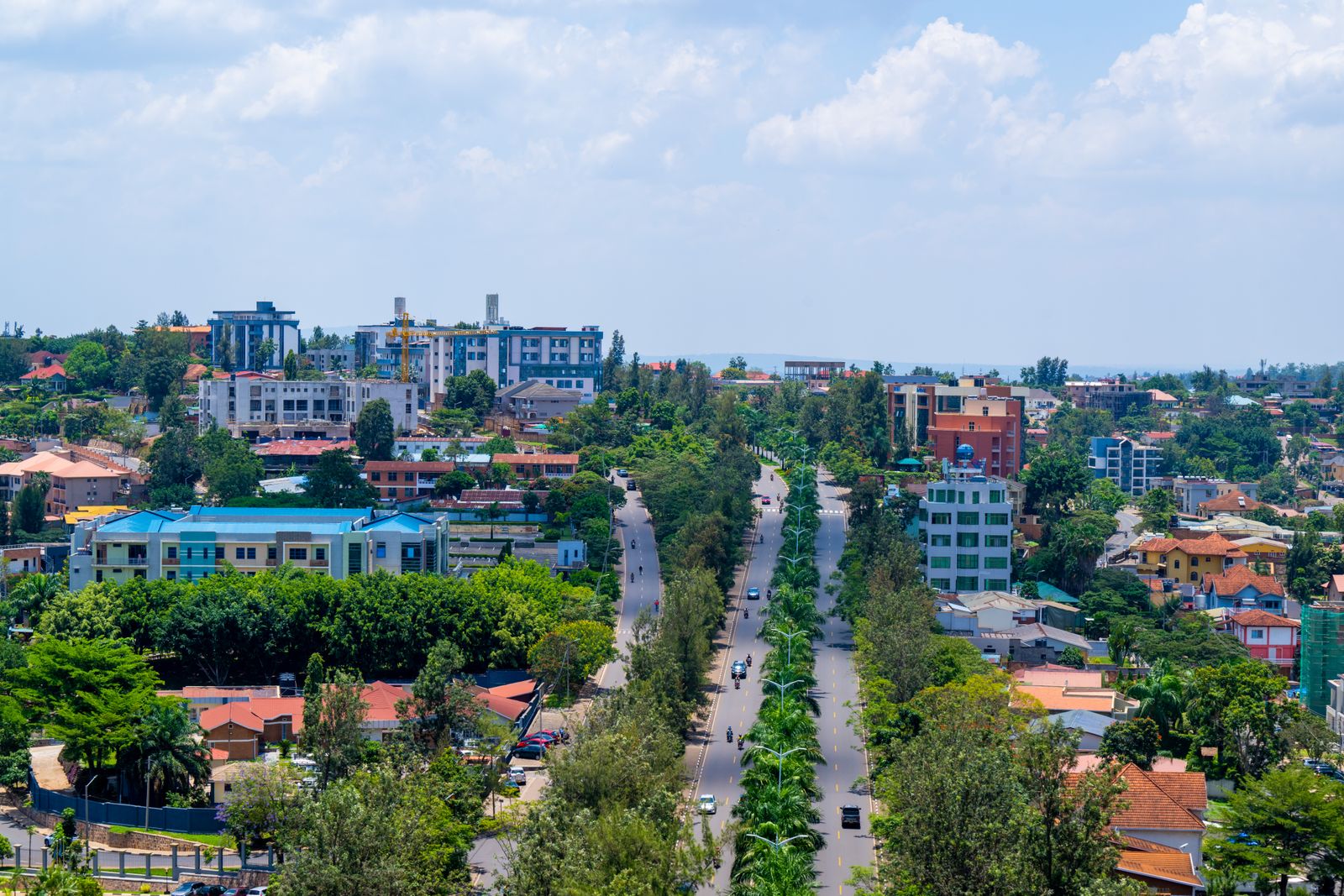
Photo: Faustin NKURUNZIZA / Pexels (Kigali, 13 March 2025; archival photograph; Pexels License) · Illustrative image.
Financial analysis | 17 November 2026. Cover: an archival photograph of Kigali taken in March 2025 by Faustin NKURUNZIZA (Pexels License), not a photograph of the proposed return centre.
How much will the EU’s Rwanda deportation centre cost taxpayers? It is the biggest unanswered question after five European Union countries unveiled plans for a migrant return hub in Rwanda on 16 November 2026.
Germany, Denmark, Austria, Greece and the Netherlands want a pilot programme operating in 2027, initially accommodating about 100 people at a time. But the five governments have not published a total budget, a cost per person, a fixed annual payment or a binding cost-sharing formula. Negotiations with Rwanda are continuing. The official Danish joint statement calls the arrangement a possibility the partners are exploring, not a fully costed, finalised contract.
That distinction matters. Britain spent hundreds of millions of pounds on its abandoned Rwanda policy; Italy has budgeted hundreds of millions of euros for a separate offshore migration arrangement in Albania. Neither figure tells us what this new EU scheme will cost, but both expose the financial risks of getting the model wrong.
EU Rwanda return hub cost: what we know so far
| Financial question | Position as of 17 November 2026 |
|---|---|
| Which countries are involved? | Germany, Denmark, Austria, Greece and the Netherlands |
| When could the hub open? | 2027, if negotiations and implementation proceed |
| How big is the pilot? | Approximately 100 places at a time, not necessarily 100 transfers per year |
| Published total budget? | No |
| Published price per migrant? | No |
| Who is expected to pay? | The five participating governments are expected to cover removals, accommodation and associated services |
| Is Ireland participating? | No commitment announced; Ireland has not yet taken a position |
The 16 November Vienna announcement was a political step towards a pilot, rather than publication of a detailed procurement agreement. Euronews’ reporting from the announcement explicitly noted that the cost estimate was missing.
The proposed centre is intended for adults with enforceable return decisions whose claims and appeals have been exhausted. Officials describe an open facility, not a closed detention centre. People transferred there could potentially integrate into Rwanda or leave for a country where they have the right to reside. This is different from Britain’s former proposal to transfer some asylum seekers before their claims were determined.
Who pays for the Rwanda deportation deal?
The immediate expectation is that Germany, Denmark, Austria, Greece and the Netherlands would fund the costs connected to the people they send, including travel and support in Rwanda. But crucial financial terms have not been published.
That leaves three separate questions:
- What will Rwanda receive? Rwandan officials have suggested they are not asking for a standalone host-country payment, according to contemporary reporting. That is not proof the whole arrangement is free: housing, services, integration and administration still require funding.
- How will the five countries split shared bills? A centre has shared overheads even if only a handful of transfers occur. There is no publicly documented formula establishing whether bills will be split equally, by transfer volume or by another measure.
- Will taxpayers get itemised accounts? No published procurement, audit or annual cost-reporting framework accompanied the initial announcement.
The public should distinguish between payments to Rwanda’s government, payments to providers operating a centre, and the total cost to European governments. These are not interchangeable figures. A zero direct host fee would not mean a zero taxpayer bill.
Nor is this a confirmed EU-wide budget programme. The initial initiative belongs to five member states, not automatically all 27 EU governments.
What costs could make a small 100-place centre expensive?
A credible budget needs more than the price of a bed. It should include:
- Transport and escorts: securing aircraft or flight capacity, airport handling, escorts, travel documents and contingency arrangements.
- Accommodation and integration: housing, food, healthcare, interpretation, safeguarding, employment support and any longer-term assistance.
- Fixed running costs: administration, staffing, facilities, security appropriate to an open centre, insurance and independent monitoring.
- Legal and compliance costs: individual challenges, judicial reviews, oversight, record-keeping and the possibility of interrupted transfers.
- Returns from Rwanda: if people later depart for their country of origin or another lawful destination, who pays for those journeys and related support?
- Unused capacity: running a 100-place facility with 20 residents does not necessarily cost one-fifth of operating it at full capacity.
That last item is central to the economics. A headline of 100 places tells us capacity, not the number of people who will pass through the programme each year, how long they will stay or how many will ultimately return to their country of origin.
A 100-place open centre could serve very different annual volumes depending on average residence time. Any published ‘cost per migrant’ that quietly divides a total budget by 100 would therefore be potentially misleading.
How much did Britain’s Rwanda scheme cost?
The strongest publicly documented warning comes from the UK Home Office’s December 2024 accounts.
The Home Office recorded £715 million spent by June 2024 on the Migration and Economic Development Partnership with Rwanda and associated Illegal Migration Act 2023 implementation.
| UK cost category | Recorded spending to June 2024 |
|---|---|
| Payments to Rwanda | £290 million |
| Flights, escorts, airfield and affected policing | £50 million |
| Detention and reception capacity investment | £95 million |
| Other fixed costs, including policy implementation, staff, systems and legal work | £280 million |
| Total UK Rwanda partnership and related legislation | £715 million |
Source: UK Home Office’s published expenditure breakdown. All figures in pounds sterling; categories rounded by the Home Office.
Important qualification: £715 million was not the price of operating a Rwanda return centre. It included spending on the wider UK immigration legislation and domestic detention infrastructure. The EU’s 2026 proposal has a different legal design and target population, so using £715 million as a prediction for the EU pilot would be inaccurate.
The UK reported four voluntary relocations and no asylum seekers sent through the proposed compulsory scheme during the programme’s operation. Its £290 million payments to Rwanda included £270 million in an economic-development fund and a £20 million operational advance.
The UK contract would also have involved substantial additional variable costs if transfers had gone ahead. The National Audit Office documented planned per-person and integration charges. The central lesson is that large upfront commitments can be incurred before a policy produces measurable results.
The UK scheme was ultimately abandoned after major legal and political setbacks. That is not evidence that the new EU initiative will follow the same path; it is evidence that the financial model should include a realistic failure scenario.
Italy’s Albania migration centres: the other financial warning
Italy’s arrangement with Albania is a different offshore migration policy, with its own rules, facilities and legal challenges. It nonetheless provides a useful example of how quickly a cross-border programme can grow beyond the cost of accommodation.
Italian parliamentary material from 18 September 2026 cites technical reports forecasting €671.6 million in total expenditure through 2028 for implementation of the Italy–Albania protocol. The parliamentary record refers to the forecast, rather than presenting €671.6 million as money already spent.
That €671.6 million is not the Rwanda pilot’s budget and should never be presented as such. The lesson is more specific: when another country hosts an immigration process, the sponsoring government can remain liable for staffing, logistics, oversight and legal costs.
Before claiming Rwanda will be cheaper, the five governments need a like-for-like comparison covering the whole period of support, not simply a daily accommodation rate.
Original financial model: what could taxpayers pay per transfer?
Because there is no official EU cost estimate, Compound has calculated three illustrative scenarios, not government forecasts.
Every scenario makes the same two invented assumptions solely to illustrate the arithmetic: €2 million in annual fixed/shared operating costs and €20,000 in direct and support costs for each person transferred that year. No government has stated either figure.
| People transferred in one year | Hypothetical fixed cost | Hypothetical variable cost | Illustrative annual total | Illustrative cost per transfer |
|---|---|---|---|---|
| 100 | €2.0m | €2.0m | €4.0m | €40,000 |
| 200 | €2.0m | €4.0m | €6.0m | €30,000 |
| 400 | €2.0m | €8.0m | €10.0m | €25,000 |
Method: annual cost = €2,000,000 + (€20,000 × number transferred). Cost per transfer = annual cost ÷ number transferred. These assumptions are not sourced estimates of actual prices. They exclude any future-year liabilities beyond the modelled year and should not be mistaken for the full lifetime cost of a relocation or a budget proposal.
The arithmetic illustrates one important mechanism: fixed costs make a low-volume pilot especially expensive per transfer. A higher transfer count lowers the allocated fixed cost per transfer, but raises the overall budget. Whether such volumes are possible depends on residence times and whether the open, approximately 100-place facility can accommodate them.
Even the resulting cost per transfer is not automatically a cost per successful return. If, for example, 200 people are transferred but only 50 ultimately return to their country of origin, the denominator for cost per completed return would be 50, not 200. Integration in Rwanda may be an intended outcome in its own right, which requires reporting separately rather than changing the definition of success after the fact.
Would the deal actually save money for European taxpayers?
It might reduce some domestic accommodation or enforcement costs, but there is not yet enough published information to demonstrate a net saving.
A proper public-finance assessment would compare:
Net fiscal impact = avoided costs in Europe − new Rwanda programme costs − any extra administration, legal and long-term liabilities.
It would also separate two claims often bundled together:
- Operational savings: spending less per case than would otherwise have been spent on the relevant domestic alternative.
- Deterrence: changing future migration decisions and therefore future expenditure.
A pilot might achieve one, both or neither. Deterrence cannot be entered as a guaranteed budget saving without evidence and a defensible counterfactual.
The timing matters too. An upfront investment made in 2027 may not produce measurable savings until later years, if at all. A government’s press release can announce a policy immediately; a rigorous value-for-money analysis takes longer.
What about legal costs and human-rights compliance?
The EU adopted new rules allowing member states to pursue return hubs in non-EU countries, subject to conditions including international human-rights obligations and the principle of non-refoulement. The Council of the EU’s October 2026 announcement also excludes unaccompanied minors from such arrangements.
A legal route to establishing a facility does not guarantee every individual transfer will be lawful. Rights organisations have criticised the Rwanda plan and questioned accountability and safeguards. The five governments say the project will comply with international law.
For taxpayers, this has an economic dimension: monitoring, legal representation, individual challenges and possible injunctions can increase costs and limit throughput. A serious business case should budget for those risks rather than assume transfers will proceed without interruption.
Will Ireland pay for the Rwanda deportation centre?
Ireland is not one of the five countries behind the pilot. The participating governments are Germany, Denmark, Austria, Greece and the Netherlands.
On 17 November 2026, TheJournal.ie reported that the Taoiseach said Ireland had not yet taken a position on joining. There is therefore no announced Irish contribution or Irish per-person fee for this specific scheme.
That does not rule out a future Irish policy decision. It simply means the figures being discussed cannot legitimately be labelled as an Irish government expenditure commitment today.
For context on spending Ireland has budgeted, see our separate analysis of the planned €682 million reduction in Irish refugee and asylum accommodation spending for 2027. That Irish budget figure is unrelated to financing the Rwanda pilot.
Five financial disclosures to demand before the first transfer
Before the facility begins operating, taxpayers should be able to inspect:
- The signed financial agreement, including any guaranteed payments and compensation if the project ends early.
- A multi-year budget that separates setup, transport, accommodation, integration, monitoring and legal expenses.
- A clear cost-sharing formula between the participating governments.
- Two denominators: cost per person transferred and cost per verified outcome, with definitions published in advance.
- An independently auditable comparison with the domestic alternatives, including scenarios where occupancy is low or transfers are legally suspended.
Until those documents exist, political claims that the scheme is either cheap or enormously expensive are assertions, not verified costings.
Frequently asked questions
How much will the EU Rwanda deportation centre cost?
No official budget or price per person had been released as of 17 November 2026. The initial facility is planned for approximately 100 people at a time. Britain’s and Italy’s programmes are financial comparisons, not forecasts of this one’s cost.
Which five EU countries are involved in the Rwanda deal?
Germany, Denmark, Austria, Greece and the Netherlands announced the joint initiative on 16 November 2026.
Is the Rwanda deportation centre opening in 2026 or 2027?
The target is 2027, subject to the negotiations and legal and operational preparations that remain outstanding.
How much did the UK spend on its Rwanda plan?
The UK Home Office reported £715 million spent up to June 2024 on the Rwanda partnership and related Illegal Migration Act implementation, including £290 million paid to Rwanda. It is misleading to describe the full £715 million as a transfer fee or a bill for one facility.
Is Ireland contributing money to the EU Rwanda return hub?
There is no announced Irish funding commitment. Ireland was not among the five launch partners and had not decided whether to participate as of 17 November 2026.
The bottom line
The new EU–Rwanda arrangement is a politically important announcement, but its financial case is still unpublished. The first pilot’s 100-place size gives the public almost no information about the overall bill or value for money.
The useful question is not simply what does one bed cost in Rwanda? It is what will five European governments spend, over how many years, to achieve how many lawful and durable outcomes?
That is the calculation Compound will use to assess any subsequent agreement, budget or audit. For further coverage of Irish taxation and public spending, explore Compound’s finance and investing hub and Ireland’s public spending explorer.
Source and methodology note: Facts about the five-country announcement are based on the 16 November 2026 joint statement and contemporaneous reporting. UK expenditure is from official Home Office accounts; the Italian figure is a forecast cited in a parliamentary record. The three euro scenarios are Compound illustrations only, not expenditure, contract terms or forecasts. This article will require an update when the participating governments publish financial details.