When did you last do something just for fun?
You can draw badly, grow three herbs or learn half a song. A hobby does not have to become a side hustle to deserve a place in your life.
 Life / The Compound journal
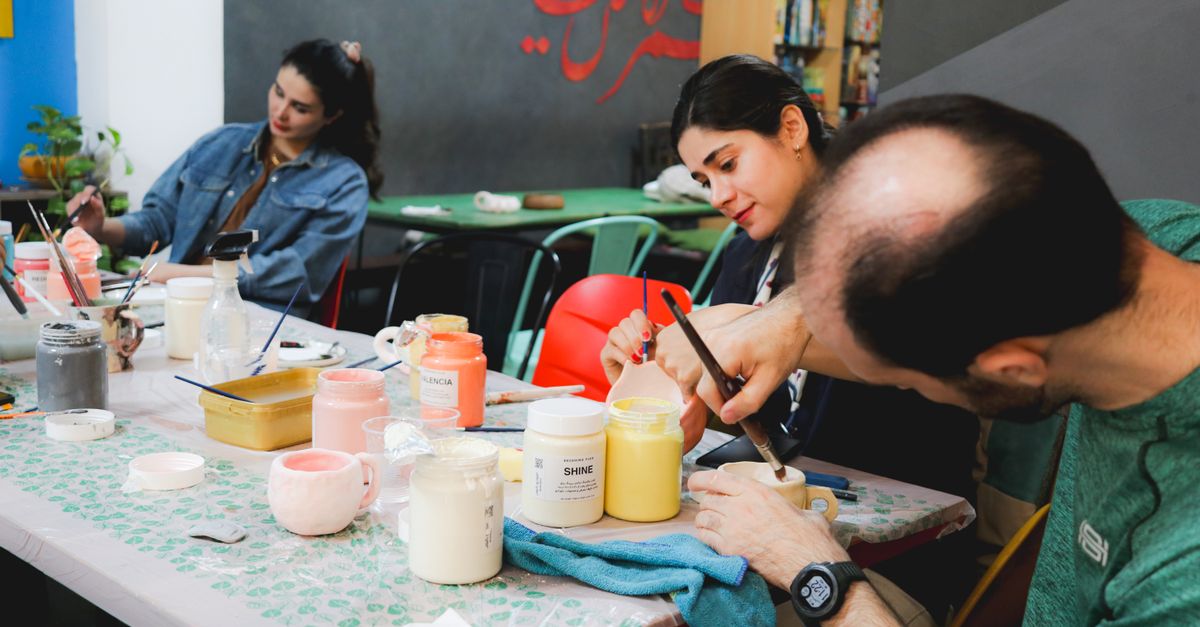
Photo: Golboo Maghooli on Pexels · Illustrative image.
There is a particular kind of evening when you have been busy all day and cannot think of a single thing you did for yourself.
Work happened. Dinner happened. Someone needed a lift. You answered a message while watching something you barely remember. Tomorrow looks much the same.
Ask what you do for fun and the answer might take a moment. You used to play an instrument. You liked making things. There was a time when a football, a notebook or a packet of seeds could absorb an afternoon.
You do not necessarily need to find a new passion. You might just need to make a little room for an old curiosity.
When enjoyment starts needing a justification
It is easy to put conditions on spare time. Reading should teach you something. A walk should count towards a target. If you are making something, perhaps you should sell it. If you are learning something, you should get good enough to show people.
There is nothing wrong with enjoying progress, competition or a small business. The trouble comes when those become the entry requirements. A sketchbook can start feeling like a portfolio before you have drawn the first page.
Try a different question: would I still want to do this if nobody ever saw the result?
That is not a test you have to pass. Some people love performing or sharing their work. It is simply a way to notice what attracts you to the activity itself: the sound of a chord, the feel of clay, the pleasure of getting a seedling through its first week.
What the research actually says
In a 2023 study published in Nature Medicine, researchers examined data from 93,263 people aged 65 and over across 16 countries. Having a hobby was associated with greater happiness and life satisfaction and fewer depressive symptoms. Changes over several years also pointed in a favourable direction. But the study was observational: it could not establish that hobbies caused those improvements, and its findings concern older adults. UCL’s account of the research.
A separate 2024 study analysed survey data from 7,182 people aged 16 and over in England. Taking part in arts and crafts was associated with slightly higher happiness, life satisfaction and a sense that life was worthwhile, after accounting for several demographic factors. It did not find a significant additional association with lower anxiety or loneliness. This was a snapshot of survey responses, not an experiment assigning people a hobby. Read the study.
That is encouraging evidence, with limits. It cannot tell you which hobby you will love, how many minutes you need, or whether pottery will make a difficult week easier. It certainly does not establish that being bad at something is especially beneficial.
The case for allowing yourself to be a beginner is more ordinary: needing to be impressive can stop you starting.
Choose something that fits your actual life
An appealing hobby and a manageable hobby are not always the same thing. A weekly class an hour away might be perfect in theory and impossible after work. An activity that takes ten minutes to set up can feel like too much when you only have twenty.
Start with the circumstances you have. Would you like quiet or company? Do you want to leave the house? Are you drawn to making something, moving around, learning or simply noticing things?
The ideas below are starting points, not a prescription. The time suggestions describe a first attempt, not a scientifically established dose.
| If you want… | Try this first |
|---|---|
| A quiet few minutes | Draw a mug with a pen you already own. Give it ten minutes. |
| A reason to go outside | Take a short photo walk and look for one colour. A phone is enough. |
| Something to make | Try a small paper collage using old packaging or magazines. |
| Something to grow | Ask a friend for a suitable plant cutting and advice on getting it started. |
| A little company | Invite someone to bring a book, a puzzle or a pack of cards. |
| A fresh challenge | Borrow an instrument if possible and try one simple chord or rhythm. |
Compound suggestions. Use what you already have where possible; equipment, access and any class fees will vary.
A LITTLE INSPIRATION
Find something you’d enjoy.
Choose what fits today. Your suggestions change straight away.
Try a little drawing
Pick an everyday object and sketch it with a pen and scrap paper. Stop whenever you like.
Or follow your curiosity
Read a few pages of a book you already have, purely because it interests you.
Ideas, not a wellbeing assessment. Budgets are rough starting allowances, not supplier quotes. Choices stay in this page; nothing is submitted or saved by the picker.
Where to look in Ireland
Your local library is a useful first stop. Public library membership is free, and you can join online or in person. Borrowing a book about drawing, gardening or music lets you explore an interest before buying a shelf of equipment. Libraries Ireland explains how to join.
Ask the branch about its current events, too. The programme depends on the library: Dublin City Council, for example, currently lists language and film-club events. Check whether you need to book and whether there is a charge for a particular activity. Dublin City Council’s library events and services.
Your local Education and Training Board is another place to enquire about adult and community education. Ask specifically about beginner leisure or creative courses, the full cost including materials, and whether you can try a session before committing. Provision and eligibility vary; not every course is free. Find your ETB through ETBI.
For an informal group, try a community noticeboard, a local arts centre or a club you can contact directly. A useful first message is: “I have never done this before. Is this suitable for complete beginners, and do I need to bring anything?”
If company is what you are missing, choose an activity where there is actually time to talk. You can enjoy hours of solitary painting and still want someone to have a cup of tea with afterwards.
Make the first attempt deliberately small
You do not need a shopping trip to prove you are serious. Borrow, improvise or use a beginner kit already in the house. Leave the expensive version until you know which part you enjoy.
Pick one manageable slot this week. Thirty minutes is a suggestion; ten is fine. Decide what you will do before that slot arrives, so you do not spend it comparing supplies or watching reviews.
Then let the attempt be an attempt. The cake can sink. The drawing can look odd. You can learn a few bars and leave the rest for another day.
Afterwards, ask yourself whether you enjoyed any part of it and whether you would like another go. If the answer is no, change the activity, the setting or the amount of effort it takes to begin. You have learned something useful without signing up for a new identity.
Keep a corner of it for yourself
If you enjoy tracking progress, track it. If a class helps you turn up, book one you can afford. If sharing a photograph makes it more fun, share it.
But leave yourself permission to do a little, miss a week, change your mind or make something that never leaves the kitchen table.
On an ordinary Tuesday, half an hour spent happily absorbed in something can be worth having on its own terms. You do not need to turn it into anything else.
Related Compound guides
If life feels broader than a missing hobby and you are struggling to create momentum, start with How to get out of a rut.
For the wider evidence on hobbies, relationships, exercise, gratitude and life satisfaction, read How to be happier: what the evidence actually says.
If you want to make a hobby more social, see How to make friends as an adult in Ireland.