Pickleball in Ireland: How to Play, Rules, Clubs & Where to Start
Pickleball is growing rapidly across Ireland. This complete beginner's guide explains what the sport is, how the rules work, what equipment you need, how scoring works, where to find a club and how to start playing.
 Life / The Compound journal
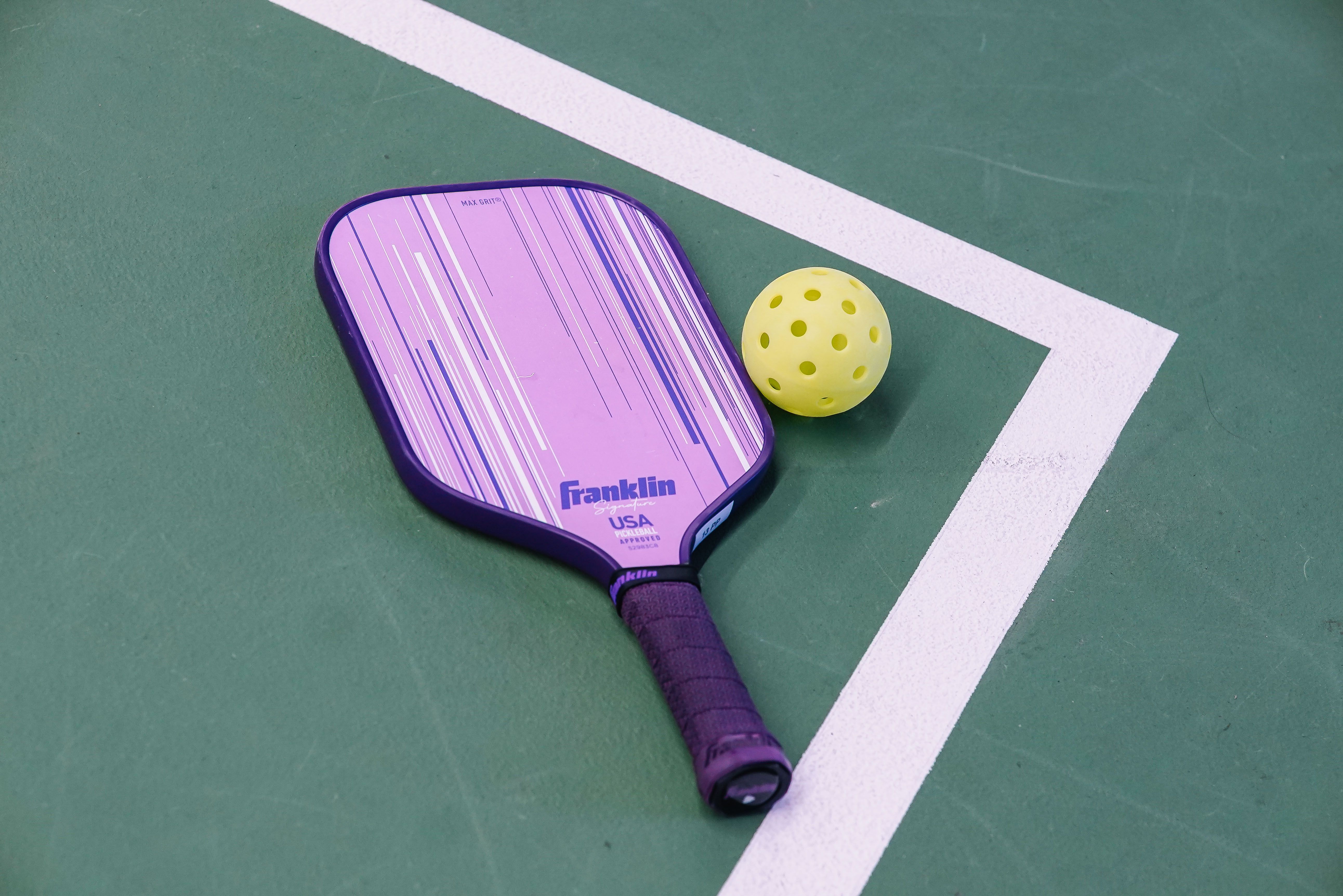
Photo: Abdulaziz hasan on Pexels · Illustrative image.
Pickleball sounds like somebody made it up five minutes ago.
The name is strange.
The ball has holes in it.
The court looks like a shrunken tennis court.
And the most famous part of the court is called the kitchen.
But the sport is no longer a curiosity.
In Ireland, pickleball has developed from a small recreational activity into a nationwide club sport with social games, coaching, local leagues, provincial tournaments and national championships.
Pickleball Ireland, the national governing body for the sport, says there are now more than 120 clubs across the country and more than 4,000 people playing each week.
That makes it worth understanding properly.
Quick answer
Pickleball is a racket-and-ball sport played on a 20 ft × 44 ft court using solid paddles and a perforated plastic ball. It can be played as singles or doubles, although doubles is especially common.
If you want to try it in Ireland, the simplest route is to find a nearby club through Pickleball Ireland's official club directory, attend a beginner or social session, and borrow equipment before buying your own.
This guide was checked on 7 October 2026 against Pickleball Ireland and the current USA Pickleball rules resources.
What is pickleball?
Pickleball is a paddle sport that sits somewhere between:
- tennis;
- badminton;
- and table tennis.
The court is smaller than a tennis court.
The net is lower.
The paddle is solid rather than strung.
And the ball is a lightweight plastic ball with holes.
The sport can be played:
- indoors or outdoors;
- as singles;
- or as doubles.
For most new players, doubles is the easiest introduction because less court needs to be covered by each person and the social side of the game is a major part of its appeal.
Why is pickleball becoming popular in Ireland?
There is no single reason.
The sport has several features that make it unusually easy for a new club or community group to adopt.
It is quick to learn
You can understand the basic shape of a pickleball game in one session.
There are technical details and tactical depth, but a complete beginner can usually start rallying much faster than in many other racket sports.
The court is compact
A regulation pickleball court is 20 feet wide by 44 feet long — approximately 6.10 metres by 13.41 metres.
That is the same court size for singles and doubles.
Because the footprint is relatively small, pickleball can be introduced in sports halls, community facilities and other venues without needing a full tennis-court setup.
Doubles is naturally social
Four people share a small court.
Games are relatively short.
Players rotate.
Club sessions can therefore feel as much like a social evening as a formal training session.
That is a significant part of why the sport works well for people who want to become more active without joining a conventional team sport.
It works across a wide range of ages
Pickleball Ireland runs competitions across adult age categories, while local clubs commonly offer beginner and social sessions.
The Irish Nationals programme itself includes adult, 50+, 60+ and 70+ divisions.
That does not mean the sport is effortless.
Competitive pickleball can be fast, technical and physically demanding.
But the entry point is broad.
How big is pickleball in Ireland?
Pickleball Ireland describes itself as the National Governing Body for Pickleball in Ireland.
As of October 2026, it reports:
- 120+ clubs across the country;
- 4,000+ people playing weekly;
- a nationwide network of affiliated clubs;
- provincial events;
- national championships;
- coaching and player-development activity.
Those are Pickleball Ireland’s own published figures rather than independently audited national participation statistics, but they give a useful indication of how quickly the sport has expanded.
There is also evidence of growth at local level.
Cork Sports Partnership published a community pickleball directory in September 2026 covering groups in locations including Kanturk, Kilbrin, Bishopstown, Ballinacarriga, Bandon, Skibbereen, Union Hall and Riverstick.
Galway Pickleball, founded in 2020, now runs sessions across multiple venues in Galway City.
This is no longer a sport confined to one or two specialist clubs.
Where did pickleball come from?
Pickleball began in 1965 on Bainbridge Island in Washington State in the United States.
Joel Pritchard, Bill Bell and Barney McCallum are credited with creating the game.
The original version was improvised using a badminton court, paddles and a plastic ball.
The sport later developed formal rules, equipment standards and organised competition.
And no, despite the story you may have heard, the strongest historical evidence says the game was not named after a dog called Pickles.
USA Pickleball’s historical account says the dog came later.
Pickleball court dimensions
A regulation pickleball court measures:
| Measurement | Size |
|---|---|
| Court width | 20 ft / 6.10 m |
| Court length | 44 ft / 13.41 m |
| Non-volley zone depth | 7 ft / 2.13 m on each side of the net |
| Total non-volley area | 14 ft / 4.27 m from front edge to front edge |
The court is divided into:
- two baselines;
- two sidelines;
- a centreline on each side;
- left and right service courts;
- and the non-volley zone beside the net.
That non-volley zone is usually called the kitchen.
What is the kitchen in pickleball?
The kitchen is the seven-foot area immediately beside the net on each side.
Its formal name is the non-volley zone.
The important rule is simple:
You cannot volley the ball while standing in the kitchen.
A volley means hitting the ball before it bounces.
You also cannot complete a volley outside the kitchen and then allow your momentum to carry you into the kitchen.
But you can enter the kitchen to play a ball after it has bounced.
You can also stand there when you are not volleying.
This rule stops players simply camping at the net and smashing every ball downwards.
It is one of the main reasons pickleball develops into a tactical game rather than a pure power contest.
The two-bounce rule
Another rule makes pickleball easier to rally.
After the serve:
- the receiving side must let the serve bounce before returning it;
- the serving side must then let that return bounce;
- after those two bounces, either side may volley or play the ball after a bounce.
This is often called the two-bounce rule.
It prevents an immediate serve-and-volley rush to the net and gives both teams time to establish the rally.
How do you serve in pickleball?
The serve is made diagonally into the opposite service court.
Traditional volley serves are struck with an upward motion and have specific paddle-position rules.
A drop serve is also permitted under the official rules.
For a beginner, the most useful things to remember are:
- serve from behind the baseline;
- serve diagonally;
- the ball must land beyond the kitchen;
- you get one serve attempt;
- and the receiving team must let the serve bounce.
If the ball touches the net but still lands legally in the correct service court, play continues.
There is no old-style “let” replay simply because the serve clipped the net.
How does scoring work?
This is the part that confuses most first-time players.
Under standard side-out scoring:
- only the serving team scores a point;
- games are commonly played to 11 points;
- you generally need to win by two;
- in doubles, both partners normally get an opportunity to serve before possession passes to the other team.
The opening service sequence is the exception.
At the very start of the game, only one player on the first serving team serves before a side-out.
That is why you may hear a pickleball game begin with the score:
0-0-2
In doubles, the three numbers mean:
- serving team’s score;
- receiving team’s score;
- whether the current server is server one or server two in that service turn.
It sounds awkward for about ten minutes.
Then it becomes normal.
A simple scoring example
Imagine Team A starts serving.
The score is called:
0-0-2
Team A wins the rally.
The score becomes:
1-0-2
The same server moves to the other side and serves again.
If Team A then loses the rally, service passes to Team B because the opening team started with its second server.
Later in the game, each team normally gets both servers before a side-out.
Tournament formats can vary, so check event rules if you move beyond recreational play.
What equipment do you need?
Very little.
At minimum you need:
- a pickleball paddle;
- a pickleball;
- suitable court shoes;
- access to a court and net.
Paddle
A pickleball paddle is larger than a table-tennis bat but smaller than a tennis racket.
It has a solid face.
Materials range from basic composite and fibreglass designs to higher-end carbon-fibre paddles.
A beginner does not need an expensive paddle.
If a club offers loan equipment, use it first.
You will learn more from three sessions with borrowed paddles than from trying to choose a premium paddle before you know how the game feels.
Ball
Pickleballs are hollow plastic balls with holes.
Indoor and outdoor balls can differ in:
- hole pattern;
- weight;
- hardness;
- and durability.
For casual play, use whatever ball the club or venue normally uses.
Shoes
Court shoes are preferable to running shoes.
The sport involves repeated sideways movement, quick stops and direction changes.
A shoe designed for court movement is generally a better fit than a soft running shoe built mainly for forward movement.
Do you need to buy equipment before your first session?
Usually, no.
Many clubs and beginner sessions have spare paddles and balls.
If you are trying the sport for the first time, ask before attending.
The most sensible beginner sequence is:
- borrow a paddle;
- play two or three sessions;
- work out whether you enjoy the game;
- then buy equipment.
That avoids turning a cheap experiment into an unnecessary shopping exercise.
How to start playing pickleball in Ireland
The easiest route is through an existing club.
Step 1: Find a nearby club
Pickleball Ireland maintains its club directory through PickleBook.
The directory covers clubs and groups across Ireland and Northern Ireland.
Start at the Pickleball Ireland club finder and follow the club-finder link.
Step 2: Look for a beginner or social session
Do not assume every session is suitable for a first-time player.
Look for wording such as:
- beginner;
- social;
- improver;
- Pickleball 101;
- open play.
If the timetable is unclear, contact the club.
Step 3: Ask about equipment
Check whether the club can provide:
- a paddle;
- balls;
- and any venue-specific footwear guidance.
Step 4: Learn the kitchen and two-bounce rule
You do not need to memorise the full rulebook.
For session one, understand:
- where to serve;
- two-bounce rule;
- kitchen rule;
- basic scoring.
That is enough to get a game moving.
Step 5: Play doubles
Doubles is the most forgiving way to learn.
You cover less space and have a partner helping with:
- positioning;
- scoring;
- rules;
- shot selection.
Where can you play pickleball in Ireland?
The answer changes quickly because clubs are still being added.
Rather than publish a static list that will become outdated, the best source is Pickleball Ireland’s live club finder.
The governing body’s directory covers clubs across the island and is intended to be kept up to date.
There are established or growing communities in areas including:
- Dublin;
- Cork;
- Galway;
- Belfast;
- and many smaller towns and community venues.
Local Sports Partnerships are also worth checking.
Cork Sports Partnership, for example, now maintains its own community pickleball directory.
If there is no club near you, Pickleball Ireland also publishes a starter pack for people who want to form one.
Can you play pickleball on a badminton court?
This is one reason the sport is useful for indoor venues.
A pickleball court is the same length and width as a standard badminton doubles court: 20 ft × 44 ft.
The markings and net requirements are not identical, but existing badminton spaces can often be adapted for pickleball sessions.
That makes sports halls, schools and community centres natural places for clubs to develop.
Can you play pickleball on a tennis court?
Yes, with appropriate temporary or permanent markings and a suitable net arrangement.
A tennis court is much larger than a pickleball court, so more than one pickleball court can potentially fit within the footprint depending on the site layout and safety margins.
Temporary nets and court lines are commonly used for casual or multi-use facilities.
For any permanent conversion, use proper facility guidance rather than simply painting lines onto a court.
Is pickleball easier than tennis?
It is usually easier to start.
That is not the same as saying it is easy to master.
A beginner benefits from:
- a smaller court;
- a slower perforated ball;
- a shorter swing;
- an underhand serve;
- and the two-bounce rule.
But better players use:
- spin;
- placement;
- soft shots;
- fast volleys;
- angles;
- tactical positioning;
- and rapid exchanges at the kitchen line.
The skill ceiling is high.
The learning floor is low.
That combination explains a lot of the sport’s appeal.
Pickleball versus padel
They are often confused.
They are different sports.
| Pickleball | Padel |
|---|---|
| Played with a perforated plastic ball | Played with a pressurised ball similar to a tennis ball |
| 20 ft × 44 ft open court | Larger enclosed court |
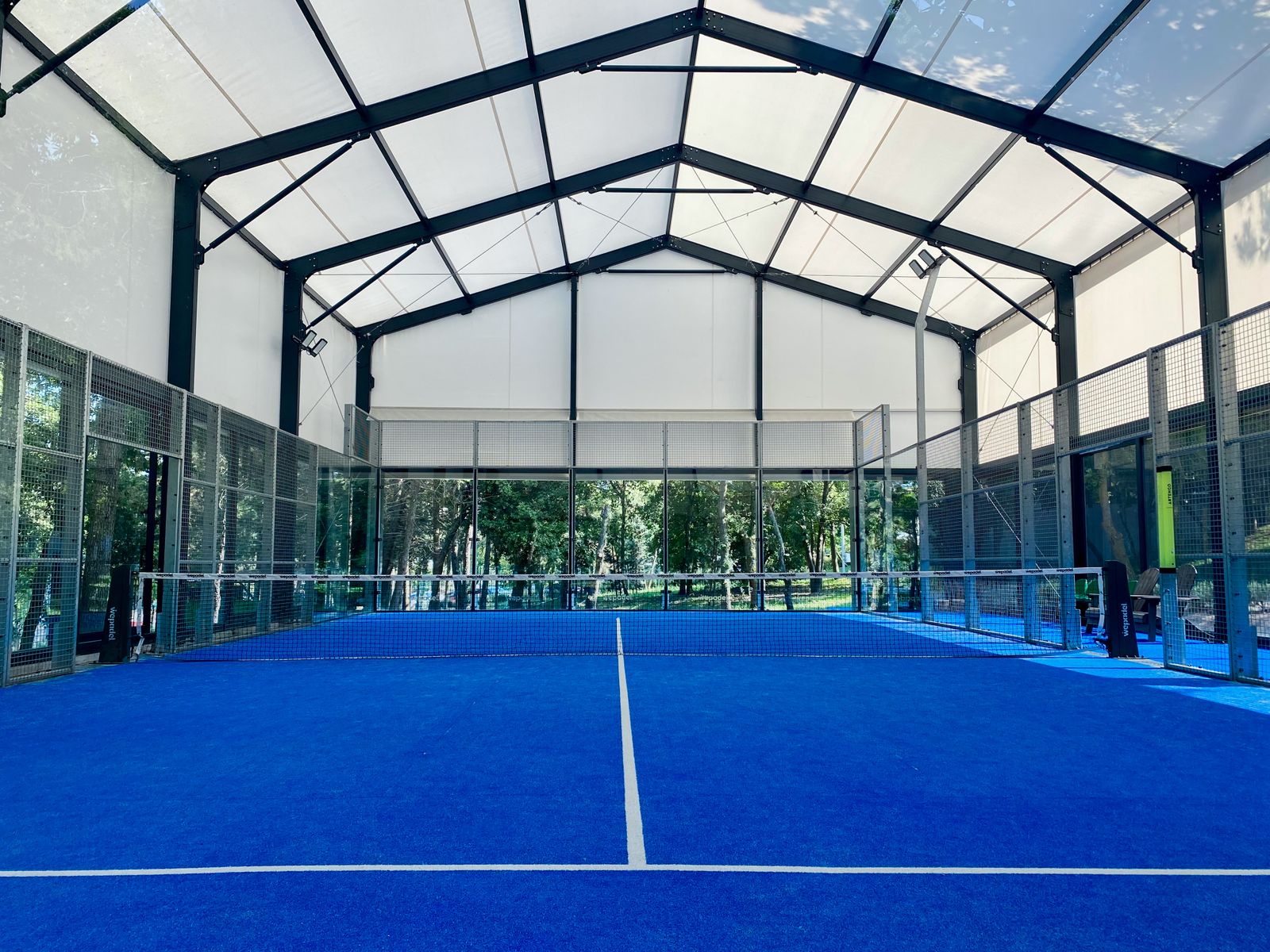
| No walls involved in normal play | Walls are part of the game |
| Solid paddle | Solid perforated padel racket |
| Can be set up in many sports halls | Usually requires a dedicated padel court |
| Singles or doubles | Predominantly doubles |
Both are growing racket sports.
But they feel very different to play.
Pickleball versus tennis
Pickleball uses many familiar tennis ideas:
- serving;
- rallies;
- volleys;
- crosscourt play;
- doubles positioning.
But there are major differences.
The court is smaller.
The serve is underhand or drop-style rather than an overhead tennis serve.
The kitchen limits net domination.
The two-bounce rule changes how points begin.
And the plastic ball behaves very differently from a tennis ball.
Tennis players usually adapt quickly, but they can also bring habits that do not work — especially taking oversized swings and trying to overpower every shot.
What is a dink?
Sooner or later, somebody at a pickleball club will tell you to dink.
A dink is a soft shot hit into the opponent’s kitchen.
The aim is usually to make the ball bounce low enough that the opponent cannot attack it comfortably.
At beginner level, pickleball can feel like a game of hard drives.
At stronger levels, controlling the soft game becomes increasingly important.
That is where much of the strategy appears.
What is DUPR?
DUPR stands for Dynamic Universal Pickleball Rating.
It is a player-rating system used in pickleball.
Pickleball Ireland says players in Ireland commonly use:
- self-rating;
- and DUPR.
A complete beginner does not need to worry about a rating.
It matters more when you begin:
- entering graded sessions;
- playing leagues;
- joining competitions;
- or looking for opponents at a similar level.
Is there competitive pickleball in Ireland?
Yes.
Ireland now has a structured tournament calendar rather than only informal club play.
Pickleball Ireland promotes:
- provincial opens;
- club competitions;
- national championships;
- and other competitive events.
The Kukri Irish Nationals 2026, for example, are scheduled for four days in Lisburn and include singles, men’s doubles, women’s doubles and mixed doubles across multiple age categories.
That gives players a straightforward progression:
beginner session → regular club play → rated play → local competition → provincial/national events
You can stop anywhere on that ladder.
There is no requirement to make a hobby competitive.
Do you have to join Pickleball Ireland?
Individual players do not currently join Pickleball Ireland directly.
The organisation says individuals are encouraged to join an affiliated club.
Affiliated clubs can access benefits including:
- national tournaments and leagues;
- club competitions;
- development support;
- training opportunities;
- and official recognition.
For somebody who simply wants to try the sport, the first step is still just a local club session.
Can you start a pickleball club?
Yes.
Pickleball Ireland actively supports new clubs and provides a starter pack covering areas such as:
- venue setup;
- insurance;
- club organisation;
- governance;
- and promotion.
This is particularly relevant in towns where there is a sports hall but no established pickleball group.
Because the equipment and court requirements are relatively modest, a small group can create the beginnings of a club without building a dedicated facility.
Is pickleball good for meeting people?
It can be.
The format naturally creates repeated interaction:
- doubles partners rotate;
- opponents rotate;
- games are short;
- sessions often involve waiting and talking between games;
- clubs usually operate repeated weekly slots.
That repeated-contact structure is exactly what many adults lose after school, college or early-career life.
If the social side is part of the appeal, read our guide to making friends as an adult in Ireland.
Pickleball will not automatically create friendships.
But it creates something useful: a reason to see the same people again next week.
Is pickleball a good first racket sport?
Yes.
You do not need tennis experience.
You do not need badminton experience.
You do not need table-tennis experience.
Experience in those sports may help with hand-eye coordination or court awareness, but pickleball can be learned from scratch.
A beginner’s first goals should be:
- keep the serve in;
- understand where to stand;
- let the return bounce;
- stay out of the kitchen when volleying;
- keep the ball in play.
Do not worry about spin, advanced serves or elaborate tactics yet.
Five beginner mistakes
1. Standing too far back
Once the two-bounce sequence is complete, strong doubles positioning often moves towards the kitchen line.
Beginners frequently stay near the baseline and give opponents too much space.
2. Trying to hit everything hard
Power helps when the shot is available.
Trying to hit every ball as hard as possible usually creates errors.
3. Forgetting the kitchen rule
Almost everybody does this early on.
4. Losing track of the score
Also normal.
Call the score clearly before serving.
5. Buying an expensive paddle immediately
Skill develops faster than equipment.
Start with something sensible.
A first-session checklist
Wear:
- comfortable sports clothing;
- court-appropriate shoes;
- layers if the venue is cold.
Bring:
- water;
- a paddle if the club does not provide one;
- a willingness to ask questions.
Know:
- where the kitchen is;
- the two-bounce rule;
- that serves go diagonally;
- that only the serving side scores under standard side-out scoring.
That is enough.
Frequently asked questions
What is pickleball?
Pickleball is a paddle sport played with a solid paddle and perforated plastic ball on a 20 ft × 44 ft court. It can be played as singles or doubles.
Is pickleball played in Ireland?
Yes. Pickleball Ireland reports more than 120 clubs and more than 4,000 weekly players across the country as of October 2026.
Where can I play pickleball in Ireland?
Use Pickleball Ireland’s official PickleBook club finder. It is more reliable than a static list because the club network is changing quickly.
What is the kitchen in pickleball?
The kitchen is the seven-foot non-volley zone on each side of the net. You cannot volley while touching it or allow your momentum after a volley to carry you into it.
How many points do you need to win?
Under standard side-out scoring, games are commonly played to 11 points and must be won by two. Tournament formats can differ.
Can beginners play pickleball?
Yes. The rules are relatively quick to learn, and beginner or social sessions are common within Irish clubs.
Do I need to buy a paddle?
Not necessarily for your first session. Ask the club whether loan paddles are available.
Can pickleball be played indoors?
Yes. Pickleball is commonly played both indoors and outdoors.
Is pickleball the same as padel?
No. Padel uses an enclosed court with walls and a different ball and racket. Pickleball uses an open 20 ft × 44 ft court, a perforated plastic ball and a solid paddle. Read our Padel in Ireland beginner guide for the full comparison.
The bottom line
Pickleball’s success makes more sense after you play it than before.
On paper, it sounds like an odd mixture of existing sports.
On court, the appeal is straightforward.
It is:
- quick to understand;
- difficult to master;
- social without requiring a large team;
- compact enough for community venues;
- and competitive only if you want it to be.
If you are curious, do not begin by buying equipment or studying the rulebook.
Find a local beginner session.
Borrow a paddle.
Learn the kitchen.
Play one game.
That will tell you more about whether pickleball is for you than anything you can read online.