Hormone replacement therapy (HRT) in Ireland | Systemic and local hormone effects during menopause
Systemic and local hormone effects during menopause.
 Health / The Compound journal
Photo: Medgirl131 · 2020 · CC BY-SA 4.0 · framed · Illustrative image.
At a glance
HRT is an umbrella term for several ways of treating menopause symptoms. The choice depends on the symptoms, whether a uterus is present and individual health risks. HSE guide
The Science Behind the Drug
Systemic and local hormone effects during menopause
Oestrogen binds receptors that regulate genes in tissues including bone, the brain and the urogenital tract. Systemic preparations deliver hormone through circulation. Vaginal products are usually chosen for local symptoms. For someone with a uterus, systemic oestrogen generally needs appropriate progestogen protection of the endometrium. HSE source
What the evidence measures
Evidence for relief of hot flushes, bone outcomes and urogenital symptoms addresses different questions. Risks vary with route, formulation and medical history. Ask how any estimate applies to your starting risk and duration of use.
Three starting questions
| What to check | Why it matters |
|---|---|
| Symptoms | are they local, systemic or both? |
| Regimen | is progestogen needed and what changes require reassessment? |
What does systemic mean in a menopause consultation?
Systemic treatment delivers hormone through the bloodstream to multiple tissues. A local vaginal product is generally selected for symptoms in that area. Discuss which symptoms need treatment and which route meets that aim.
When to ask for help or a medication review
Review unexpected bleeding with the treating team. Mention previous clots, hormone-sensitive cancer or new diagnoses before a regimen is chosen or changed. HSE patient guidance
Decide which symptoms the proposed treatment is meant to help
Write down which symptoms affect daily life most and discuss which formulation can address them. Hot flushes and night sweats are commonly discussed with systemic options. Vaginal dryness or discomfort can lead to a separate discussion about local vaginal oestrogen. Some people need to discuss both. The difference between local and systemic treatment matters when reading research, comparing risks and deciding whether a separate progestogen is needed. HSE HRT guidance · Menopause guideline
What makes a risk estimate relevant to you?
Ask what formulation and route the estimate applies to, who was studied, and the period over which the outcomes were counted. Personal history can change the starting risk. It helps to bring information about bleeding patterns, previous surgery involving the uterus, clotting history, cancer history and medicines that affect hormone treatment. A number from a study on one regimen should not be carried across to every product. Menopause guideline
For a product change, note the oestrogen and the progestogen in separate lines, including route and schedule. Check whether you are using continuous combined HRT or a sequential regimen and what bleeding pattern to report. HSE HRT guidance
Related guides
Continuous combined HRT · Sequential combined HRT · Oestrogen tablets, patches, gel and spray · Vaginal oestrogen · Utrogestan · How to find the Irish patient leaflet
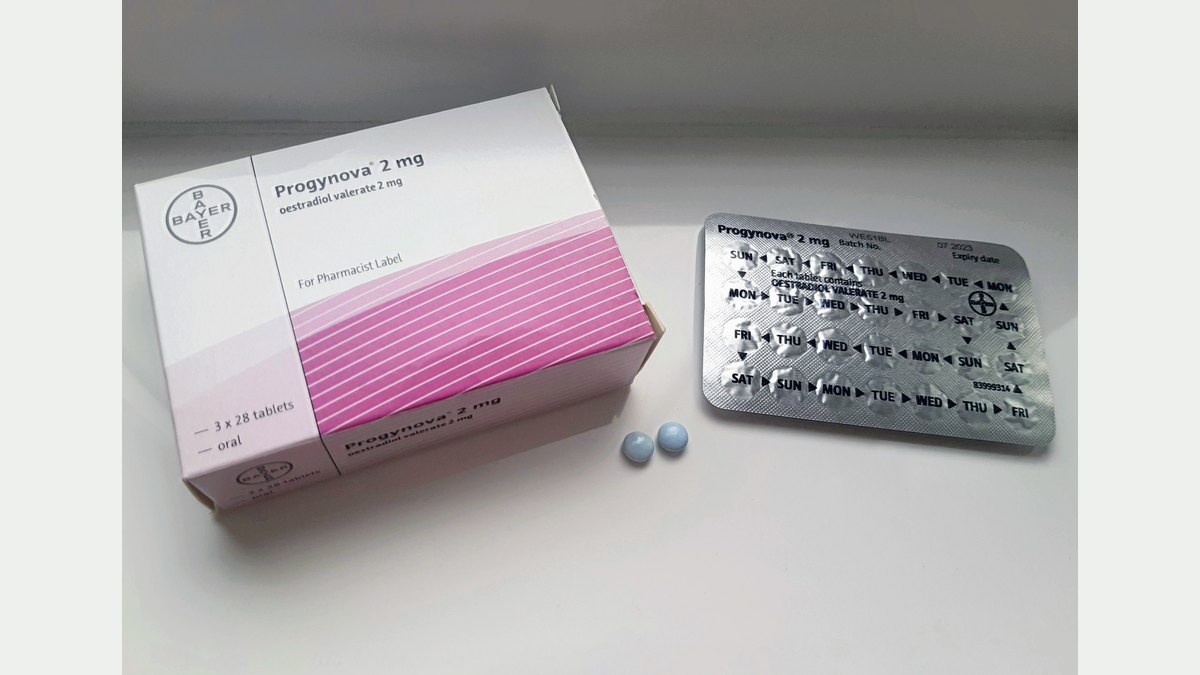
A UK pack of estradiol valerate tablets, one example of an HRT product. Image licence.