Continuous combined HRT in Ireland | Oestrogen and continuous protection of the womb lining
Oestrogen and continuous protection of the womb lining.
 Health / The Compound journal
Photo: Erica-Schroeder · 2020 · CC BY-SA 4.0 · framed · Illustrative image.
At a glance
Continuous combined HRT combines systemic oestrogen with a progestogen taken continuously. It is generally considered for people who still have a uterus and are at an appropriate stage after menopause. HSE guide
The Science Behind the Drug
Oestrogen and continuous protection of the womb lining
Oestrogen binds its receptor and changes gene expression in responsive tissues. In the uterus, systemic oestrogen stimulates the endometrium. The continuously given progestogen counteracts that stimulation and changes how the lining develops. This explains why the progestogen component matters even when it is the oestrogen that mainly targets symptoms. HSE source
What the evidence measures
Track the original symptom, tolerability and any bleeding pattern. Benefits and harms depend on the formulation, route and personal history, so population averages are a starting point for a shared decision.
Make a two-line treatment record
| What to check | Why it matters |
|---|---|
| Symptom to review | hot flushes, night sweats or sleep disruption |
| Bleeding history | record timing and whether the pattern changed |
Why is a symptom diary useful?
Timing can reveal whether bleeding or side effects began after a formulation, schedule or adherence change. Record the detail and share it with the clinician instead of inferring the cause.
When to ask for help or a medication review
Report unexpected bleeding according to the care plan, particularly new or persistent bleeding. Ask the prescriber to review any change in the regimen so both components remain appropriate. HSE patient guidance
When the combination is split across two packs
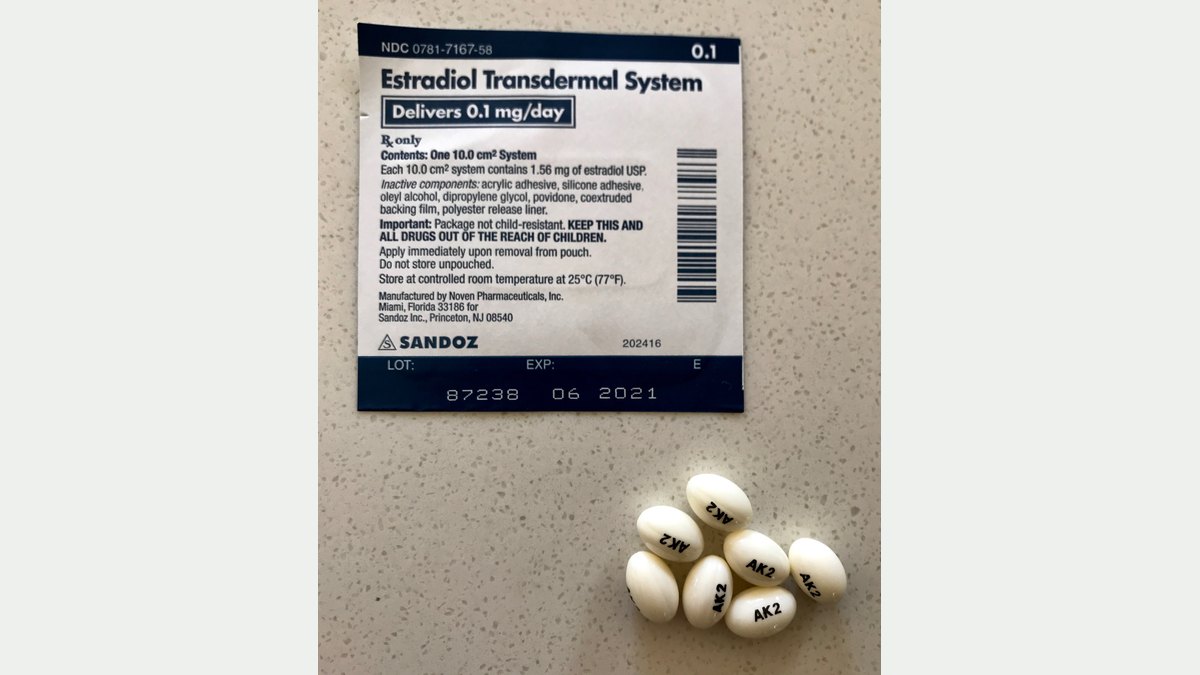
The daily progestogen may be in the same product or prescribed separately from the oestrogen. Write down the product names, route and instructions for both. This matters when a pharmacy changes a brand or a GP adjusts one component. If you still have a uterus, the clinician needs to know how the progestogen part is being supplied when considering a change to the systemic oestrogen. HSE continuous combined HRT guidance · Menopause guideline
What to include in a bleeding and symptom diary
Write the date, duration and amount of any bleeding, when you started or changed either component, and any late or missed doses. Include why you started HRT and which symptoms are still affecting daily life. Spotting soon after a change and bleeding that begins after a settled period give the clinician different information. Ask what action to take if bleeding occurs and which patterns need assessment sooner, particularly new, heavy or persistent bleeding. HSE continuous combined HRT guidance · Menopause guideline
Read the sequential combined HRT guide if you have a scheduled part-month progestogen. The expected timing of bleeding and the treatment calendar differ.
Related guides
Hormone replacement therapy (HRT) · Sequential combined HRT · Oestrogen tablets, patches, gel and spray · Vaginal oestrogen · Utrogestan · How to find the Irish patient leaflet
An oestrogen patch and oral progestogen, examples of separate HRT components. Image licence.