Antifungal medicines in Ireland | Fungal membranes, cell walls and treatment route
Fungal membranes, cell walls and treatment route.
 Health / The Compound journal
Photo: Watswang · CC BY-SA 3.0 · framed · Illustrative image.
At a glance
An antifungal treats infection caused by a susceptible fungus. Creams, local treatments, tablets and hospital infusions reach very different tissues, so the site and type of infection matter. HSE guide
The Science Behind the Drug
Fungal membranes, cell walls and treatment route
A fungal cell membrane relies on ergosterol. Azoles inhibit an enzyme involved in making it, while allylamines affect an earlier step in the pathway. Some hospital antifungals instead block components of the fungal cell wall. Selecting a target that differs from human cell biology is central to how these medicines are designed. HSE source
What the evidence measures
Visible skin improvement may begin before the planned course ends. Nail appearance can take much longer to change because a healthy nail has to grow out. For deep or recurrent infections, a sample and identification of the fungus may help guide treatment.
Match the treatment to the site
| What to check | Why it matters |
|---|---|
| Superficial skin | local contact may be sufficient for a suitable diagnosis |
| Nail or deeper tissue | drug delivery and confirmation of the organism matter |
Why might nails look abnormal after treatment?
The visible nail reflects older growth as well as newer growth. Ask what rate of change is realistic and when persistent symptoms should prompt another examination or sample.
When to ask for help or a medication review
Oral antifungals can interact with other medicines. If a rash is spreading or symptoms keep returning, seek an assessment and avoid assuming that every similar-looking change is fungal. HSE patient guidance
The nail, skin and bloodstream are different treatment sites
A cream deposits medicine where it is applied. A nail can limit what reaches the infected tissue beneath it, and any damaged part may look abnormal until new nail grows. In a deeper infection, a systemic drug must circulate to the affected area. The best choice depends on the organism, where the infection sits, and whether the person can safely receive a particular treatment. This is why a successful skin treatment cannot automatically be substituted for a nail or internal infection. HSE antifungal guidance
A sample may matter when the diagnosis is uncertain or previous treatment failed. Irritation, inflammatory skin conditions and nail injury can resemble a fungal infection. A response to a treatment is useful information, but also bring photographs showing when the area changed and the exact name and dates of everything applied. HSE fungal nail infection guidance
One useful check for oral products
Different oral antifungals affect drug metabolism in different ways. Bring the entire prescription list, including as-needed medicines. A pharmacist can check the specific combination rather than applying one interaction rule to the whole class. If you were told to monitor blood tests, make sure you know which tests are planned and who will review them. HSE antifungal guidance
Related guides
Antibiotics · Amoxicillin · How to find the Irish patient leaflet
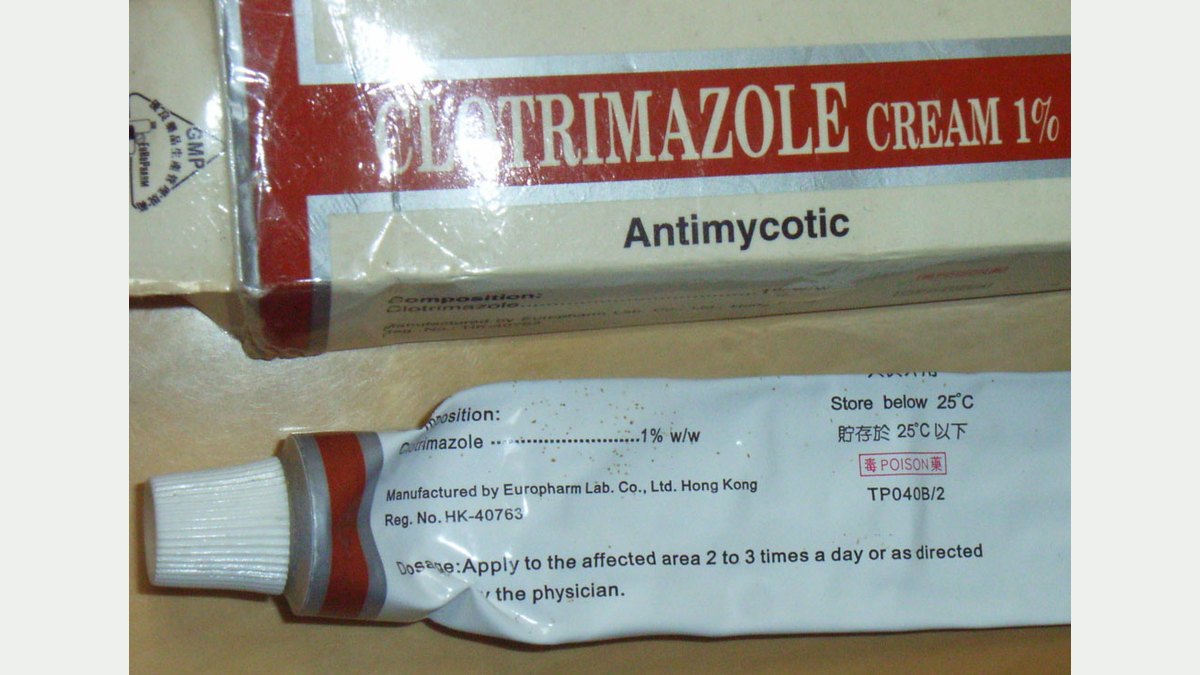
Clotrimazole cream packaging. Image licence.