Antibiotics in Ireland | How bacterial targets and resistance shape treatment
How bacterial targets and resistance shape treatment.
 Health / The Compound journal
Photo: Myself (Shorelander) · 2007 · CC BY 2.5 · framed · Illustrative image.
At a glance
Antibiotics treat particular bacterial infections. Choosing one depends on the likely organism, site of infection, local resistance and the person’s allergy and medical history. HSE guide
The Science Behind the Drug
How bacterial targets and resistance shape treatment
Some antibiotics block the enzymes that build bacterial cell walls. Others interfere with bacterial ribosomes, nucleic acid synthesis or metabolic pathways. Mutations and genes acquired from other bacteria can change a target, reduce the drug concentration inside the cell or allow an enzyme to inactivate a drug. Treatment therefore depends on which organism is present as well as what the drug can reach. HSE source
What the evidence measures
Evidence for one infection and one regimen cannot simply be carried over to another. Cultures can refine an initial decision when appropriate. Improvement in symptoms, resolution of infection and side effects all matter, and unnecessary exposure can encourage selection of resistant bacteria.
Why two infections may need different treatment
| What to check | Why it matters |
|---|---|
| Site | ask whether the antibiotic reaches the infected tissue |
| Organism | organism and susceptibility can change the preferred drug |
What does a laboratory susceptibility report tell us?
It describes how the tested organism responded under standard laboratory conditions. Clinicians also consider dose, infection site, achievable exposure, allergies and whether the tested organism caused the illness.
When to ask for help or a medication review
Follow the specific prescription. Keep a record of any previous reaction and describe what happened rather than simply listing an allergy. Facial or throat swelling, breathing difficulty or collapse needs emergency help. HSE patient guidance
Why a result marked susceptible still needs interpretation
A laboratory can grow a sample and measure how a bacterium responds to an antibiotic. That result matters only if the sample represents the infection and the medicine achieves adequate exposure at the affected site. A clinician also weighs whether the person can take that medicine safely, the severity of illness, and the need for a procedure such as draining a collection. “Strongest antibiotic” is rarely a useful comparison without those details. HSE antibiotic guidance
The same idea explains why a broad-spectrum antibiotic is sometimes started before the exact cause is known and later changed to a more targeted choice. The initial decision addresses uncertainty. The review uses the information that has become available, such as cultures, the person’s progress or evidence for a different cause. HSE infection and antibiotic resources
What to clarify before you leave the pharmacy
Check which infection the prescription is for, whether it replaces another treatment, and what symptoms or timeframe should trigger a call back. If you have an antibiotic allergy record, tell the prescriber what happened rather than giving the medicine name alone. Do not use a previous packet to treat a new illness. If the instructions you receive after a test differ from the label, call for clarification so the team can reconcile both. HSE antibiotic guidance
Related guides
Amoxicillin · Antifungal medicines · How to find the Irish patient leaflet
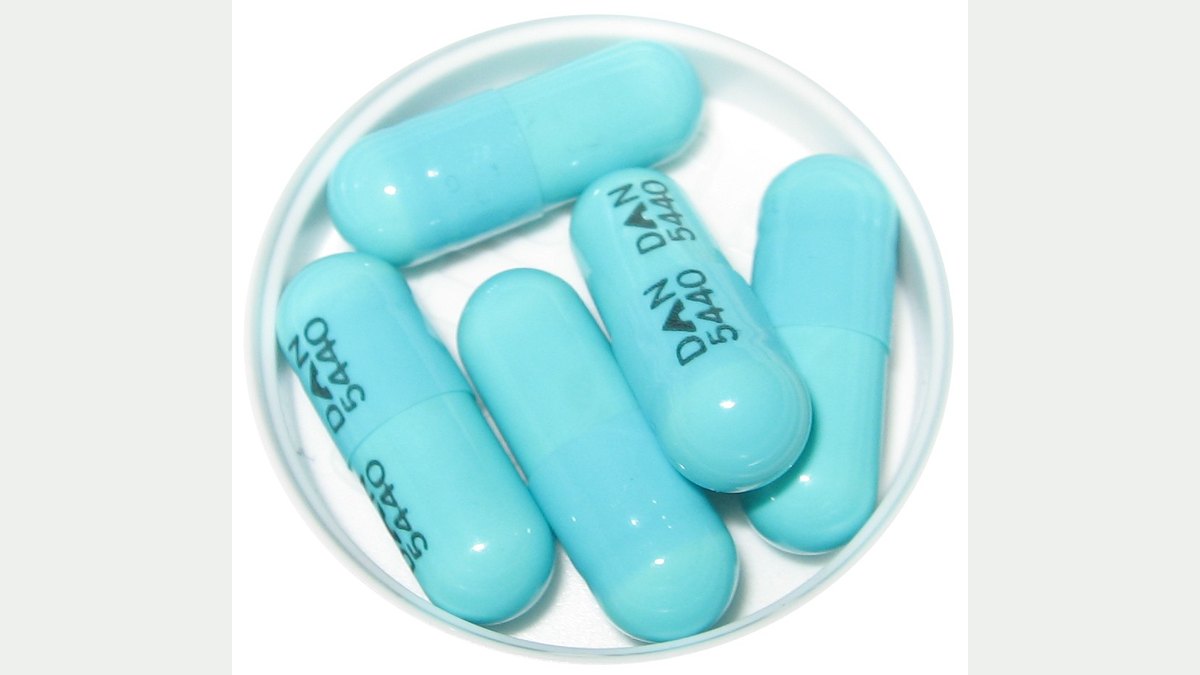
Doxycycline capsules, an example of an antibiotic. Image licence.