Zebra’s Sales Jumped 22%, but Gross Margin Fell. Can Automation Growth Absorb Memory Costs?
Zebra Technologies delivered strong organic growth, but memory costs and mix reduced gross margin. We examine operating leverage, cash flow and balance-sheet risk.
 Wealth / The Compound journal
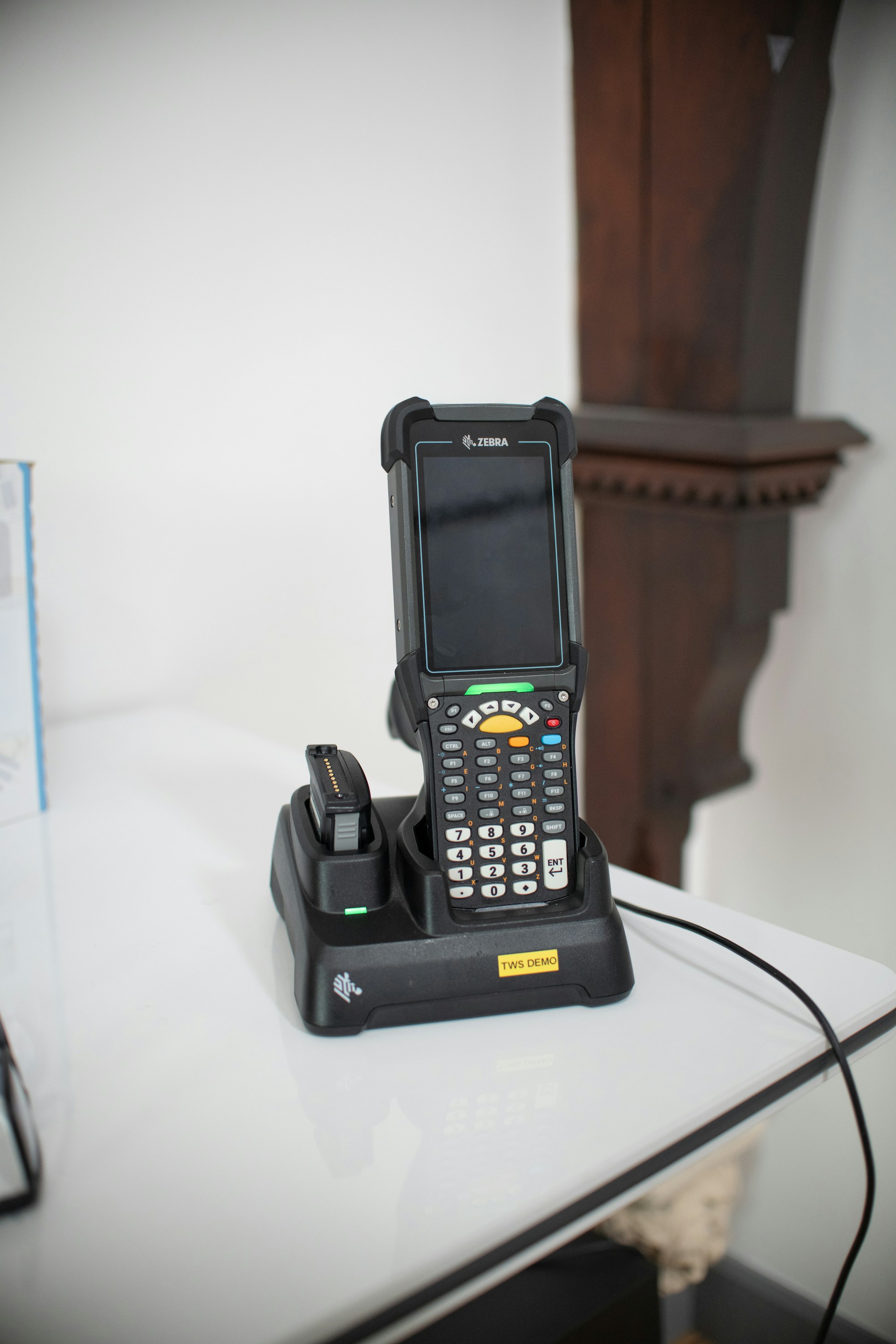
Photo: Bluestonex / Unsplash, Unsplash License. Archival photograph published 22 September 2025; cropped for publication. · Illustrative image.
Zebra Technologies is growing quickly again, but the quarter exposed a tension between demand and unit economics. The investment question is whether operating leverage can keep offsetting lower hardware gross margin as memory costs rise.
For its third quarter ended 3 October 2026, Zebra reported $1.61 billion of sales, up 22.3%. Organic sales growth was 11.3%, excluding acquisitions and foreign-currency effects. Net income rose to $164 million from $101 million.
Yet GAAP gross margin fell to 45.7% from 48.0%. Management cited higher memory-component costs and product mix, partly offset by currency movements. The company sold much more, but retained a smaller share of each sales dollar after product costs.
For the maintained financial record, see Zebra Technologies’ stock profile. This analysis asks whether automation growth and expense leverage can absorb that hardware pressure without weakening cash conversion.
The growth was broad—and partly acquired
Connected Frontline sales increased to $949 million from $705 million, with 15% organic growth. This segment includes mobile computers, data-capture products and related services used by workers in retail, warehouses and other operating environments.
Asset Intelligence & Tracking sales rose to $665 million from $615 million, with 7% organic growth. That segment includes barcode printing, supplies, RFID and machine-vision technologies.
Both operations therefore grew without relying entirely on currency or acquisitions. Reported growth was higher than organic growth partly because Zebra acquired Elo Touch Solutions. Investors should keep the two figures separate: acquired revenue can expand the platform, but it comes with a purchase price and integration risk.
The Connected Frontline result is particularly important because it was the larger and faster-growing segment. Strong demand for frontline devices can pull through software and services, while machine vision, RFID and tracking can deepen Zebra’s role in customer workflows. The strategic case is strongest when those products form a connected system rather than a series of replacement hardware purchases.
Gross margin absorbed the component shock
GAAP gross margin declined 230 basis points to 45.7%. Adjusted gross margin fell 220 basis points to 46.0%. Memory components were a named pressure, alongside mix.
Hardware businesses cannot always pass a component-cost increase to customers immediately. Prices may be contractual, competitors may resist increases, and new products can carry a different initial margin. The risk is that strong demand conceals weaker unit economics until revenue growth slows.
Zebra still produced adjusted EBITDA of $349 million, up from $285 million. Its adjusted EBITDA margin was unchanged at 21.6%. In other words, operating-expense leverage offset the gross-margin decline this quarter.
That is a real strength, but it is not an unlimited solution. A company can restrain operating expenses while revenue rises rapidly. If memory costs remain elevated and sales growth moderates, holding the same EBITDA margin becomes harder without either better pricing, improved mix or structural cost savings.
Cash generation is strong, with a working-capital caveat
For the first nine months, operating cash flow was $711 million. Capital expenditure was $50 million, leaving $661 million of company-defined free cash flow.
Zebra repurchased $643 million of shares over the same period—almost all of that free cash flow. Buybacks can create value when shares are attractively priced, but the comparison shows that little internally generated cash remained after repurchases for debt reduction or further acquisition spending.
Working capital also used cash. Accounts receivable consumed $229 million and inventory consumed $125 million, partly offset by $194 million provided by accounts payable. Inventory ended the quarter at $851 million, up from $729 million at year-end, while receivables rose to $1.03 billion from $801 million.
Those movements can support growth: more inventory can protect availability and higher receivables can simply follow higher sales. The quality test is whether inventory turns into shipments without discounting and customers pay on time. If sales growth slows while both balances stay elevated, cash conversion would weaken.
The balance sheet makes allocation matter
Zebra ended the quarter with $182 million of cash and $2.58 billion of debt. The company has profitable operations and meaningful cash generation, but the gap between cash and debt makes capital allocation more consequential than it would be for a net-cash business.
Management expects at least $1 billion of full-year free cash flow. It also guided fourth-quarter sales growth to 10%–14%, adjusted EBITDA margin to approximately 22%, and adjusted EPS to $5.00–$5.40.
These are management forecasts, not achieved results. Reaching the free-cash-flow target would require a strong fourth quarter and likely some working-capital conversion. Investors should compare the result with inventory, receivables and repurchases rather than focusing on adjusted EPS alone.
What would confirm the thesis?
The strongest outcome would combine sustained organic growth in both segments with a recovery in gross margin. Connected Frontline should keep expanding without customer concentration or product-refresh timing creating a false baseline, while Asset Intelligence & Tracking should contribute steady growth and attractive recurring supplies or service economics.
Cash should validate the income statement. Inventory and receivables need to convert, full-year free cash flow should meet guidance without a one-quarter working-capital manoeuvre, and debt should remain manageable after acquisition and buyback spending.
The counter-case is that reported growth becomes more acquisition-dependent, memory costs or mix keep gross margin lower, and operating-expense restraint cannot compensate when demand normalises. Aggressive repurchases alongside elevated debt could then reduce flexibility.
Zebra’s quarter showed genuine demand strength, not just acquisition accounting. It also showed that revenue growth is only half the investment case. The more durable proof will be recovered gross margin and cash that remains after working capital, acquisitions and buybacks.
Explore Compound’s earnings hub and our guide to investment diversification.
Reported figures are in US dollars and relate to Q3 or the first nine months of fiscal 2026 as stated; Zebra’s quarter ended 3 October 2026. Organic growth, adjusted EBITDA, adjusted EPS and free cash flow are non-GAAP measures. Facts come from Zebra’s 3 November results release and Form 10-Q; calculations and interpretation are Compound’s. Guidance is a management expectation. General information, not personal investment advice.
Cover: Bluestonex, Unsplash, under the Unsplash License. Archival Zebra product photograph published 22 September 2025; cropped for publication and not presented as a current reporting-period image.