Hershey Raised Prices 11% and Volume Fell 10%. How Durable Is the Margin Recovery?
Hershey’s margins rebounded as price increases and lower commodity costs outweighed lower volume. We examine how much of the recovery can endure.
 Wealth / The Compound journal
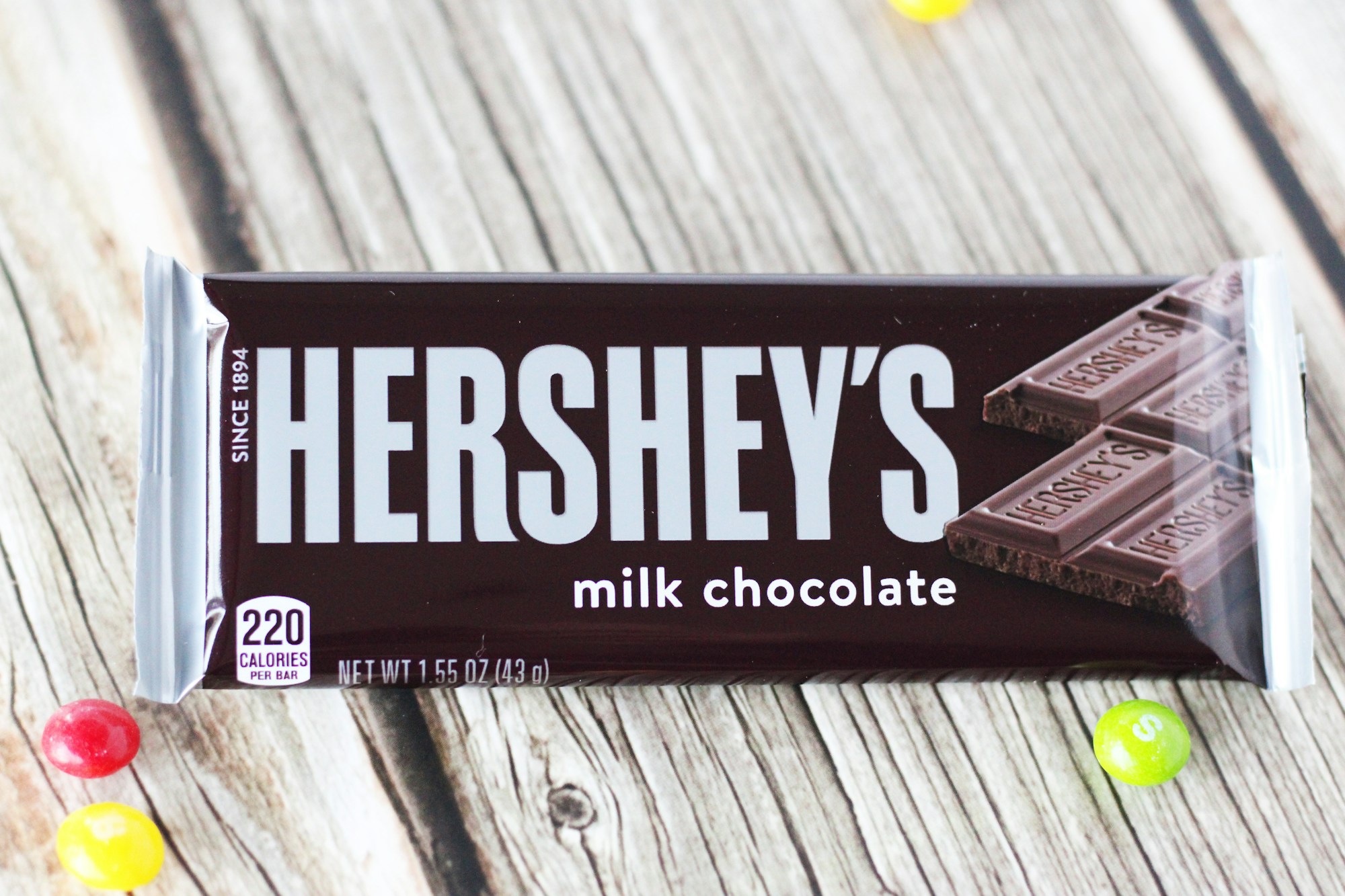
Photo: logan jeffrey / Unsplash, Unsplash License. Archival photograph published 5 February 2021; cropped for publication. · Illustrative image.
Hershey has restored a large part of its margin after a difficult cost cycle, but customers are buying less product. The investment question is whether pricing power can outlast the volume decline and the temporary benefits inside the quarter.
For the three months ended 27 September 2026, Hershey reported $3.28 billion of sales, up 3.0%. Organic constant-currency sales increased just 0.8%: approximately 11 percentage points of price were mostly offset by an approximately 10-point decline in volume.
At the same time, reported gross margin rose to 46.1% from 32.6%, while adjusted gross margin increased to 42.7% from 31.8%. Pricing, lower net commodity costs, productivity savings and tariff refunds more than offset the volume decline and higher freight costs.
For the maintained financial record, see the Hershey stock profile. This analysis asks how much of that margin rebound is structural—and how much depends on benefits that may not repeat.
Pricing fixed the cost problem, for now
The margin comparison is dramatic because the prior-year base was weak. Cocoa and other input inflation had compressed profitability, while Hershey’s 2026 pricing passed more of those costs to customers.
In North America Confectionery, net sales rose 1.6% to $2.66 billion. Price realization contributed about 13 percentage points, while volume declined about 11 points. Segment profit rose to $949.7 million and margin expanded by 14 percentage points to 35.8%.
That is evidence that Hershey can protect profit when input costs surge. It is not yet proof that the new price level is fully accepted. Consumer takeaway in measured channels grew only 0.8%, and the company said confectionery market share declined. Shipment timing can make quarterly sales and retail demand differ, but both the filing and release identify price elasticity as a reason for lower volume.
The durable version of the thesis requires volume to stabilise after the price reset. Repeated double-digit price increases are unlikely to be a dependable growth engine.
Not every margin benefit is recurring
Reported gross margin benefited from derivative mark-to-market gains. Hershey excludes those valuation movements from adjusted gross margin because they can reverse with commodity prices. The adjusted figure therefore gives a cleaner view of current operations, although it remains a company-defined non-GAAP measure.
Tariff refunds also helped the quarter. Full-year adjusted earnings guidance includes approximately $0.22 per share from third-quarter refunds and $0.03 from the second quarter. Hershey explicitly said its outlook does not include potential future refunds.
Investors should distinguish three layers. Pricing and productivity can persist if the company holds them. Lower commodity costs can endure, but they remain exposed to market movements and hedging. Mark-to-market gains and retrospective tariff refunds are the least dependable.
The test is not whether next year reproduces a 1,090-basis-point adjusted gross-margin increase. It is whether Hershey can retain a healthy margin after one-off support fades and without another damaging step-up in price.
Acquisitions helped sales more than profit
North America Salty Snacks sales rose 22.3% to $392.7 million, but the LesserEvil acquisition contributed approximately 20 percentage points. Organic constant-currency growth was 2.3%.
Segment profit fell 17.9%, and margin declined 5.9 percentage points to 12.1%. The release cited higher input and manufacturing costs and integration effects. Acquired revenue therefore made consolidated growth look stronger without yet providing matching profit growth.
International sales fell 7.5%, with volume down about 14 points, and the segment reported a $30 million loss. International is much smaller than North American confectionery, but it reinforces the elasticity risk: higher prices can defend dollars while weakening units and local operating leverage.
Cash flow improved, with a working-capital cost
Operating cash flow for the first nine months increased to $1.64 billion from $1.35 billion. Subtracting $305 million of capital additions leaves about $1.33 billion before acquisitions, dividends, buybacks and financing. This is a simple calculation, not Hershey’s reported free-cash-flow measure.
Working capital used $428.7 million of cash, compared with $148.4 million a year earlier. Higher inventory and other operating balances can reflect commodity purchasing and the cost of serving the business, but they also reduce the cash available to owners.
Hershey repurchased $439.4 million of shares during the first nine months. It ended the quarter with $676.7 million of cash and approximately $5.1 billion of total debt. That balance sheet is manageable only if the recovered earnings and cash flow persist; it leaves less room for a prolonged combination of weak volume, elevated working capital and acquisitions that take time to mature.
What would confirm the thesis?
The strongest evidence would be confectionery volume stabilising while adjusted gross margin remains healthy after tariff refunds and derivative movements wash out. Market share should stop declining, and price growth should moderate toward a level consumers can absorb.
Salty Snacks would need to convert acquisition-led sales into better segment profit, while International should narrow its losses. Cash conversion should improve through working capital rather than depending only on accounting profit.
The counter-case is that the margin recovery is harvested at the expense of demand. If volume keeps falling, retailers allocate less shelf space, or consumers trade down, Hershey could eventually need more promotion just as temporary cost benefits disappear.
Hershey’s third-quarter margin recovery was real, but its quality was mixed. Pricing and productivity repaired the income statement; the next phase requires proof that the company can keep those gains without continuing to shrink the amount customers buy.
Explore Compound’s earnings hub and our guide to investment diversification.
Reported figures are in US dollars and relate to Q3 or the first nine months of 2026 as stated; Hershey’s quarter ended 27 September 2026. Organic constant-currency sales and adjusted margins are non-GAAP measures. Facts come from Hershey’s results release and Form 10-Q; calculations and interpretation are Compound’s. Guidance is a management expectation. General information, not personal investment advice.
Cover: logan jeffrey, Unsplash, under the Unsplash License. Archival Hershey product photograph published 5 February 2021; cropped for publication and not presented as a current reporting-period image.