Sandisk Earnings: AI Storage Surges as an Eight-for-One Split Approaches
Sandisk posted $11.03bn revenue and announced an eight-for-one split. The real investment question is how durable its exceptional storage margins are.
 Wealth / The Compound journal
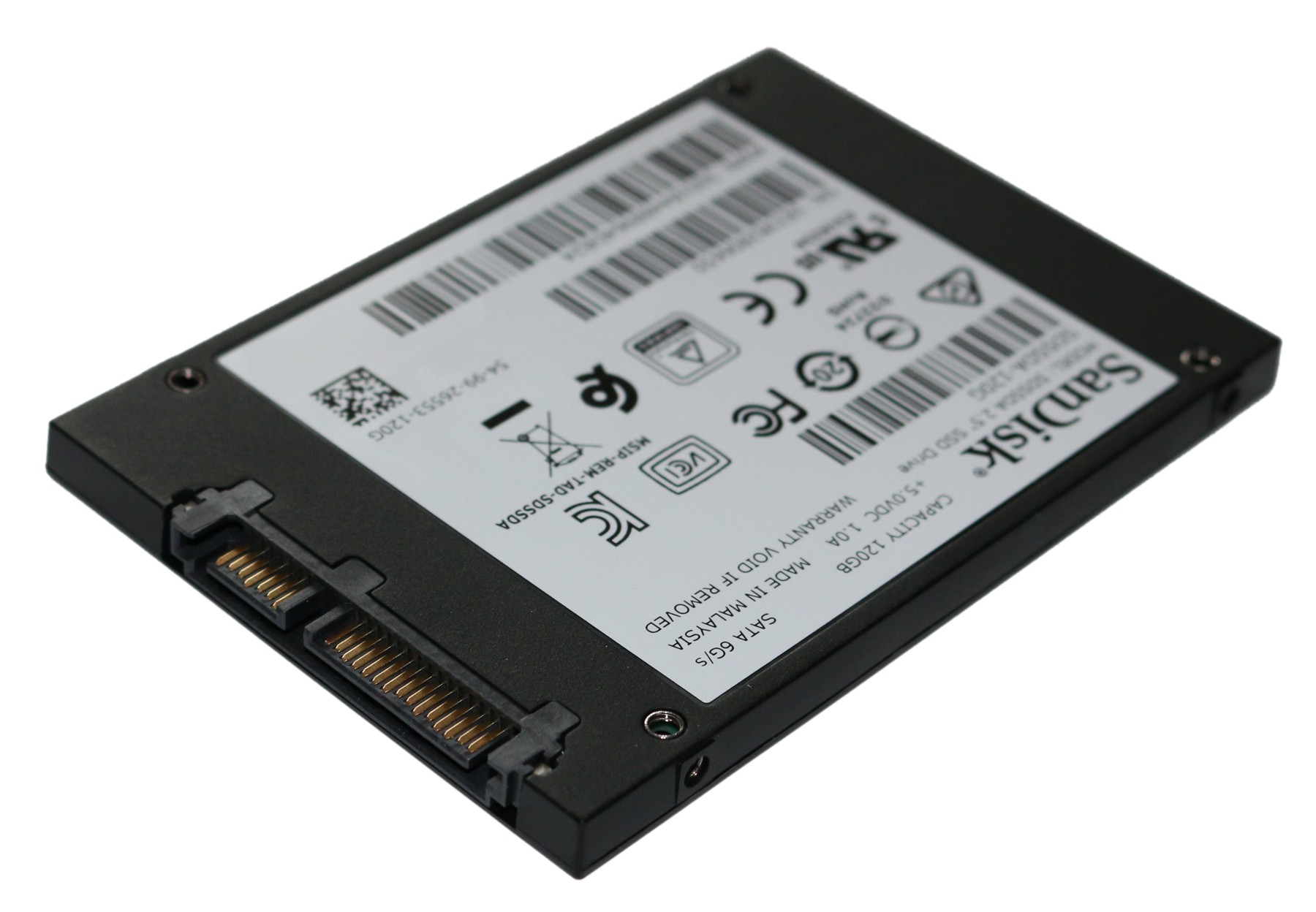
Photo: MichaelOpdenacker / Wikimedia Commons (CC BY-SA 4.0; 2018-11-21) · Illustrative image.
Sandisk’s earnings announcement combines spectacular growth with an eight-for-one stock split. The split will change the number of shares and the price attached to each one. The investment case still depends on the cash and profit the underlying business can sustain.
The SEC-furnished release covers Q1 of fiscal 2027, ended 2 October 2026. That fiscal label is correct even though the results were announced in calendar 2026.
The growth is real; the mix matters
Revenue reached $11.031 billion, up 23% sequentially and 378% year on year. GAAP net income was $8.101 billion, with diluted EPS of $52.60. Adjusted EPS was $49.51. All per-share figures in the release are on a pre-split basis.
Datacenter revenue reached $4.802 billion, up 61% from the previous quarter. Edge generated $5.832 billion, while Consumer revenue fell to $397 million. The business is therefore not rising uniformly across every end market.
Datacenter represented approximately 43.5% of total sales, calculated from the reported figures. That makes enterprise demand much more important to the mix than the consumer storage products many readers associate with the brand.
Why exceptional margins need a stress test
The GAAP gross margin was 85.0%. An unusually profitable period can create substantial value, but valuing a business as though a peak margin lasts forever leaves little room for changes in pricing, supply or customer behaviour.
Consider a simple sensitivity, not a forecast: on $11.031 billion of quarterly revenue, a five-percentage-point gross-margin reduction would reduce gross profit by about $552 million, before any change in operating expenses or tax. Revenue could remain very large while the profit outcome changed materially.
The preceding Q4 release attributed approximately two-thirds of that quarter’s sequential revenue growth to higher pricing and one-third to volume. That is historical context, not a claim that the same proportions explain this quarter. It shows why investors should ask for the drivers behind growth rather than extrapolate the headline percentage.
What the split does—and does not—change
Sandisk plans to issue seven additional shares for each existing share after market close on 19 November, with split-adjusted trading expected on 20 November. The record date is 9 November.
An investor with one share would have eight, but the proportional ownership would remain unchanged. A lower nominal share price is not an eightfold improvement in value. EPS comparisons must also use a consistent basis after the split.
Guidance keeps the operating question in focus
Management forecasts next-quarter revenue of $12.2–12.6 billion and adjusted EPS of $55–57 before the split. The EPS range would be approximately $6.875–7.125 on an eight-for-one adjusted basis, purely by division; it is the same economic guidance.
The next test is whether demand, pricing and customer relationships sustain attractive returns as capacity and industry conditions evolve. The split may draw attention. The durability of storage economics will determine far more.
Follow the Sandisk earnings page and earnings hub. Reported facts and management forecasts are separated above; sensitivities are Compound’s, not forecasts or personal investment advice.
Cover: MichaelOpdenacker, Wikimedia Commons, CC BY-SA 4.0. Photographed 2018-11-21; archival. Resized for display; display cropping may apply. This image and its resized version remain available under the same licence. A Sandisk solid-state drive and its connectors, photographed in 2018; archival product photograph.