Rural House Planning Permission Ireland: One-Off Houses & Local Need
How planning permission for a one-off rural house works in Ireland, including local-need policies, development plans, rural areas under pressure, population-decline areas, site suitability, access and wastewater.
 Wealth / The Compound journal
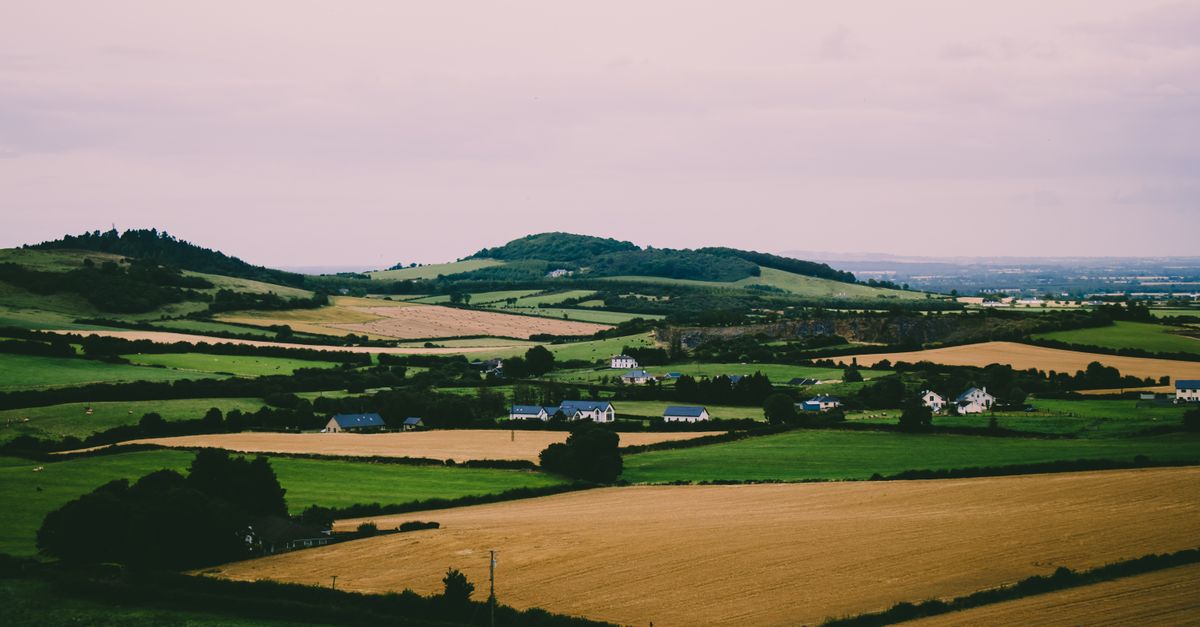
Photo: Jeswin Thomas on Pexels · Illustrative image.
Getting planning permission for a house in rural Ireland is not decided by one national “local-needs test”.
The decision starts with national policy, but the practical rules are applied through your county or city development plan, the characteristics of the site and the planning merits of the proposal.
Quick answer
The Government's current rural-housing policy says people who are an intrinsic part of a rural community based on economic or social need should be supported to build in rural areas.
In rural areas near cities and towns, policy generally directs a greater share of housing demand toward settlements. In rural areas experiencing population decline, current national policy is more supportive of anyone wishing to build, subject to normal planning and environmental requirements.
The exact test on your site comes from the relevant development plan and local planning context.
For the full system, start with Planning Permission in Ireland: The Complete Guide.
There is no single rural planning rule for all of Ireland
A site in rural Meath can face different planning policy from a site in:
- Mayo;
- Kerry;
- Wicklow;
- Cork;
- Galway;
- Donegal;
- or the commuter belt around Dublin.
That is because local authorities classify and manage rural areas differently through their development plans.
The first document to read is therefore not a generic blog.
It is the current development plan for the planning authority where the site is located.
What does national policy say?
The Department of Housing’s current Rural Housing Guidelines summary identifies three broad policy directions.
People connected to rural communities
People who are an intrinsic part of the rural community based on economic or social need should be supported to build homes in rural areas.
Rural areas near cities and towns
In areas under strong pressure from nearby cities and towns, policy seeks to direct housing demand toward urban settlements rather than allowing unrestricted scattered development.
Rural areas with population decline
In rural areas experiencing population decline, current policy is more permissive: people wishing to build can be supported subject to normal planning and environmental rules.
That is the national direction.
The local development plan turns it into site-level policy.
What does “local need” mean?
The phrase local need is widely used, but the exact evidence required can vary by development plan and rural-area category.
Depending on the local policy, relevant connections can include matters such as:
- having grown up in the area;
- long-term family connection;
- employment tied to the rural area;
- farming;
- caring responsibilities;
- social connection;
- housing need;
- or another locally defined circumstance.
Do not assume that because one council accepted a particular form of local connection, another council must use the same test.
Read the exact policy wording.
Why location near a town matters
A rural site only a short distance from a major town can be treated differently from a remote site in an area losing population.
Planning policy generally tries to avoid excessive ribbon development and dispersed housing where it undermines:
- compact settlement growth;
- infrastructure;
- road safety;
- landscape character;
- services;
- transport;
- and environmental objectives.
This does not mean nobody can obtain rural permission near a town.
It means policy scrutiny can be stronger.
What is a one-off rural house?
The phrase normally describes an individual house on a rural site rather than a dwelling within a larger planned housing estate.
The planning authority still assesses it as a full planning application.
A site can fail for reasons completely unrelated to local need.
Site suitability matters as much as local need
Even where an applicant satisfies the relevant rural-housing policy, the site itself must be suitable.
Common planning issues include:
- safe road access;
- sightlines;
- wastewater treatment;
- groundwater;
- flooding;
- ecology;
- landscape;
- house design;
- settlement pattern;
- archaeology;
- protected habitats;
- proximity to utilities;
- and impact on neighbouring amenity.
Passing a local-needs test is not a guarantee of permission.
Road access and sightlines
A rural entrance can become one of the decisive issues.
The planning authority may examine:
- traffic speed;
- available sight distance;
- road classification;
- hedgerows;
- bends;
- nearby entrances;
- gradients;
- drainage;
- and whether land needed for sightlines is under the applicant’s control.
A site can look spacious but still have poor visibility onto the public road.
Resolve access early.
Wastewater
Where a rural house will not connect to a public sewer, on-site wastewater treatment becomes a core planning issue.
The site must be capable of supporting an appropriate wastewater solution under the applicable environmental standards.
That can involve:
- site-characterisation testing;
- soil/subsoil conditions;
- groundwater;
- separation distances;
- percolation;
- system selection;
- and maintenance.
A cheap field is not a viable building site if it cannot support a compliant wastewater solution.
Water supply
The application also needs a credible water-supply solution.
That can involve:
- public water connection;
- group scheme;
- private well;
- or another accepted source.
Check connection feasibility before assuming nearby infrastructure can serve the site.
House design in the countryside
Rural-house design is not purely aesthetic.
Development plans and rural design guidance can address:
- scale;
- height;
- roof form;
- massing;
- materials;
- siting;
- relationship to contours;
- landscaping;
- boundary treatment;
- and visibility in the landscape.
A large suburban-style house on an exposed ridge may face a different planning response from a more site-responsive design.
Ribbon development
Many development plans seek to prevent or limit excessive lines of individual houses along rural roads.
The exact policy test varies.
A site between existing houses is not automatically easier simply because the road already has development.
Sometimes the existing concentration is precisely why further housing is restricted.
Family land does not guarantee permission
Owning a family site can strengthen practical and sometimes local-connection aspects of an application.
It does not create a right to build.
The planning authority still applies:
- the development plan;
- road standards;
- environmental rules;
- rural policy;
- and proper planning principles.
Do not transfer land or incur major legal costs on the assumption that family ownership settles planning.
Should you buy a site before getting permission?
This is a major risk question.
If buying a site without planning permission, consider making the transaction conditional on obtaining satisfactory permission.
A solicitor can advise on contract structure.
Otherwise you can end up owning agricultural land that does not become a building site.
The market value of land with permission and land without permission can be very different.
Outline permission
Outline permission can sometimes be used to establish whether development is acceptable in principle before moving to full detailed permission.
It is not available or appropriate for every development.
A further permission consequent on outline permission is required before construction.
Ask your planning professional whether outline permission offers any real advantage for the site.
Pre-planning consultation
For a rural house, pre-planning can be especially valuable.
Use it to test:
- policy;
- local need;
- entrance;
- siting;
- design;
- wastewater;
- landscape;
- and obvious constraints.
It does not bind the planning authority to grant permission later.
But identifying a fatal problem early can save substantial design costs.
What evidence should you prepare?
The exact evidence depends on the local policy.
Potential documentation can include:
- proof of residence history;
- family connection;
- employment;
- farming activity;
- housing circumstances;
- land ownership;
- maps;
- planning history;
- site-characterisation material;
- and professional reports.
Do not manufacture a “local-needs pack” from generic internet advice.
Match the evidence to the actual development-plan policy.
Is national rural policy changing?
Yes, planning reform is ongoing.
The Government stated in November 2025 that it intended to publish a National Planning Statement to create clearer and more consistent rural-housing criteria in local development plans.
That is important because policy has historically varied considerably.
However, until new binding criteria replace the relevant local plan provisions, applicants still need to work with the current development plan and law in force.
Rural planning and the Planning and Development Act 2024
The 2024 Act is being commenced in stages.
The planning system is therefore in transition.
Do not assume every reform described in the Act is already operational for an ordinary rural-house application.
This cluster is updated against the system in force on 5 October 2026.
If permission is refused
Read the refusal reasons carefully.
A refusal based on:
- local need;
- road safety;
- wastewater;
- landscape;
- or policy conflict
may require very different responses.
Sometimes an appeal is appropriate.
Sometimes a redesigned application or a different site is stronger.
Read Planning Appeals Ireland before assuming every refusal should be appealed.
Frequently asked questions
Do you need to be from the area to build a rural house in Ireland?
Not everywhere under one identical rule. Current national policy supports people who are intrinsic to rural communities based on economic or social need, while areas with population decline can be more permissive. The actual test is applied through the relevant development plan.
What is a local-needs test?
It is a local planning-policy assessment used in certain rural areas to determine whether the applicant has the type of social, economic or housing connection required by the development plan.
Can I build on family land?
Possibly, but family ownership does not guarantee permission. The site and applicant still have to satisfy planning policy and technical requirements.
Do I need a percolation test?
Where on-site wastewater treatment is proposed, site-characterisation and wastewater suitability are normally important parts of the application.
Can I buy a site subject to planning permission?
Yes, transactions can be structured subject to planning. Use a solicitor to protect your position.
Is rural planning easier in areas losing population?
National policy is generally more supportive in rural areas experiencing population decline, subject to normal planning and environmental requirements.
The bottom line
For a rural house, assess the applicant and the site separately.
The applicant may satisfy local-need policy while the site fails on access or wastewater.
The site may be technically excellent while the applicant fails the policy applicable in that location.
A strong application needs both.
Before paying heavily for design, confirm:
- the site’s rural policy category;
- the applicable local-needs test;
- access feasibility;
- wastewater feasibility;
- major environmental constraints.
That early work can save far more than it costs.