Nvidia’s next competitive test is software portability
TorchNeuron could make AWS Trainium easier to adopt. What that means for Nvidia’s switching costs, pricing power and investors.
 Wealth / The Compound journal
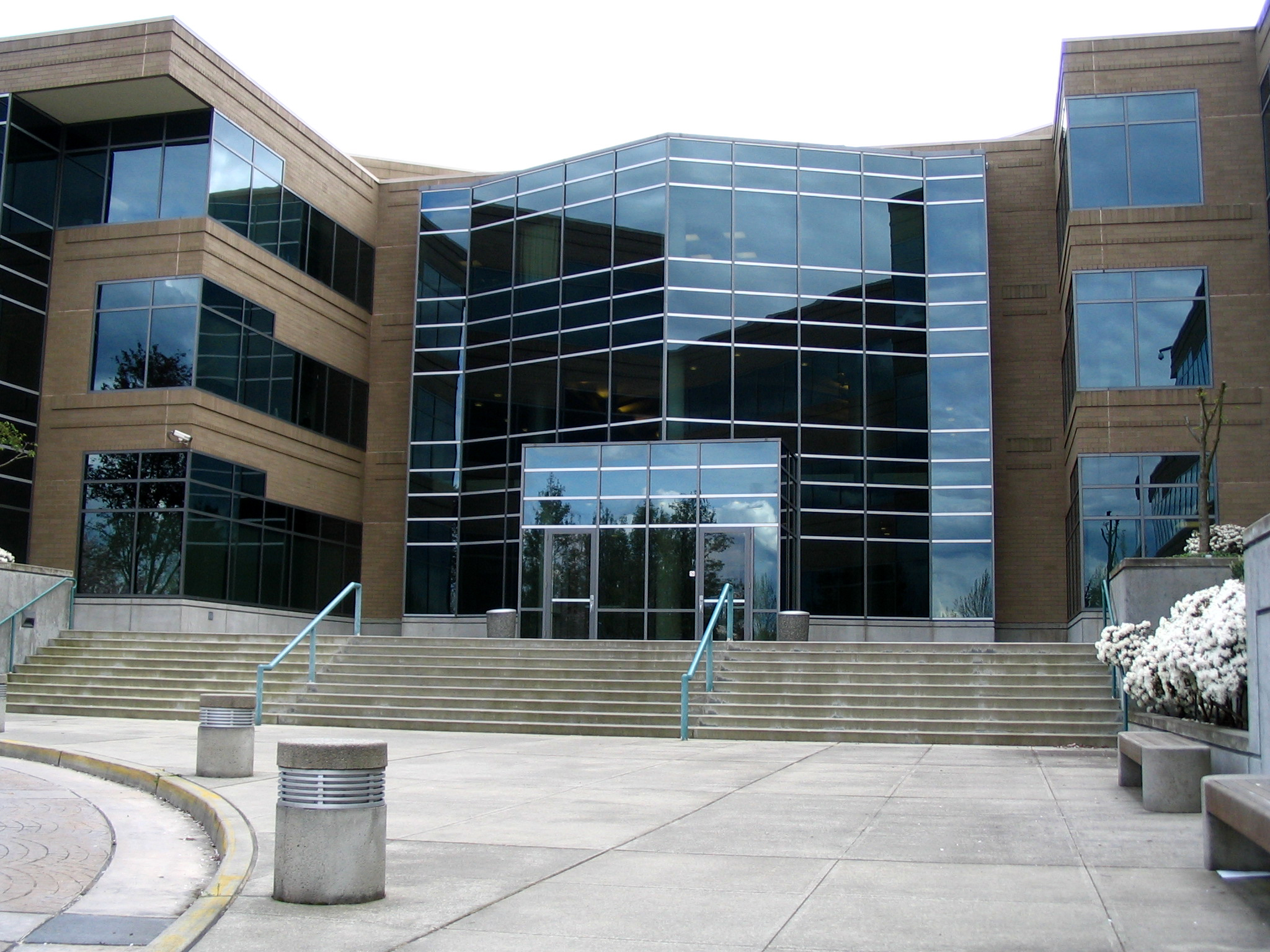
Photo: Dicklyon / Wikimedia Commons / CC BY-SA 4.0. Archival: 5 October 2017. · Illustrative image.
Amazon’s latest challenge to Nvidia is about making different chips easier to use. That could matter to pricing long before it changes who leads the AI hardware market.
The most consequential competition in AI does not always arrive as a faster processor. Sometimes it arrives as software that makes an alternative processor less troublesome to adopt.
That is the investment question raised by TorchNeuron, a new native PyTorch backend for AWS Trainium. The PyTorch announcement dates the public beta to 20 October 2026. It is a concrete development for investors following Nvidia, although it is not evidence of lost Nvidia orders.
What has Amazon introduced?
TorchNeuron connects Trainium to PyTorch’s hardware-extension interfaces, aiming to let developers retain familiar model code, libraries and workflows. The announcement describes support for eager execution, compilation and distributed operations.
There are limitations. The first release does not support every PyTorch feature; its documented exclusions include dynamic and symbolic shapes and some sparse operations. Testing also distinguishes supported operations from those falling back to a CPU. Compatibility claims therefore need to be assessed against the particular workload.
Source: the PyTorch launch documentation. These are developer-reported capabilities, not Compound’s independent benchmark results.
Why this matters to Nvidia’s software advantage
A chip competes as part of a working system. Customers must consider debugging, staff familiarity, software maintenance, networking and the cost of moving an application into production.
Even a cheaper accelerator may be unattractive if migration absorbs months of engineering time or introduces operational uncertainty. Conversely, reducing that friction can make an alternative commercially viable without requiring it to win every performance comparison.
The inference for Nvidia is that software portability can increase a customer’s bargaining power. An alternative that works well for a narrow, expensive workload can matter even if the customer continues using Nvidia elsewhere.
Compatibility is only the first test
| Question | Evidence investors should seek |
|---|---|
| Does the model run correctly? | Reproducible outputs and supported operations |
| Does it run economically? | Total cost at comparable model quality and throughput |
| Does it scale? | Multi-chip utilisation and communication performance |
| Can customers operate it reliably? | Debugging, recovery and production deployment evidence |
A demonstration is not the same as a sustained production deployment. Nor is the price of one accelerator equivalent to the total cost of training or serving a model. The useful comparison includes engineering time, capacity availability, power and the amount of useful work completed.
The implications for NVDA investors
The bullish interpretation is that better alternatives expand the overall AI market. More affordable workloads could create additional demand for computing, including Nvidia systems. The cautious interpretation is that large customers become better able to divide workloads among suppliers and resist premium pricing.
Both can happen together. Industry demand can grow while the share of value captured by a particular supplier changes. That is why our Nvidia stock guide separates market growth from margins and valuation.
For now, the important development is a lower potential barrier to trying Trainium. A conclusion about Nvidia’s revenue would require customer adoption and financial evidence that this release does not provide.
Watch for independently reproducible workload comparisons, repeat production use and evidence of actual spending shifts. The question is whether customers gain a credible alternative—not whether a launch announcement alone ends Nvidia’s advantage.
Editorial analysis. Sources checked on 21 October 2026.
Photograph: Nvidia campus seen from the air, 5 October 2017 (archival). Dicklyon, via Wikimedia Commons, CC BY-SA 4.0. Resized and cropped for cover and social formats; image adaptations retain the source licence.