Neuralink's LINK Pivotal Trial: FDA Approval Opens the Road to Market, Not the Market Itself
Neuralink says the FDA has approved its LINK pivotal study in people with ALS. We explain what a pivotal trial does, what the clinical registry shows, and what must still happen before any brain implant revenue.
 Wealth / The Compound journal
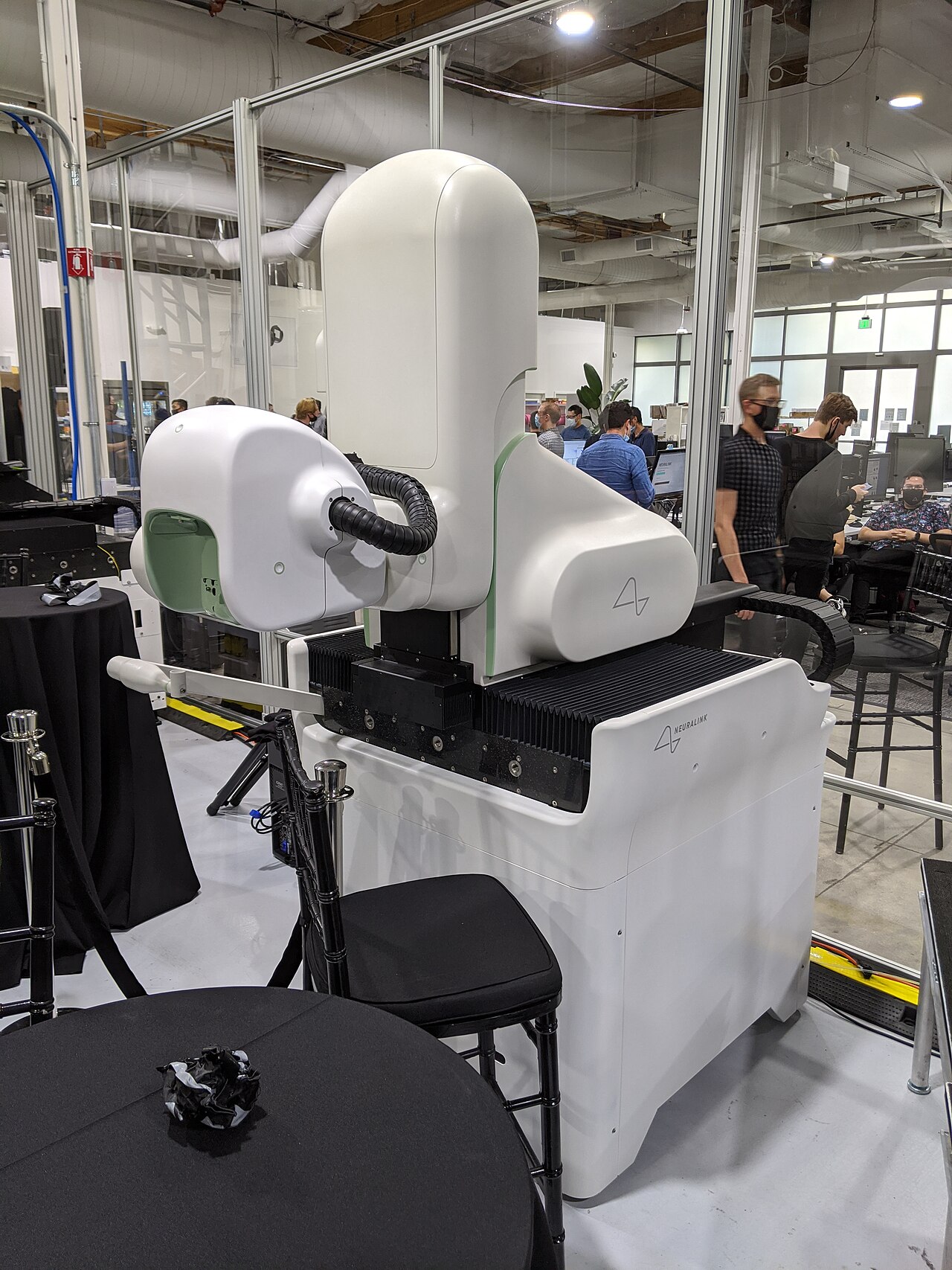
Photo: Leijurv via Wikimedia Commons, CC BY-SA 4.0 (https://creativecommons.org/licenses/by-sa/4.0/), 28 August 2020; resized/cropped. · Illustrative image.
For a medical-device company, the most valuable approvals often arrive in stages. Neuralink has just cleared one of the most important: permission to run the kind of study that could eventually support an application to sell its brain implant.
On 25 November, Neuralink said the US Food and Drug Administration had approved the launch of its LINK Pivotal Study, which it describes as the first pivotal trial for an implantable brain-computer interface (BCI) in the United States. The study will evaluate the safety and effectiveness of the Neuralink system in people with severe paralysis due to amyotrophic lateral sclerosis (ALS). Enrolment is open.
That is a genuine milestone. It is also easy to overread. Approval to start a pivotal trial is not approval to sell the device, and it tells investors little yet about when, or at what price, revenue could arrive.
What Neuralink announced
The company’s update makes four specific claims:
- The FDA approved the launch of the LINK Pivotal Study.
- It will assess participants’ ability to control digital devices “through thought”, with a focus on functional outcomes that improve independence in daily life.
- It will continue to assess long-term safety and reliability across multiple clinical sites.
- It builds on early feasibility studies in the United States, Canada and the United Kingdom, where “over 30 implanted participants” have contributed thousands of hours of real-world use.
The “first pivotal trial” description is Neuralink’s own. The announcement does not give the planned number of participants, the primary endpoint, the follow-up period or the number of sites. At the time of writing, a search of ClinicalTrials.gov did not return a LINK registry entry, so those design details could not be checked independently.
Feasibility versus pivotal: why the label matters
Medical-device development in the US usually moves from small early feasibility studies, which test whether a device can work safely in a handful of people, to a larger pivotal study designed to generate the main evidence for a marketing application. A pivotal study has pre-specified endpoints agreed with the regulator. If it meets them and the safety record holds, the company can apply for marketing authorisation. The FDA then reviews the application, which takes additional time.
In short, Neuralink has moved from “can this work?” to “can we prove it works well enough to sell?” It has not yet reached “may we sell it?”.
What the registry shows
ClinicalTrials.gov gives a useful cross-check on the company’s trial programme. Searching for studies sponsored by Neuralink Corp returns seven entries with estimated enrolment targets:
| Study | Status (registry) | Estimated enrolment |
|---|---|---|
| PRIME (NCT06429735), US | Active, not recruiting | 15 |
| CAN-PRIME (NCT06700304), Canada | Recruiting | 6 |
| GB-PRIME (NCT07127172), UK | Recruiting | 7 |
| UAE-PRIME (NCT06992596) | Recruiting | 10 |
| VOICE (NCT07224256), speech | Recruiting | 6 |
| CONVOY (NCT06710626), assistive devices | Enrolling by invitation | 3 |
| NCT07929792, feasibility | Recruiting | 10 |
Source: ClinicalTrials.gov, retrieved 27 November 2026. Enrolment figures are estimates set by the sponsor, not completed implants.
Those targets add up to 57 participants, against the company’s statement that more than 30 have been implanted. Some participants may take part in more than one study, so the figures should not be compared too precisely. The broad picture is of a programme still made up of small feasibility cohorts.
The US PRIME study is the clearest data point. Its registry record, last updated on 24 November, lists it as active but no longer recruiting, with an estimated primary completion date of September 2027. Dataconomy reported that the previous estimate was June 2026, and that Neuralink has shifted US recruitment to LINK. PRIME covers adults aged 22 to 75 at two sites: Barrow Neurological Institute in Phoenix and the University of Miami.
The commercial question is time
Neuralink is privately held. It does not publish audited accounts, and no product revenue, pricing or launch date has been disclosed. Any valuation narrative built on this announcement should be treated cautiously.
The main thing a pivotal approval changes is the timetable. As a purely hypothetical illustration, not Neuralink’s design: if a pivotal study took 12 months to enrol and then followed each participant for 12 months, the last primary data would arrive about two years after the first patient was enrolled. A marketing application and FDA review would come after that. Faster enrolment shortens the clock; a safety signal or a slow site lengthens it.
After any approval, three further hurdles decide whether a medical device becomes a business:
- Reimbursement. An implant that requires neurosurgery needs payers, including Medicare in the US, to agree to cover the device, the procedure and ongoing support.
- Surgical capacity. Neuralink uses a robot to insert its electrode threads. Each new hospital needs trained teams and equipment.
- Durability. Buyers and payers will want evidence that the implant keeps working for years, not months. Neuralink says LINK will continue to assess long-term reliability.
The ALS focus is significant here. It is a severe condition with high unmet need, which can support a strong case for access. It is also a smaller and more fragile patient group than spinal cord injury, which shapes both enrolment speed and the eventual market.
Competitive context
Neuralink is not alone. Dataconomy, citing Chinese sources, reported that China’s regulator approved a different implantable BCI, NEO, for commercial use in March 2026. Other US companies are running their own studies. A US pivotal trial is still a meaningful lead in the world’s largest medical-device market, but it does not make Neuralink the only route to an approved product.
What to watch
The next useful disclosures are a ClinicalTrials.gov entry for LINK with its endpoints and enrolment target, the number of active sites, first-implant timing in the pivotal cohort, and any long-term safety data from the feasibility studies. Those will say far more about the commercial timetable than the approval headline.
Follow the Neuralink company research profile for verified developments.
Compound Research; research checked 27 November 2026. Trial information is from Neuralink’s announcement and ClinicalTrials.gov. The enrolment timeline is a hypothetical illustration, not a company disclosure. Neuralink is privately held; no valuation, revenue or launch date is implied. This is not medical advice.
Source record
- https://neuralink.com/updates/neuralink-receives-fda-approval-to-launch-link-pivotal-study/
- https://clinicaltrials.gov/study/NCT06429735
- https://clinicaltrials.gov/search?spons=Neuralink%20Corp
- https://dataconomy.com/2026/11/26/neuralink-wins-fda-approval-for-pivotal-brain-implant-trial/