McDonald’s Profit Grew While US Guest Counts Fell. How Much Protection Does Franchising Provide?
McDonald’s US guest counts declined, but franchise margins and international growth lifted profit. The investment question is how far the model can cushion soft traffic.
 Wealth / The Compound journal
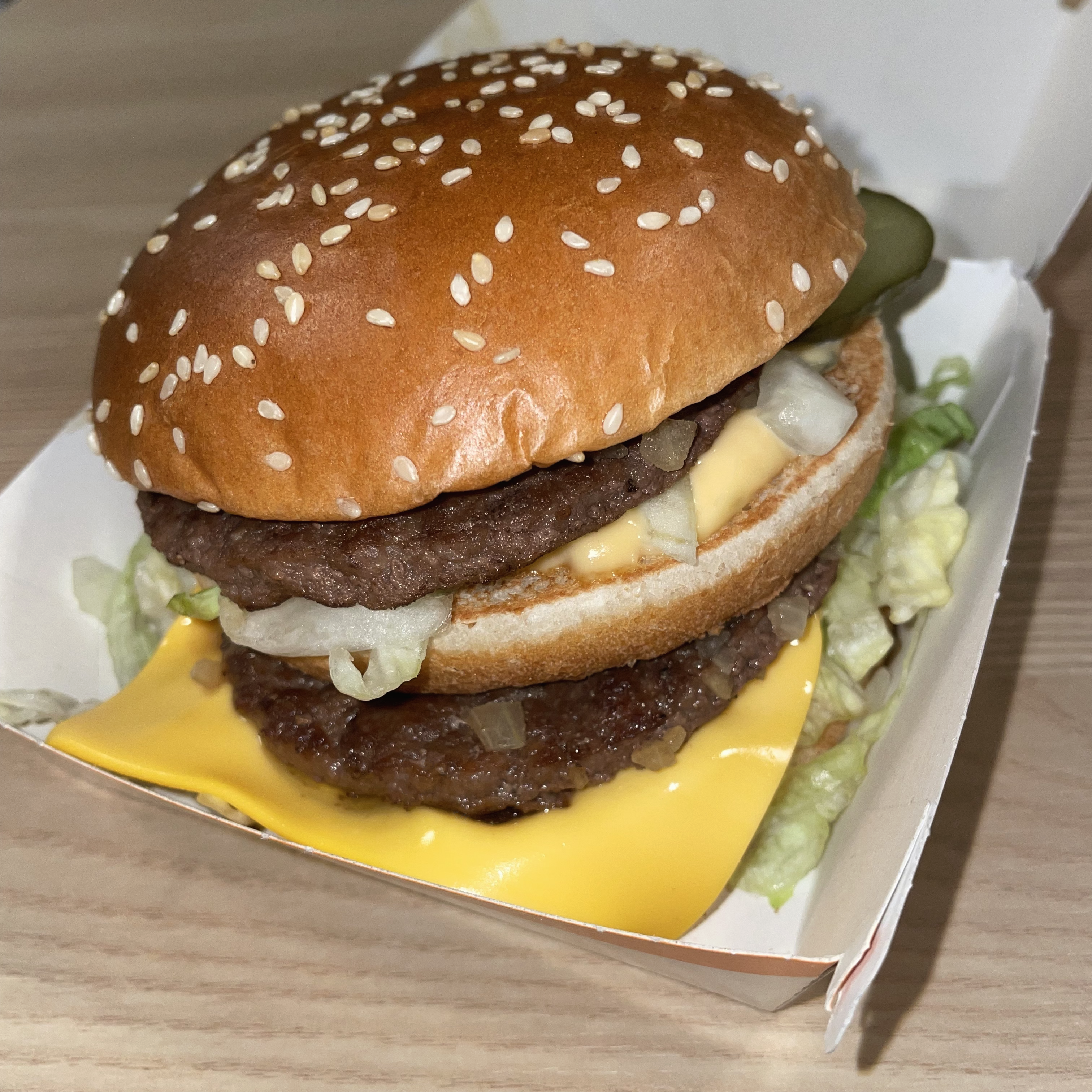
Photo: Filippos Fragkogiannis / Wikimedia Commons, CC BY-SA 4.0. Archival photograph taken 11 May 2025; cropped for publication. · Illustrative image.
McDonald’s produced higher profit in a quarter when fewer customers visited its US restaurants. That is a demonstration of resilience, not proof that demand is healthy.
For the third quarter of 2026, US comparable sales fell 0.2%. Management said negative guest counts were largely offset by a higher average cheque. Globally, comparable sales increased 1.5% and systemwide sales rose 4%.
The distinction between sales and traffic matters. A restaurant can lift the average transaction through pricing or mix while serving fewer people. That can support profit for a time, but it is a weaker foundation than broad-based growth in visits.
For the maintained financial record, see McDonald’s stock profile. This analysis asks how much protection the franchise model provides while the company works to restore value and traffic.
The US demand signal remains weak
The US is McDonald’s largest profit market. A slight comparable-sales decline may not look dramatic, but the underlying composition is important: average cheque rose while guest counts fell.
Pricing can offset wage and food inflation. It can also erode the value perception that draws customers to a mass-market restaurant. McDonald’s has been using value offers and loyalty tools to strengthen that proposition, but one quarter does not establish that traffic has recovered.
Loyalty-member sales exceeded $11 billion during the quarter and $41 billion over the trailing 12 months across 70 markets. Those figures show reach, not incremental sales. They do not tell investors how much members would have spent without the programme or what incentives were required.
International markets provided more support. Comparable sales rose 1.4% in International Operated Markets and 4.2% in International Developmental Licensed Markets. That diversification helped global systemwide sales grow despite the soft US result.
Franchising cushions the income statement
McDonald’s generated $7.157 billion of revenue, up 1%, while operating income increased 7% to $3.595 billion. Net income rose 9% to $2.486 billion, and diluted earnings per share increased 10% to $3.51.
The supplemental information shows why profit held up better than traffic. Franchised restaurant margins were $3.800 billion, up 3%, while company-operated restaurant margins were essentially flat at $392 million.
Franchised restaurants supplied approximately 91% of total restaurant margin dollars, calculated from those two reported figures. Franchisees pay rent and royalties, giving McDonald’s a stream of revenue that requires less direct restaurant labour and food expenditure than company-operated sales.
That model transfers some day-to-day cost and volume risk to franchisees. It does not make weak customer economics disappear. If traffic pressure persists, franchisees still have to absorb labour, occupancy and food costs while funding remodels and promotions. Their financial health ultimately affects openings, investment and royalty growth.
The US split illustrates the point. US franchised margin increased 2% to $1.619 billion, while US company-operated margin fell 16% to $75 million. McDonald’s attributed pressure at company-operated restaurants to continuing inflationary costs.
Franchising protected consolidated profit from more of that pressure. Investors should not confuse that protection with a full solution to the customer problem.
Expansion is doing more of the growth work
McDonald’s expects about $3.7 billion of capital expenditure in 2026, primarily for new restaurant development. The plan is for roughly 2,500 gross openings during the year, with about 2,100 net additions after closures.
Approximately 700 gross openings are expected in the US and International Operated Markets. Developmental licensees and affiliates are expected to open about 1,800, using their own capital. The longer-term target is 50,000 restaurants globally by the end of 2028.
New units can expand systemwide sales even when existing restaurants are growing slowly. That is valuable, but it creates a second investment test: whether new restaurants earn attractive returns without drawing too much demand from existing locations.
The franchise structure again changes who writes the cheque. Licensees fund much of the development, while McDonald’s invests in openings and property across its operated markets. Investors need both net unit growth and evidence that average restaurant economics remain sound.
Cash returns cannot replace traffic indefinitely
McDonald’s repurchased $519 million of shares in Q3 and $1.8 billion over the first nine months. It also paid about $1.3 billion of quarterly dividends and raised the quarterly dividend 4% to $1.93 a share.
Those distributions can enhance per-share outcomes, but they are downstream of restaurant demand. The results release maintained an expectation for full-year free-cash-flow conversion of roughly 90%, using the company’s non-GAAP definition.
Buybacks deserve to be assessed alongside debt, interest costs and the price paid for shares. A lower share count can make earnings per share grow faster than net income; it cannot create customer visits.
What would confirm the thesis?
The strongest confirmation would be US guest counts returning to growth while franchisee cash economics remain healthy. International comparable sales and net openings would continue contributing without masking deterioration in mature restaurants.
The counter-case is that value interventions require heavier discounts, average cheque growth fades and franchisees shoulder rising costs. Company-operated margin pressure could then be an early signal rather than an isolated weakness.
McDonald’s franchise model has again shown why it is financially resilient. The business still needs customers to choose its restaurants more often. The next proof point is traffic, not another quarter in which pricing compensates for fewer visits.
Explore Compound’s earnings hub and our guide to investment diversification.
Reported figures are in US dollars and relate to Q3 2026 unless stated otherwise. Facts come from McDonald’s results release and supplemental information; calculations and interpretation are Compound’s. General information, not personal investment advice.
Cover: Filippos Fragkogiannis, Wikimedia Commons, under CC BY-SA 4.0. Archival photograph taken 11 May 2025; cropped for publication and not presented as an image from the current reporting period.