CVS Plans to Split in Two. Do the Segment Economics Support the Separation?
CVS intends to separate its insurance and health-services businesses from retail pharmacy. The investment question is whether cleaner structures can improve two very different economic profiles.
 Wealth / The Compound journal
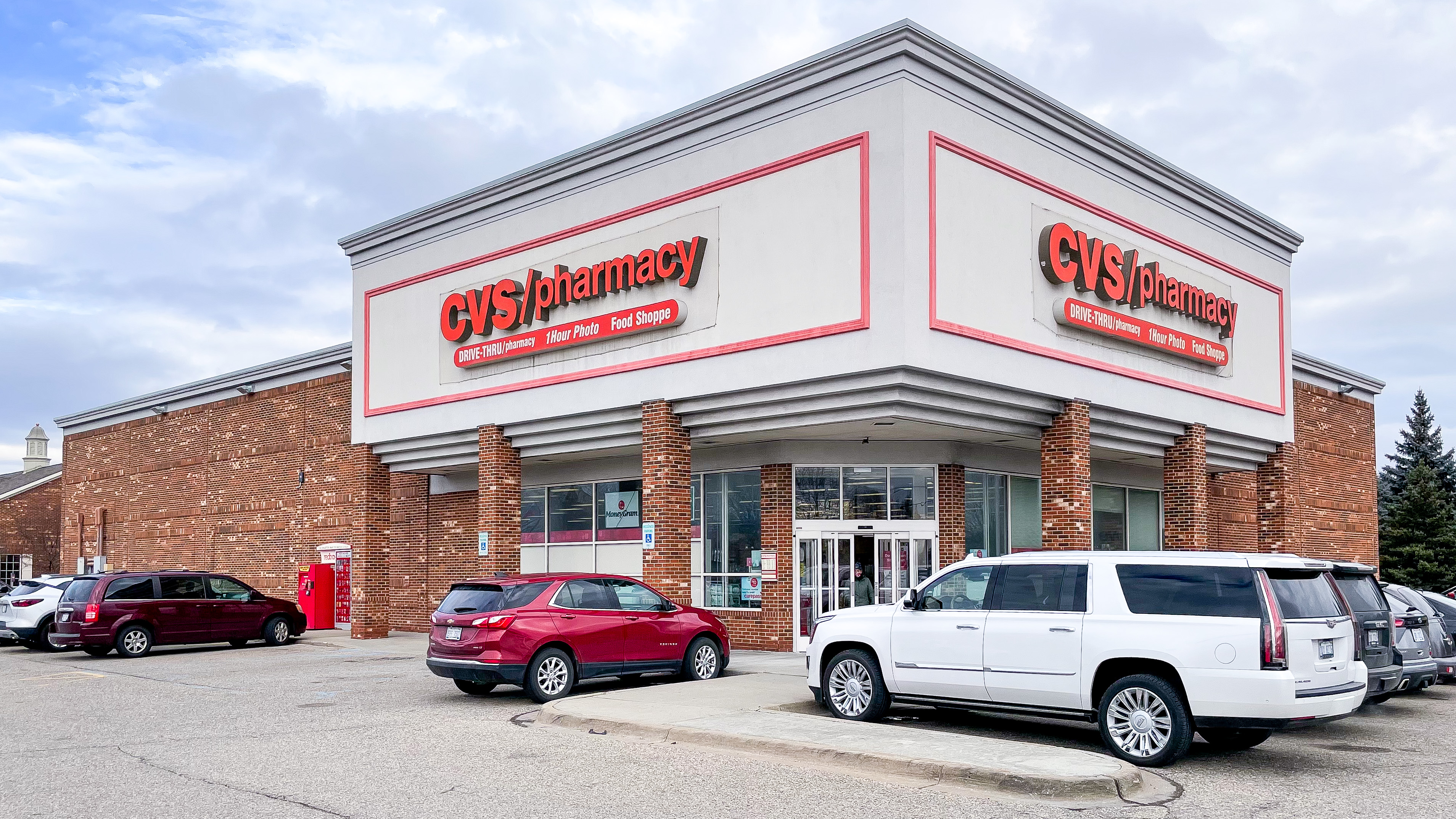
Photo: ajay_suresh / Wikimedia Commons, CC BY 2.0. Archival photograph taken 24 December 2020; cropped for publication. · Illustrative image.
CVS Health plans to reverse part of the integration strategy that created today’s group. A cleaner structure may help investors see the businesses more clearly; it cannot by itself improve their economics.
On 4 November 2026, CVS announced its intention to separate into two publicly traded companies during the first half of 2028. One would combine Aetna insurance, Caremark pharmacy benefits, CVS Specialty, Oak Street Health and Signify Health. The other would contain retail and mail-order pharmacy, MinuteClinic, virtual care and Health100.
The proposed transaction remains subject to conditions, and names are interim. It is therefore an intention, not a completed separation. Important questions—including final debt allocation, standalone costs and detailed capital structures—remain unanswered.
For the maintained financial record, see CVS Health’s stock profile. This analysis asks whether the reported segment economics support the case for two independent companies.
Insurance recovery drove the improvement
CVS reported third-quarter revenue of $108.399 billion, up 5.4%. Adjusted operating income, a non-GAAP measure, increased 21.2% to $4.194 billion.
The largest improvement came from Health Care Benefits, which includes Aetna. Revenue rose 2.4% to $36.855 billion, while adjusted operating income increased to $912 million from $314 million.
The segment’s medical benefit ratio improved to 91.3% from 92.8%. This ratio compares benefit costs with premium revenue: lower is generally better, although the causes and sustainability matter. Membership fell to 26.1 million from 26.7 million.
For the first nine months, Health Care Benefits adjusted operating income reached $6.379 billion, up from $3.615 billion. The 10-Q also reports $1.3 billion of favourable prior-period development during that period. That benefit relates to revisions of earlier estimates, so investors should not assume it recurs at the same level.
The insurer’s recovery is meaningful. It also shows why the future healthcare-solutions company will remain exposed to medical-cost forecasting and pricing discipline. A separation does not remove that volatility.
Services grew faster than profit
Health Services, which includes Caremark and specialty pharmacy, increased revenue 9.5% to $53.964 billion. Adjusted operating income rose only 2.7% to $2.106 billion.
Using the company’s reported figures, the calculated adjusted operating margin declined to about 3.9% from 4.2%. Claims processed increased 1.3% to 481.7 million.
That gap between sales and profit matters for the proposed healthcare-solutions company. Large revenue can reflect the cost of medicines passing through the system. Economic quality depends on retention, pricing, mix and the value produced per claim, not revenue size alone.
Combining insurance and pharmacy benefits may still have operational advantages. CVS can coordinate pharmacy, medical and care-delivery information. The investment question is whether those advantages produce better health outcomes and durable profit without creating regulatory or customer conflicts.
Retail shows the opposite pattern
Pharmacy & Consumer Wellness revenue fell 2.0% to $35.498 billion, while adjusted operating income increased 10.6% to $1.635 billion. Prescriptions filled rose 1.9% to 470.0 million.
CVS attributed revenue pressure partly to drug-price reductions, generic introductions and pharmacy reimbursement. Profit benefited from core pharmacy performance and acquired Rite Aid assets.
The calculated segment margin improved to approximately 4.6% from 4.1%. Again, that is Compound’s calculation using reported adjusted operating income and revenue.
This is a different economic profile from insurance. The future retail company would depend on prescription relationships, reimbursement, store productivity and consumer health services. Separation may give management a clearer capital-allocation mandate, but it could also leave a narrower business carrying standalone corporate costs.
Cash and debt allocation will shape both companies
CVS generated $15.318 billion of operating cash flow during the first nine months, more than double the prior-year period. It spent $2.357 billion on property and equipment, repaid $4.057 billion of long-term debt and paid $2.578 billion of dividends.
At the end of September, CVS held $11.738 billion of cash. Long-term debt was $57.223 billion, with another $3.457 billion classified as current.
Those figures make allocation central to the separation. Insurance businesses need capital to support regulated subsidiaries and absorb claim volatility. Retail and pharmacy operations need investment in stores, technology and working capital. Loading too much debt onto either side could undermine the strategic clarity the split is meant to create.
Management raised full-year operating-cash-flow guidance to at least $15.5 billion and expects adjusted earnings per share of at least $8.20. These are forecasts, not guarantees, and the adjusted figure excludes items defined by the company.
GAAP comparisons also require care. CVS reported $3.566 billion of operating income this quarter versus a $3.207 billion loss a year earlier. The prior-year result included a $5.725 billion goodwill impairment, so the swing is not a like-for-like measure of operating recovery.
What would confirm the thesis?
The separation case would strengthen if CVS provides credible standalone financials, allocates debt conservatively and demonstrates that each business can cover its own investment needs. Insurance margins would need to hold without large reserve benefits, while Health Services turns revenue growth into profit and retail sustains improved margins.
The counter-case is that dis-synergies and duplicate costs offset the benefits of focus. Medical costs could rise again, PBM economics could remain under pressure, and the retail company could inherit a slower-growth base with a demanding balance sheet.
CVS’s segments already behave like different businesses. That supports the logic of clearer structures, but not automatically higher value. The decisive evidence will be standalone cash generation, debt capacity and the durability of each segment’s margin—not the announcement itself.
Explore Compound’s earnings hub and our guide to investment diversification.
Reported figures are in US dollars and relate to Q3 2026 unless stated otherwise. Facts come from CVS Health’s results release and Form 10-Q; calculations and interpretation are Compound’s. General information, not personal investment advice.
Cover: ajay_suresh, Wikimedia Commons, under CC BY 2.0. Archival photograph taken 24 December 2020; cropped for publication and not presented as a current operating image.