IBM Earnings: Stronger Cash Flow, but the Recovery Is Uneven
IBM Q3 2026 earnings show software growth and a higher cash-flow outlook. We examine uneven demand, margins and the tax effect on EPS.
 Wealth / The Compound journal
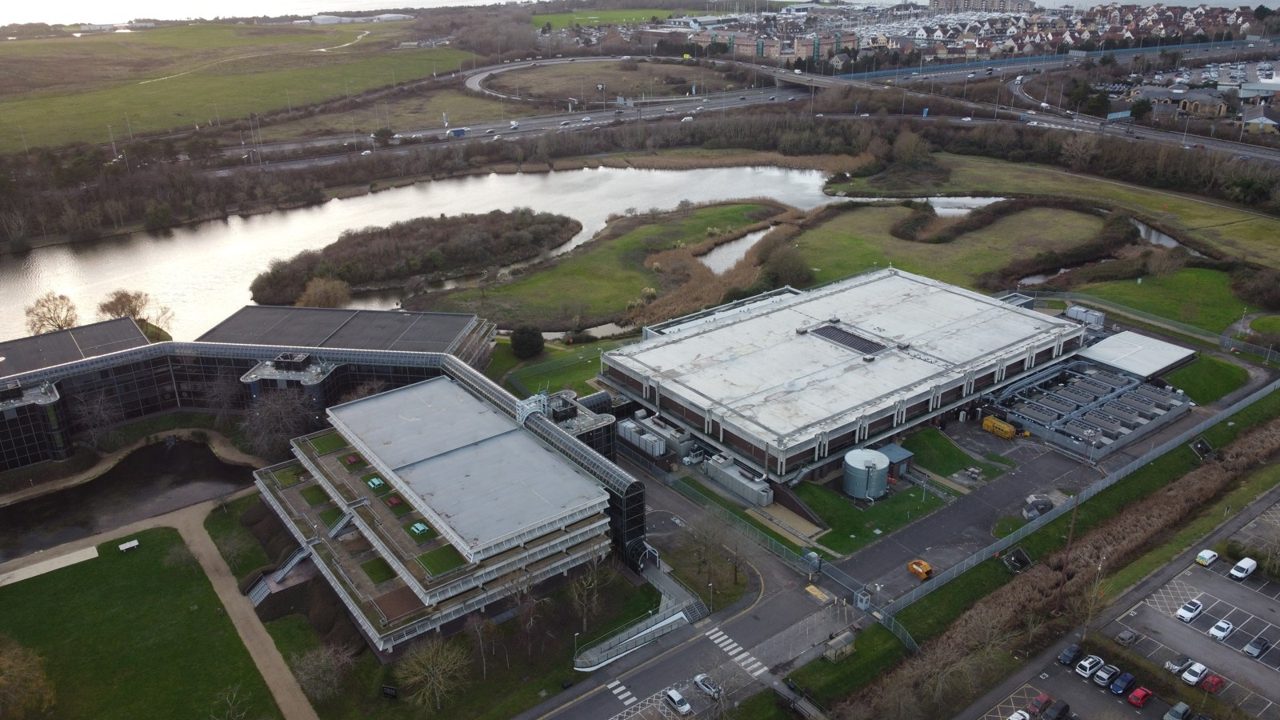
Photo: Tim Sheerman-Chase / Wikimedia Commons — CC BY 2.0; 21 December 2023 · Illustrative image.
IBM’s latest results offer a more tangible investment argument than another broad claim about AI: stronger cash generation. But the detail does not describe a uniform acceleration across the business.
The third-quarter release, published on 21 October 2026, is best read as a test of earnings quality. Investors need to distinguish operating progress from tax effects, and segment growth from the performance of the whole portfolio.
IBM earnings at a glance
| Metric | Q3 2026 |
|---|---|
| Revenue | $17.103bn; approximately +5% annually |
| GAAP diluted EPS, continuing operations | $2.31 |
| GAAP diluted EPS, total | $2.30 |
| Operating diluted EPS, non-GAAP | $2.95 |
| Operating cash flow | $4.0bn |
| Free cash flow, company non-GAAP definition | $3.0bn |
Source: IBM’s SEC 8-K, Exhibit 99.1; quarter ended 30 September 2026. US dollars.
Software is growing, but the mix matters
Software revenue rose 8%; consulting was flat. Within software, data grew 19%, Red Hat 11%, and automation fell 3%. Infrastructure grew 4%, despite IBM Z falling 20%.
The significance is not that every product must grow every quarter. Different businesses have different sales cycles, and a portfolio can absorb weakness in one area. The question is whether the stronger activities are large and durable enough to support overall growth.
Investors should also avoid equating a product category with a pure measure of AI revenue. Enterprise customers purchase overlapping capabilities. Broad segment results cannot cleanly isolate the incremental return from any one technology.
Why the EPS increase needs a second look
Continuing-operations pretax profit rose about 3%, while its effective tax rate fell from 28.2% to 11.9%. GAAP gross margin declined from 57.3% to 56.8%.
A lower tax rate can improve earnings per share without an equivalent acceleration in operating performance. It is still part of the shareholder result, but forecasting future earnings requires a view on whether the tax outcome will persist.
For that reason, an analyst should start with revenue, operating economics and pretax profit, then examine the tax bridge. Reading only the final EPS growth rate risks attributing too much improvement to the underlying business.
The cash outlook is the stronger signal
IBM maintained full-year constant-currency revenue growth guidance of 4–5% and raised its free-cash-flow outlook to growth of more than $1bn annually. Nine-month acquisition spending was $11.4bn; debt, including financing debt, was $63.8bn.
Free cash flow is useful because it helps assess resources available for capital allocation. However, the company’s definition must be understood, and acquisitions remain a real use of capital even when excluded from a headline cash measure.
Dividend capacity and acquisition returns therefore belong in the same discussion. A reliable distribution is valuable, but the long-term investment case also depends on whether retained and borrowed capital earns sufficient returns.
What investors should watch next
The most convincing follow-through would combine sustained software demand, firmer consulting activity and cash conversion that supports the company’s commitments. A single quarter cannot establish that pattern.
Read the IBM stock page for the interactive chart and continuing research. Compare businesses on consistent accounting definitions before treating their cash yields or adjusted earnings as directly interchangeable.
IBM has offered shareholders a clearer cash-flow case. The task now is to test its durability without allowing enthusiasm for one part of the portfolio to obscure weaker economics elsewhere.
Source: SEC earnings release. Editorial analysis; reported figures and management forecasts are identified separately.
Image: IBM site in Hampshire, photographed 21 December 2023 (archival). Credit: Tim Sheerman-Chase / Wikimedia Commons — CC BY 2.0; 21 December 2023. Original; licence. Resized for publication; image adaptations retain the original licence.