Gilead Earnings: Strong HIV Sales, but Acquisitions Reshape the Profit Story
Gilead raised its sales outlook as HIV revenue grew 18%. Why product growth, reported revenue and acquisition-adjusted earnings tell different stories.
 Wealth / The Compound journal
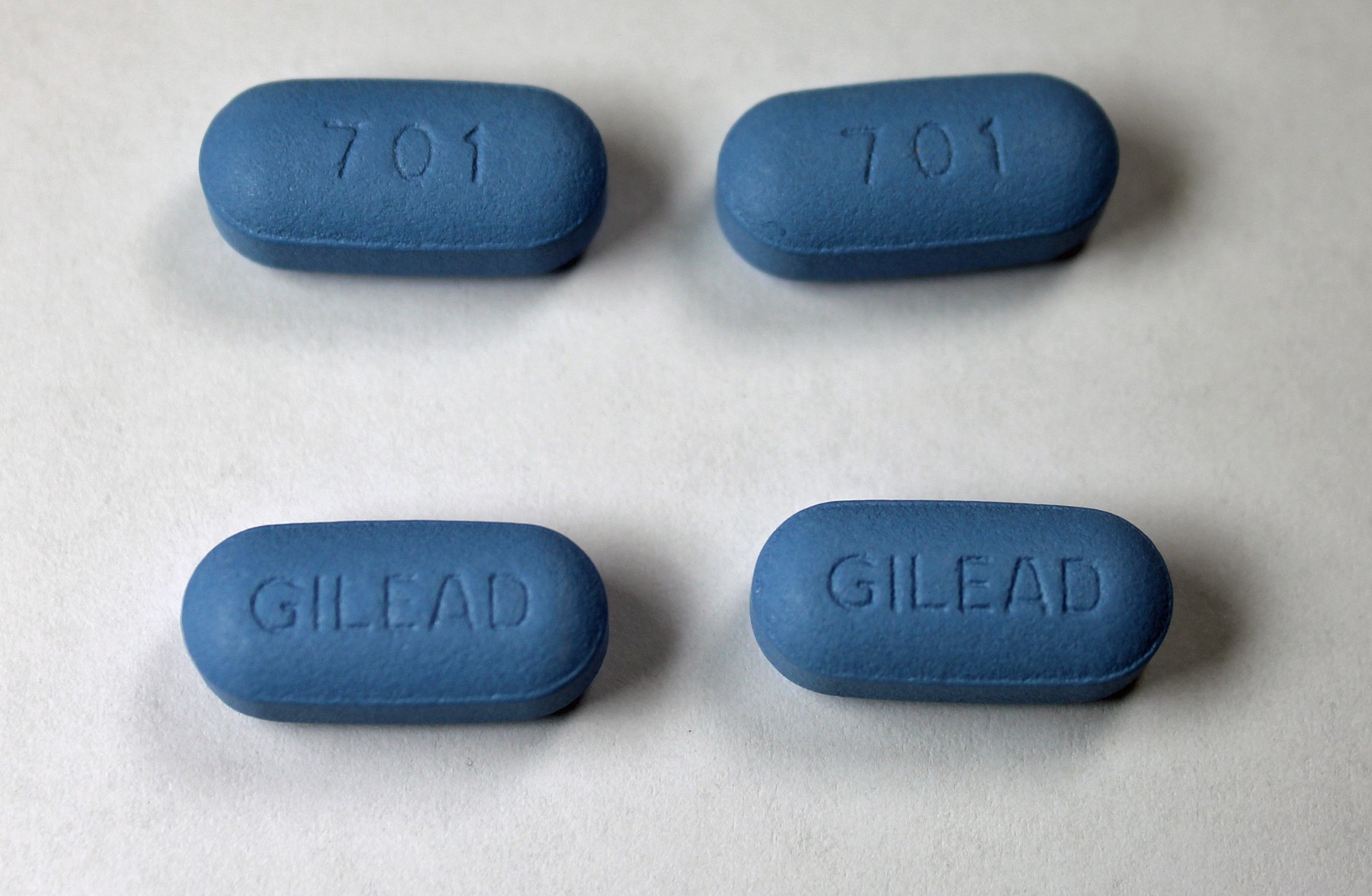
Photo: Jeffrey Beall / Wikimedia Commons (CC BY-SA 3.0; 2012-05-26) · Illustrative image.
Gilead’s latest results contain a strong medicines business and a much more complicated earnings story. The company raised its sales outlook, while acquisition-related research charges continue to weigh on the full-year profit forecast.
The distinction matters: a better commercial quarter does not erase the cost of buying tomorrow’s pipeline.
Product sales and total revenue are different numbers
The SEC-furnished Q3 release reports $8.300 billion of total revenue, compared with $7.769 billion a year earlier: growth of approximately 6.8%. Product sales rose 13% to $8.289 billion. Royalty, contract and other revenue fell from $424 million to $11 million.
Calling the entire business’s revenue growth 13% would therefore overstate the reported increase. A prior-year intellectual-property transaction did not repeat, obscuring some of the improvement in medicine sales.
The correct interpretation is neither to ignore the weaker total nor to dismiss the stronger product business. Both are real, and they measure different aspects of the comparison.
HIV remains the centre of gravity
HIV sales rose 18% to $6.2 billion, with Biktarvy up 10% to $4.1 billion. Management attributes HIV growth to pricing, prevention demand and favourable inventory movements. Those drivers should not all receive the same forecast assumption: inventory timing can reverse, while sustained patient demand is more durable.
Trodelvy sales grew 42% to $506 million, but cell-therapy sales fell 18% to $355 million. That contrast matters for the diversification thesis. Success in one oncology franchise does not establish that every part of the portfolio is performing equally well.
For investors, the useful question is whether newer products can develop into dependable earnings contributors without requiring repeated large acquisitions to sustain growth.
Adjusted earnings do not remove every deal cost
GAAP diluted EPS fell to $1.94 from $2.43; non-GAAP EPS increased to $2.55 from $2.47. The release’s reconciliation should be read before interpreting either measure as a complete account of performance.
For the full year, Gilead now expects product sales of $31.0–31.3 billion, up from $30.1–30.4 billion. However, its forecast remains a GAAP loss of $4.40–4.05 a share, and a non-GAAP loss of $1.20–0.85. Both include approximately $9.88 a share from acquired research-and-development charges associated with announced transactions, net of the specified collaboration and tax effects.
That is a useful reminder that “adjusted” does not mean “excluding every economically significant charge”. Investors need the company’s actual definition, not an assumption about what the label usually means.
The return on the pipeline is the longer-term test
Buying research assets exchanges cash today for uncertain future medicines. An accounting charge can arrive long before a commercial return, so a loss alone does not prove that the investment was poor. Equally, describing the charge as unusual does not make the acquisition free.
The evidence to follow is clinical progress, launch execution and eventual cash returns, alongside the durability of the existing HIV franchise. Tonight’s results strengthen the commercial-growth case. They leave the acquisition-return question to be answered over a longer period.
The Gilead earnings page carries the continuous quarterly financial record. See all recent earnings for related coverage.
Source: Gilead’s SEC-furnished release for the quarter ended 30 September 2026. Growth calculations are Compound’s. This is company analysis, not medical advice or a personal investment recommendation.
Cover: Jeffrey Beall, Wikimedia Commons, CC BY-SA 3.0. Photographed 2012-05-26; archival. Resized for display; display cropping may apply. This image and its resized version remain available under the same licence. Archival Truvada tablets photographed in 2012; an earlier Gilead HIV medicine, not Biktarvy or Yeztugo.