Microsoft's Layoff Wave: What the 60,000-Employee Exit Offer Really Means
Microsoft is offering voluntary exits to about 60,000 eligible employees. That is not 60,000 confirmed layoffs. We examine the cuts, AI investment and implications for Ireland.
 News / Wealth
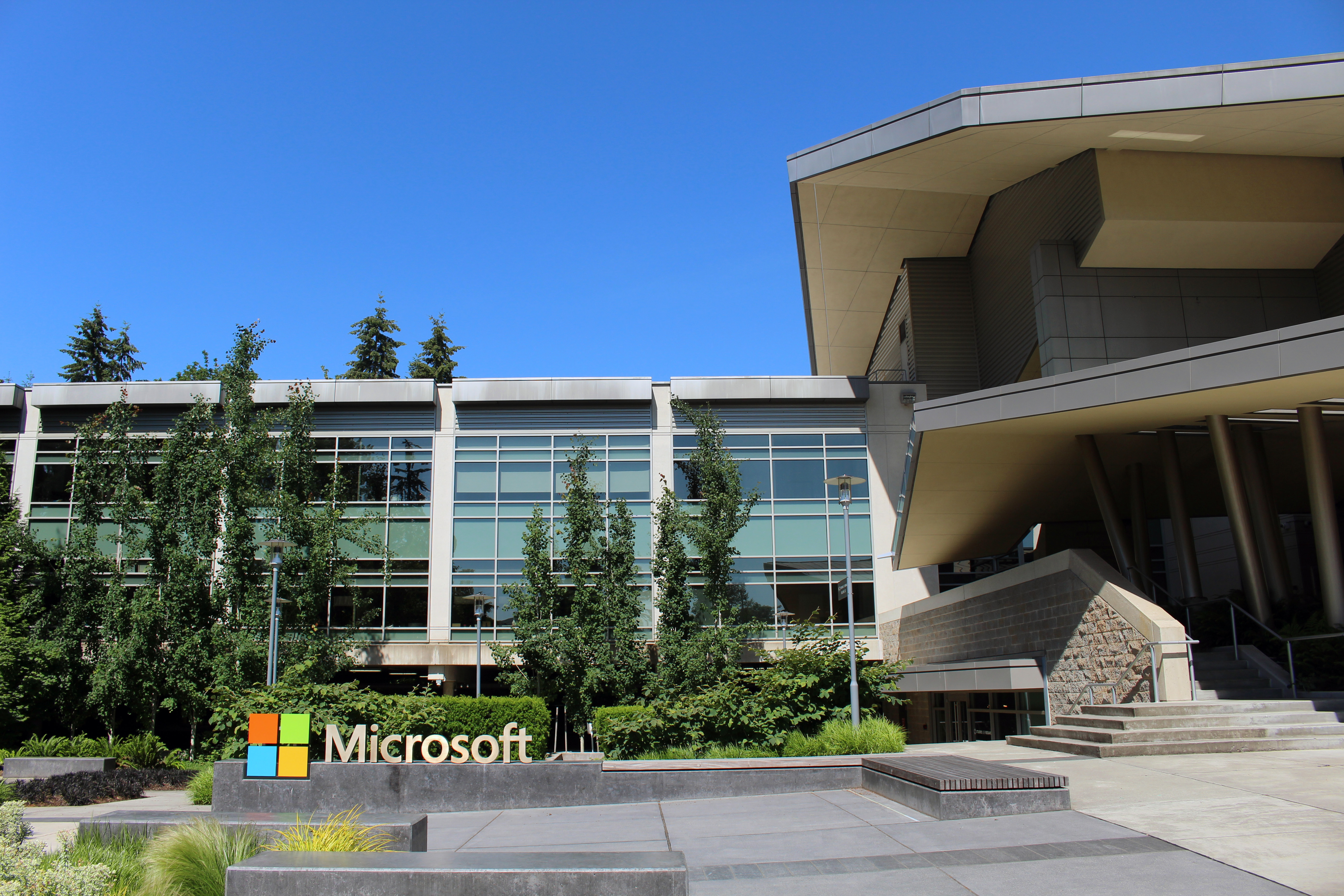
Photo: Coolcaesar / Wikimedia Commons, CC BY-SA 4.0. Archival photograph: 30 May 2016. Resized and cropped; image derivatives under the same licence. · Illustrative image.
29 October 2026 · Compound analysis. Cover: Microsoft Building 92 in Redmond, photographed on 30 May 2016 by Coolcaesar. Wikimedia Commons, CC BY-SA 4.0. Archival photograph; resized and cropped for display, with image derivatives under the same licence.
Microsoft’s workforce restructuring is continuing, but the biggest number in this week’s headlines needs careful reading: about 60,000 employees are eligible for a voluntary exit offer. Microsoft has not announced that 60,000 people are being laid off.
The distinction matters for employees trying to understand their position and investors trying to estimate costs. Eligibility is not take-up, and neither is a confirmed reduction in headcount.
The new offer follows earlier job cuts. Yet Microsoft is also reporting strong growth. The question is what the company wants its workforce to look like as its business changes—and what it risks losing in the process.
What Microsoft has actually announced
In an official memo published on 26 October, chief people officer Amy Coleman introduced a time-limited Voluntary Exit Offer for eligible employees in participating teams.
| Question | Confirmed position |
|---|---|
| Which countries are named? | Canada, India, the United Kingdom and the United States |
| Which employee levels? | Level 70 and below |
| Is every team included? | No. Participation differs by organisation |
| Is participation compulsory? | No. This is a voluntary programme |
| What support is offered? | Financial support and career-planning resources; individual details are provided to eligible employees |
Microsoft describes the programme as a way to adapt to changing workforce needs. Its public memo does not put a number on expected departures.
The company separately confirmed to GeekWire that roughly 60,000 employees are eligible. GeekWire reported a workforce of 223,000 at the end of June. The eligible group is therefore approximately 27% of that earlier workforce, not a forecast that Microsoft will shrink by 27%.
How this fits into the earlier layoffs
GeekWire reports that Microsoft cut 4,800 jobs in July, followed by hundreds more in September. It also reports that more than 15,000 positions were cut in 2025.
Those are different events from this week’s exit offer. Adding 60,000 eligible employees to earlier layoff totals would materially overstate confirmed job losses.
Microsoft told GeekWire it expects a lower acceptance rate than its earlier retirement programme, and that voluntary exits do not replace the possibility of layoffs. The eventual outcome remains uncertain.
A profitable company can still cut jobs
Microsoft’s results published on 28 October show why these announcements cannot simply be read as evidence that the whole business is struggling.
For fiscal Q1 2027, the three months ended 30 September 2026, revenue reached $92.3 billion, up 19% year on year. Operating income rose 21% to $45.9 billion, while Azure revenue increased 48%.
The picture was uneven: Xbox content and services revenue fell 2%, and Windows OEM and Devices revenue fell 22%.
These are company-reported figures. They provide context for the restructuring; they do not prove that any particular role was unnecessary, or that the latest exit offer caused the quarter’s performance. The offer was announced after the quarter ended.
For the broader business, see our Microsoft stock guide and Microsoft stock page.
Is AI replacing these employees?
The available evidence does not establish a one-for-one replacement of departing staff by AI.
Reuters places the offer in the context of cost control and substantial AI investment. Its reporting identifies participating areas including Copilot, Xbox, Windows and finance, while noting exclusions elsewhere.
Compound’s interpretation is that this is a workforce-allocation story as well as a cost story. A business can expand infrastructure, recruit for selected skills and reduce other roles at the same time. None of those actions alone tells us how much productivity AI has delivered.
To demonstrate that case, Microsoft would need evidence about output, service quality and costs over time. A smaller payroll is not, by itself, proof of better execution.
Our separate analysis of Microsoft’s AI spending and cash flow examines the investment question in more detail.
What investors should watch
The useful calculation starts with actual departures, not the number receiving an offer. Until take-up and package costs are known, precise savings estimates would be speculative.
There are four questions worth tracking:
- How much does the programme cost upfront? Exit payments can arrive before recurring savings.
- How much payroll expense actually disappears? Replacement hiring, contractors and internal transfers can change the result.
- Does delivery improve? Lower costs are less valuable if customers face slower support, product delays or weaker reliability.
- Who chooses to leave? Voluntary schemes can lose experienced people whose knowledge is difficult to replace.
These are analytical risks, not claims that those outcomes have already occurred at Microsoft. The investment case depends on retaining the capabilities customers pay for while improving the economics of delivering them.
What does it mean for Ireland?
Ireland is not listed in Microsoft’s published country eligibility criteria. That is the strongest direct evidence available for the scope of this particular programme.
The Irish Times reported on 27 October that the Irish business would not comment on whether locally based staff could participate. There is therefore no basis here to announce an Irish layoff total or assume Irish employees qualify.
Equally, exclusion from this published list is not a guarantee against future restructuring. Employees should rely on communications specific to their role and employing entity.
Our Irish redundancy guide explains the local framework generally; it is not a statement of Microsoft’s package or anyone’s eligibility.
The test is what remains after the cuts
For workers, restructuring can mean uncertainty even when the business is profitable. For shareholders, fewer employees do not automatically make a company more valuable.
Microsoft’s task is to turn its changing mix of people, software and infrastructure into durable customer value. The next meaningful evidence will be actual take-up, disclosed costs and subsequent operating performance. An exit offer is a management decision; whether it improves the business is still to be demonstrated.