Fuel protests return ahead of Budget 2027 — and the next price shock could be bigger
More than 1,000 people attended a fuel-cost meeting in Moate as organisers warned of renewed protests. With pump prices already elevated and temporary tax cuts still supporting motorists, the next increase could hit from a higher starting point.
 News / Wealth
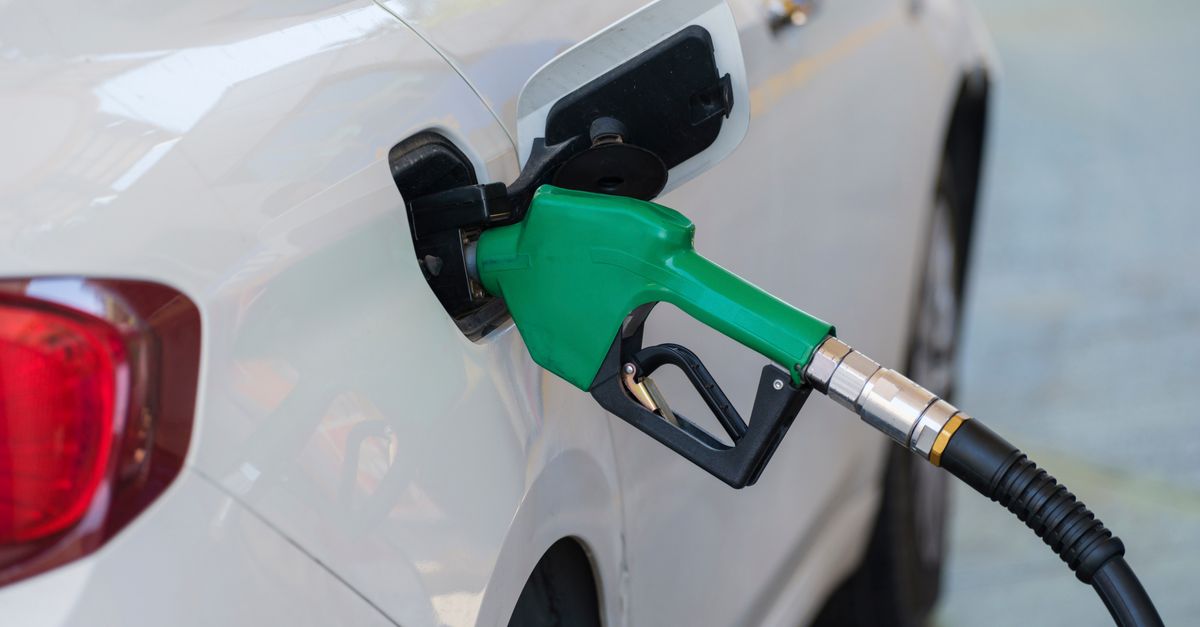
Photo: Kujtim Shabani on Pexels · Illustrative image.
News analysis · 28 September 2026. Budget 2027 has not yet been announced. The calculations below are scenarios, not forecasts of future pump prices.
Fuel-price pressure is building again in Ireland.
More than 1,000 people attended a meeting in Moate, Co Westmeath on Sunday, where organisers associated with the fuel protests earlier this year warned that further action could follow if Budget 2027 does not reduce the burden of fuel costs.
The immediate political argument is about tax.
But the more important household question is simpler:
what happens if Ireland eventually removes temporary fuel supports while petrol and diesel prices are already high?
That is the scenario that could make the next fuel-price shock more painful than the one motorists experienced earlier this year.
The outcome is not predetermined. The Government is currently considering extending the existing petrol and diesel excise reductions until late February or early March 2027.
But the underlying problem has not disappeared. The tax cuts are temporary, international fuel prices remain volatile, and every extension pushes the eventual decision further down the road.
For your own car, Compound’s Fuel Cost Calculator lets you enter annual mileage, fuel economy and pump price to see what a 10c, 20c or 30c change per litre means over a full year.
What happened at the Moate meeting?
The Irish Times reported that more than 1,000 people attended Sunday’s meeting organised by people associated with the fuel-cost protests held earlier in 2026.
Speakers called for reductions in fuel taxation and warned that further road protests could take place if prices do not fall.
The meeting included farmers, contractors, people from the fishing industry and representatives of several political parties.
That matters because the fuel issue is no longer confined to private motorists.
For a household, higher fuel prices show up directly at the pump.
For a haulier, farmer, contractor or delivery business, fuel is an operating input. Higher diesel costs can therefore feed into transport charges, business margins and, eventually, the prices of goods and services.
The April protests produced a very large tax intervention
Following the sharp rise in fuel costs earlier this year, the Government announced a major support package in April.
The temporary reductions were equivalent to approximately:
| Fuel | Temporary reduction |
|---|---|
| Petrol | 27c per litre |
| Diesel | 32c per litre |
| Marked gas oil | 7.4c per litre |
The package also included targeted supports for transport, farming and fisheries.
Those numbers are important because they show how much Government support is currently embedded in the price motorists see at the pump.
A litre of diesel today is not simply reflecting the international fuel market. It is also benefiting from a temporary tax reduction worth up to 32 cent per litre relative to the full rate.
That creates a second risk on top of the market price itself.
Why the next increase could be worse
There are two separate variables:
- the underlying market price of fuel;
- the amount of tax relief applied by Government.
Earlier this year, Government could respond to rising market prices by cutting excise.
The next difficult scenario is the opposite one: market prices remain elevated while those temporary reductions eventually have to be unwound.
That does not mean petrol will automatically rise by 27c or diesel by 32c on a particular date.
Wholesale prices can fall. Exchange rates can move. Retail margins can change. Government can extend the reductions again.
But it does mean there is a sizeable amount of temporary relief sitting underneath current pump prices.
If some or all of it disappears while the underlying fuel price remains high, motorists could be hit from a higher starting point.
What would a full reversal mean for a normal fill?
The simplest way to understand the scale is to look at a 50-litre tank.
If the full temporary reduction were eventually removed and the entire difference were reflected at the pump, the arithmetic would be:
| 50-litre fill | Approximate additional cost |
|---|---|
| Petrol at +27c/litre | €13.50 |
| Diesel at +32c/litre | €16.00 |
For a diesel driver filling a 50-litre tank three times a month, €16 per fill is €48 per month.
Over a full year, that is €576.
For petrol at the same usage level, the equivalent figure would be about €486 per year.
These are not predictions of what pump prices will do. They simply show the size of the tax support currently in the system.
Annual cost if the full reduction disappeared
| 50-litre fills per month | Petrol: +27c/litre | Diesel: +32c/litre |
|---|---|---|
| 1 | €162/year | €192/year |
| 2 | €324/year | €384/year |
| 3 | €486/year | €576/year |
| 4 | €648/year | €768/year |
Drivers doing high annual mileage can be exposed to considerably more.
Use the Fuel Cost Calculator with your own kilometres, litres per 100km and pump price rather than relying on a standard tank-size example.
Calculate your annual petrol or diesel cost →
Pump prices are already elevated despite the tax cuts
This is the part that makes the current situation unusual.
RTÉ reported on 22 September that diesel was moving above €2.10 per litre at many forecourts, with some prices heading towards €2.20.
Those prices are being seen while the temporary excise reductions remain in place.
The Irish Road Haulage Association told RTÉ that many haulage businesses struggle to remain viable once diesel rises above €1.90 per litre.
That does not establish what the correct level of taxation should be. It does show why the eventual withdrawal of support is becoming increasingly difficult.
If the underlying market price were to fall substantially, the tax reductions could be phased out with less impact.
If prices remain close to current levels, the same decision becomes much more visible to motorists and businesses.
Government is now considering delaying the increases again
The near-term risk of a sudden November increase has reduced.
RTÉ reported on 23 September that the Government is considering extending the current petrol and diesel excise reductions until late February or early March 2027.
Tánaiste and Minister for Finance Simon Harris has also said the Government intends to give households certainty on fuel excise for the winter period.
So the most likely Budget question is no longer simply whether the cuts disappear on 1 November.
It is how long they remain, whether they are eventually phased out, and what happens if international fuel prices are still high when that point arrives.
For the broader tax measures being considered, see Compound’s Budget 2027 guide.
There is another energy-tax date approaching
Fuel excise is not the only tax issue.
A carbon-tax increase that had originally been due to take effect on 1 May was postponed until 14 October 2026, according to Revenue.
That measure relates to fuels including marked gas oil and non-propellant fuels such as home-heating oil and natural gas.
The Government may alter policy again in Budget 2027, so households should not treat the October position as immutable.
But it reinforces the wider point: Ireland is entering the winter with several temporary energy supports and deferred tax decisions still unresolved.
For households comparing electricity and heating costs, Compound’s Electricity Cost Calculator can be used alongside the fuel calculator to build a clearer picture of annual energy spending.
Why higher diesel prices can spread beyond the forecourt
Diesel has a particularly wide economic footprint.
It is used by:
- hauliers;
- agricultural contractors;
- tradespeople;
- delivery fleets;
- buses and coaches;
- construction businesses;
- and many commuters outside major urban centres.
A private motorist experiences a fuel increase directly.
A business can experience it thousands of times across a fleet.
The result is that a prolonged rise in diesel prices can increase the cost of moving food, building materials and consumer goods around the country.
Businesses do not automatically pass every increase on to customers. Some absorb it through lower margins.
But sustained transport-cost increases create pressure somewhere in the chain.
That is one reason the fuel debate matters even to households that do not drive large distances.
What about switching to an EV?
High petrol and diesel prices naturally make electric vehicles more attractive on energy cost alone.
But the comparison should be made using the driver’s real numbers.
An EV charged mainly at home on a low night tariff can have a substantially lower energy cost per kilometre than a petrol or diesel car.
An EV relying heavily on rapid public charging can look very different.
There is also the purchase price, depreciation, insurance, financing and battery efficiency to consider.
Compound’s EV Charging Cost Calculator lets you compare:
- your annual kilometres;
- EV efficiency in kWh/100km;
- electricity price;
- home versus public charging;
- petrol or diesel consumption;
- and current pump prices.
Compare an EV with your petrol or diesel car →
Lower running cost does not automatically mean changing cars is financially worthwhile. The calculator is most useful when you compare the annual energy saving with the actual cost of replacing your existing vehicle.
The Government faces a difficult trade-off
Keeping the excise reductions protects motorists and businesses from an immediate increase.
But temporary tax reductions also cost the Exchequer money.
Repeatedly extending them turns an emergency measure into a longer-term fiscal commitment.
Removing them, however, becomes politically and financially harder when current pump prices are already high.
There is also a longer-term climate-policy issue. Carbon taxation is intended to increase the relative cost of fossil-fuel consumption and fund measures associated with the transition to lower-carbon energy.
Supporters of that approach argue that permanently suppressing fossil-fuel taxes would weaken those incentives and reduce revenue available for the transition.
Critics argue that high energy prices already provide a strong price signal and that additional taxation can place a disproportionate burden on households and businesses with few short-term alternatives.
Budget 2027 has to navigate both arguments while dealing with immediate cost pressures.
So could it actually be worse this time?
Yes — in a specific scenario.
The next fuel shock could be larger for motorists if three things happen together:
- petrol and diesel prices remain elevated;
- temporary excise reductions are eventually withdrawn;
- households and businesses enter that period with little additional support.
That combination would mean Ireland is not simply dealing with another movement in oil prices.
It would be dealing with high market prices plus the reversal of a large tax subsidy at the same time.
But that is a risk scenario, not the current Government plan.
The Government is actively considering extending the reductions through the winter, and international prices could fall before the cuts are eventually unwound.
That is why the key figure to watch after Budget Day is not just the price of a litre of petrol or diesel.
It is the gap between the current tax-supported price and the price motorists would face once temporary measures are gone.
What to watch on Budget Day
Budget 2027 is due on 6 October 2026.
For motorists and fuel-dependent businesses, the main questions are:
- how long the 27c petrol reduction remains;
- how long the 32c diesel reduction remains;
- whether the cuts are removed at once or phased out;
- what happens to home-heating and carbon-tax measures;
- whether hauliers, farmers and contractors receive additional targeted support;
- and what assumptions Government is making about energy prices through winter.
Compound is tracking those measures in the Budget 2027 guide.
For the specific excise proposal, see our earlier analysis: Government considers extending petrol and diesel excise cuts into spring.
Farmers and agricultural contractors can also see: Extension of farmer fuel supports being considered ahead of Budget 2027.
The protests may be the most visible part of the story.
The bigger issue for household finances is what happens when temporary support eventually meets the underlying price of energy.