Standard drinks in Ireland: what a pint, glass of wine and spirit actually count as
One pint is not one standard drink. Ireland defines a standard drink as 10 g of pure alcohol, so drink size and ABV matter. This guide works through pints, wine, spirits, calories, weekly guidelines and why Irish standard drinks differ from UK units.
 Health / The Compound journal
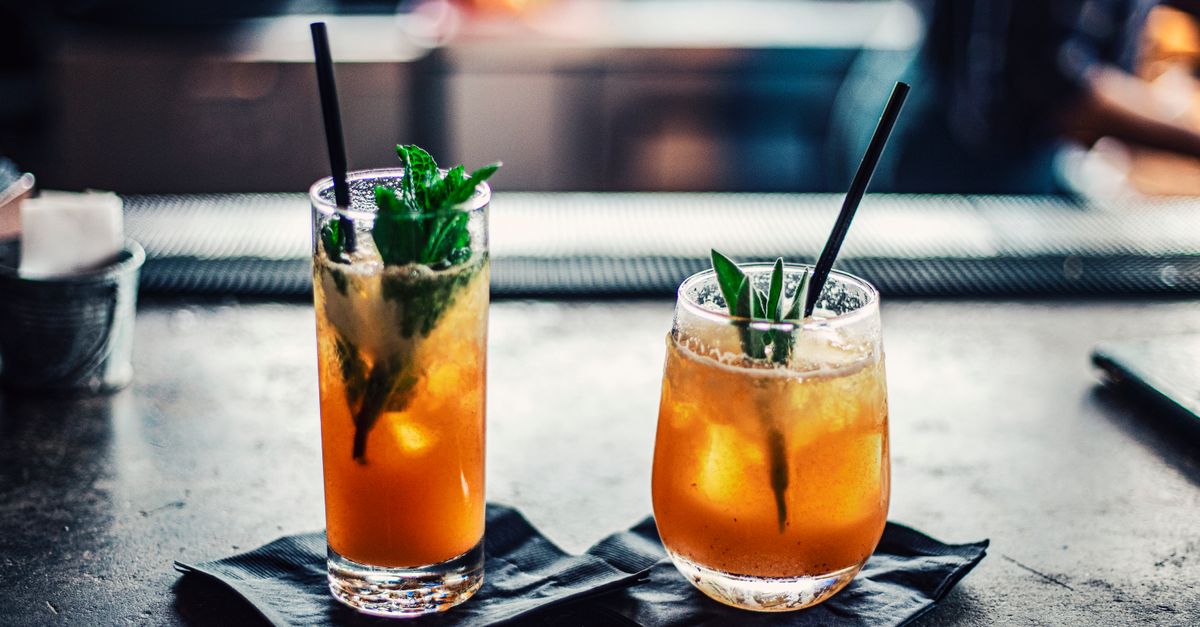
Photo: On Shot on Pexels · Illustrative image.
Irish standard drinks — quick answer
One Irish standard drink is 10 grams of pure alcohol. A 568 mL pint of 4.5% beer contains about 2.0 standard drinks; a 150 mL glass of 12.5% wine contains about 1.48; and a 35.5 mL spirit measure at 40% contains about 1.12.
Serving sizes and alcohol strength change the answer. Use our Irish standard drinks calculator to check your actual drink. This is a quantity calculation, not advice that any level of drinking is risk-free.
A pint is one drink.
A glass of wine is one drink.
A spirit is one drink.
Those statements sound intuitive.
In Ireland, they are often wrong.
The HSE defines one standard drink as:
10 grams of pure alcohol.
That means the number of standard drinks depends on:
- the volume poured;
- the alcohol strength;
- and how many servings you have.
A strong pint can contain more than two standard drinks.
A large wine glass can contain nearly two.
A bottle of wine can contain more than seven.
The useful question is therefore not:
How many glasses did I have?
It is:
How many grams of alcohol were actually in them?
The Alcohol Standard Drinks, Calories & Cost Calculator does that conversion directly.
Ireland’s definition: 10 grams of alcohol
In Ireland:
1 standard drink = 10 g of pure alcohol.
The HSE gives familiar approximations such as:
- around half a pint of ordinary-strength beer;
- a single pub measure of spirits;
- a small glass of wine.
But those are only approximations.
Drink strength and serving size vary.
HSE: weekly low-risk alcohol guidelines.
Ireland is not using the UK “unit”
This causes frequent confusion.
A UK unit contains:
8 g of pure alcohol.
An Irish standard drink contains:
10 g.
So:
1 Irish standard drink = 1.25 UK units.
And:
10 Irish standard drinks = 12.5 UK units.
If you use an online alcohol calculator built for the UK, its “units” are therefore not numerically interchangeable with Irish standard drinks.
How Ireland calculates grams of alcohol
Ireland’s Public Health (Alcohol) Act gives the formula:
volume in mL × ABV as a decimal × 0.789 = grams of alcohol
The 0.789 figure reflects the density of ethanol.
For example, a 500 mL can at 5% ABV contains approximately:
500 × 0.05 × 0.789 = 19.7 g
That is:
1.97 Irish standard drinks.
The Alcohol Calculator uses this same grams-first method.
How many standard drinks are in a pint?
Take an Irish pint:
568 mL
at:
4.5% ABV
Pure alcohol:
568 × 0.045 × 0.789 ≈ 20.2 g
Irish standard drinks:
20.2 ÷ 10 ≈ 2.0
So a 4.5% pint is approximately:
2 standard drinks.
That is why counting “four pints” as “four drinks” materially understates the alcohol amount.
Four such pints are closer to:
8 Irish standard drinks.
Stronger beer changes the number quickly
The container has not changed.
The alcohol strength has.
568 mL pint at 4%
568 × 0.04 × 0.789 ≈ 17.9 g
= 1.79 standard drinks
568 mL pint at 5%
568 × 0.05 × 0.789 ≈ 22.4 g
= 2.24 standard drinks
568 mL pint at 6%
568 × 0.06 × 0.789 ≈ 26.9 g
= 2.69 standard drinks
A pint is therefore a volume measure.
It is not an alcohol measure.
What about a 500 mL can?
Take a 500 mL can at 4.3% ABV.
Alcohol:
500 × 0.043 × 0.789 ≈ 17.0 g
Standard drinks:
~1.70
Two cans:
~3.39 standard drinks
Four cans:
~6.79 standard drinks
Again, the number printed on the front of the pack may look like “4 cans”.
Physiologically, the relevant ethanol amount is much larger than four standard drinks.
How many standard drinks are in a glass of wine?
This depends heavily on the pour.
Take wine at:
12.5% ABV.
100 mL glass
100 × 0.125 × 0.789 ≈ 9.9 g
= ~0.99 standard drinks
This is why the HSE often uses roughly 100 mL of 12.5% wine as an example of one standard drink.
150 mL glass
~14.8 g
= ~1.48 standard drinks
175 mL glass
~17.3 g
= ~1.73 standard drinks
250 mL glass
~24.7 g
= ~2.47 standard drinks
A “glass of wine” is therefore not a fixed alcohol quantity.
A large wine glass can quietly be two or more standard drinks
Suppose someone has two 250 mL glasses of 12.5% wine.
That is:
500 mL of wine
containing approximately:
49.3 g of alcohol
or:
4.93 Irish standard drinks.
Someone counting that as “two drinks” would understate the standard-drink total by more than half.
This is exactly why the HSE advises checking:
- glass size;
- amount poured;
- alcohol strength.
How many standard drinks are in a bottle of wine?
Take a standard:
750 mL
bottle at:
12.5% ABV.
Alcohol:
750 × 0.125 × 0.789 ≈ 74.0 g
Standard drinks:
~7.4
At 14% ABV:
750 × 0.14 × 0.789 ≈ 82.8 g
= ~8.28 standard drinks
So “one bottle” is a container count, not a standard-drink count.
How many standard drinks are in a spirit measure?
Take a:
35.5 mL
measure at:
40% ABV.
Alcohol:
35.5 × 0.40 × 0.789 ≈ 11.2 g
Standard drinks:
~1.12
This is close enough that a single standard pub measure is commonly approximated as one Irish standard drink.
But a home pour can be very different.
Home spirit measures are easy to underestimate
Suppose a home measure is:
60 mL
of 40% spirit.
Alcohol:
60 × 0.40 × 0.789 ≈ 18.9 g
That is:
~1.89 standard drinks
Two home pours of that size:
~3.79 standard drinks
The glass still looks like “two drinks”.
The ethanol amount is closer to four.
The easiest rule is: trust volume and ABV, not drink names
“Beer”, “wine” and “spirits” are not fixed alcohol doses.
For a reasonably accurate estimate you need:
- volume;
- ABV.
Then calculate grams.
That also makes newer high-strength beers, craft beers, large wine glasses and generous home measures much easier to compare.
Current HSE weekly low-risk guidance
As of 21 September 2026, the HSE’s current low-risk weekly guidance is:
Women
No more than:
11 standard drinks per week
Men
No more than:
17 standard drinks per week
The HSE also advises:
- spread drinking across the week;
- have at least 2–3 alcohol-free days;
- do not consume more than 6 standard drinks on any one occasion.
HSE: weekly low-risk alcohol guidelines.
The HSE says the evidence underpinning these guidelines is under review in 2026.
So these are the current published Irish limits, not immutable biological thresholds.
“Low-risk” does not mean “safe”
This distinction is crucial.
The HSE explicitly states:
there is no level of alcohol use that is safe for health.
The weekly limits are described as low-risk guidelines intended to reduce the risk of alcohol-related harm.
They are not a line below which risk becomes zero.
IARC’s 2025 evidence summary likewise states that alcohol causes at least seven cancer types and that even low levels of drinking increase cancer risk.
IARC: alcohol evidence summary.
So a calculator showing “within the current HSE weekly low-risk limit” should not be interpreted as:
safe
or:
healthy.
It means exactly what it says: within the current published weekly low-risk limit.
Six standard drinks on one occasion
The HSE defines binge drinking / heavy episodic drinking as:
6 or more standard drinks on one occasion.
Six Irish standard drinks contain:
60 g of pure alcohol.
In drink terms, 6 standard drinks could be reached with roughly:
- three 4.5% pints;
- around 3.5 glasses of 175 mL wine at 12.5%;
- a little over five 35.5 mL measures of 40% spirits.
The exact answer depends on ABV and serving size.
Weekly total and drinking pattern are different things
Imagine two people each consume:
8 standard drinks per week.
Person A has:
2 drinks on four separate days.
Person B has:
8 drinks on Saturday night.
The weekly total is identical.
The drinking pattern is not.
This is why the calculator cannot determine whether a pattern is “safe” from the weekly number alone.
It does not know:
- how quickly the drinks were consumed;
- whether food was eaten;
- medications;
- body size;
- health conditions;
- driving;
- pregnancy;
- other individual factors.
Standard drinks are not a driving calculator
Knowing your standard-drink total does not tell you whether you are under the legal driving limit.
Blood alcohol concentration depends on multiple factors and changes over time.
The HSE warns that even one standard drink can put some people over the legal driving limit.
Do not use the Alcohol Calculator to decide whether you can drive.
If driving is involved, the correct safe approach is not to use a drinks-count estimate as permission.
Alcohol and pregnancy is a separate rule
The HSE advice for pregnancy is not:
“stay under the weekly low-risk limit.”
It is:
do not drink alcohol during pregnancy.
HSE states that no amount of alcohol at any stage of pregnancy is safe for the baby.
HSE: alcohol during pregnancy.
The same HSE guidance advises avoiding alcohol when trying for a baby.
So the weekly adult low-risk guideline should not be applied to pregnancy.
How many calories are in alcohol itself?
Alcohol supplies approximately:
7 kcal per gram.
That means one Irish standard drink — 10 g of alcohol — contains about:
70 kcal
from the ethanol alone.
This is before counting any additional energy from:
- carbohydrate;
- sugar;
- mixers;
- cream;
- syrups;
- other ingredients.
The calculator therefore deliberately reports:
calories from alcohol itself
rather than pretending to know the full calorie content of every drink.
A pint example
Our 4.5% pint contained approximately:
20.2 g alcohol
Alcohol-derived energy:
20.2 × 7 ≈ 141 kcal
That is the ethanol contribution alone.
The real pint can contain additional calories from residual carbohydrate and other components.
Brand-specific nutrition information is needed for a complete total.
A 175 mL wine example
A 175 mL glass of 12.5% wine contains approximately:
17.3 g alcohol
Alcohol-derived calories:
17.3 × 7 ≈ 121 kcal
Again, this is not necessarily the total energy value of the wine.
It is the amount attributable to ethanol itself.
A bottle of 12.5% wine
The bottle contained approximately:
74 g alcohol
Alcohol-derived energy:
74 × 7 ≈ 518 kcal
before counting any non-alcohol calories.
This helps explain why alcohol intake can materially contribute to total energy intake even when the drinks do not feel like food.
Six standard drinks contain at least about 420 kcal from alcohol
By definition:
6 standard drinks = 60 g alcohol
At 7 kcal per gram:
60 × 7 = 420 kcal
from ethanol alone.
A sugary mixer or calorie-containing drink base can push the full energy total higher.
Alcohol calories do not make different drinks nutritionally equivalent
Two drinks can contain the same grams of alcohol but different:
- sugar;
- carbohydrate;
- total calories.
For example, spirits mixed with sugar-free drinks can contain much less additional carbohydrate than a sweet cocktail.
But the alcohol itself still contributes energy and health risk.
Choosing a lower-calorie drink does not remove the ethanol.
What will Irish alcohol labels eventually show?
Ireland has legislated for alcohol labels to include information such as:
- grams of alcohol;
- energy in kilojoules and kilocalories;
- health warnings;
- pregnancy warning;
- cancer-related warning;
- HSE public-health information.
The legal grams-of-alcohol formula is the same basic formula used in Compound’s calculator.
However, the implementation date changed.
The original 2023 plan had an earlier commencement date, but the law was amended in 2025.
The current commencement date for the relevant Section 12 labelling requirements is:
3 September 2028.
Irish Statute Book: Public Health (Alcohol) Act commencement.
So as of September 2026, those comprehensive mandatory labels are not yet in force.
Why grams of alcohol on the label will be useful
Suppose a can eventually states:
17 g alcohol
You can immediately convert it:
17 ÷ 10 = 1.7 Irish standard drinks
No guesswork about whether “one can” equals one drink.
Similarly:
74 g alcohol
in a bottle of wine means:
7.4 standard drinks.
The grams figure is the most direct bridge between the physical product and the Irish standard-drink definition.
Weekly spending can become large surprisingly quickly
The calculator also asks what you actually spend in a typical week.
This is deliberately separate from the health calculation.
For example:
€30/week
is:
€30 × 52 = €1,560/year
If someone modelled a sustained 25% reduction in spending:
€1,560 × 25% = €390/year
The calculator does not assume that reducing alcohol intake automatically reduces spending perfectly in proportion.
It simply lets you model that scenario.
A €60 weekly habit
At:
€60/week
annual spending is:
€3,120
A 25% reduction would be:
€780/year
A 50% reduction:
€1,560/year
These are budgeting illustrations, not health recommendations.
The appropriate health decision should not be reduced solely to what saves the most money.
Drink price does not tell you alcohol quantity
A €15 cocktail may contain fewer grams of alcohol than a €7 strong pint.
A premium bottle of wine may contain the same grams of alcohol as a cheaper bottle at the same size and ABV.
Cost and ethanol dose are different variables.
That is why Compound asks for:
- physical drink details;
- weekly spend
separately.
ABV is one of the most important numbers on the label
ABV means:
alcohol by volume.
A drink at 8% ABV contains twice the alcohol concentration of the same volume at 4%.
So:
500 mL at 4%
and:
500 mL at 8%
are not remotely equivalent.
500 mL at 4%
15.8 g alcohol
= 1.58 standard drinks
500 mL at 8%
31.6 g alcohol
= 3.16 standard drinks
Same can size.
Double the alcohol.
Low-alcohol drinks can change the standard-drink count substantially
Take 500 mL at:
2.5% ABV
Alcohol:
500 × 0.025 × 0.789 ≈ 9.9 g
That is approximately:
0.99 standard drinks.
Compare that with the same 500 mL volume at 5%:
~1.97 standard drinks.
Volume is only half of the calculation.
“Alcohol-free” and “low-alcohol” labels still need reading carefully
Products can differ in actual ABV.
If you are tracking alcohol intake, check the label rather than relying only on marketing terms.
Pregnancy is a different context: HSE currently advises that even drinks described as alcohol-free or non-alcoholic can contain small amounts and recommends avoiding them during pregnancy.
Why self-poured wine is difficult to estimate
A home wine glass does not come with a metered 100 mL line.
People can easily pour:
- 125 mL;
- 175 mL;
- 250 mL;
- more.
If accuracy matters, measure a normal home pour once.
You may find that your idea of “one glass” is much larger than the standard-drink example used in public-health guidance.
The same applies to spirits
Free-pouring spirits makes the count uncertain.
A 35.5 mL measure at 40% is around:
1.12 standard drinks.
A 70 mL home pour is around:
2.21 standard drinks.
The glass may look almost identical.
The calculator’s worked logic
The Alcohol Standard Drinks, Calories & Cost Calculator takes your weekly:
- pints;
- wine glasses;
- spirit measures;
- cans or bottles.
For each one it uses:
volume × ABV × 0.789
to estimate grams of alcohol.
Then:
grams ÷ 10
gives Irish standard drinks.
Then:
grams × 7
estimates calories from ethanol itself.
Weekly spend is multiplied by 52 for an annual spending illustration.
What it deliberately does not calculate
The tool does not calculate:
- blood alcohol concentration;
- how long alcohol will remain in your system;
- whether you can drive;
- dependence;
- withdrawal risk;
- personalised disease risk;
- a “safe” personal amount.
Those questions cannot be reduced to the four drink fields on a web form.
If the number concerns you
The point of measuring is information, not judgement.
HSE provides confidential alcohol support through its Drug and Alcohol Helpline.
The current HSE page lists:
Freephone 1800 459 459
for non-urgent confidential advice.
If someone drinks heavily or regularly and is considering abruptly stopping, medical advice can be important because alcohol withdrawal can be dangerous in dependent drinkers.
A practical way to use standard drinks
Instead of recording:
3 drinks
record:
3 × 568 mL pints at 4.5% = about 6 standard drinks
or:
2 × 175 mL glasses at 12.5% = about 3.45 standard drinks.
That gives you a number that actually relates to Ireland’s health guidance.
The practical conclusion
In Ireland:
one standard drink = 10 grams of pure alcohol.
That is the number to remember.
A 4.5% pint is about:
2 standard drinks.
A 175 mL glass of 12.5% wine is about:
1.7 standard drinks.
A 35.5 mL spirit measure at 40% is about:
1.1 standard drinks.
A 750 mL bottle of 12.5% wine is about:
7.4 standard drinks.
The current HSE weekly low-risk guideline is no more than:
- 11 standard drinks for women;
- 17 for men;
with at least 2–3 alcohol-free days and no more than 6 standard drinks on one occasion.
But those are low-risk guidelines, not safe limits, and the HSE says their evidence is under review in 2026.
Use the Alcohol Standard Drinks, Calories & Cost Calculator when you want to convert the actual drink sizes and ABVs you use.
The most important shift is simple:
stop counting containers and start counting alcohol.