Statins in Ireland | The liver cholesterol pathway and reading risk reduction
The liver cholesterol pathway and reading risk reduction.
 Health / The Compound journal
Photo: Panthro ( talk ) · 2008 · CC BY-SA 3.0 · framed · Illustrative image.
At a glance
Statins lower LDL cholesterol and can reduce cardiovascular risk in appropriate people. The decision depends on baseline risk, indication and suitability of the individual medicine. HSE guide
The Science Behind the Drug
The liver cholesterol pathway and reading risk reduction
Statins inhibit HMG-CoA reductase in the liver, lowering cholesterol synthesis. Liver cells respond in part by increasing LDL receptors, which clear more LDL from the circulation. An LDL blood result is a measurable effect. Clinical trials also track events such as heart attack and stroke. HSE source
What the evidence measures
A relative risk reduction can correspond to very different absolute benefits depending on starting risk and follow-up. Look for the same patient group, comparison and timeframe when reading benefit estimates.
The Cholesterol Treatment Trialists pooled 27 randomised trials. In participants whose estimated five-year risk of a major vascular event was below 10%, a reduction of 1 mmol/L in LDL cholesterol was associated with about 11 fewer major vascular events per 1,000 people over five years. That estimate describes the study population and the amount of LDL lowering. Different starting risks or different LDL responses can change the expected absolute benefit. Cholesterol Treatment Trialists analysis
Read two outcomes separately
| What to check | Why it matters |
|---|---|
| LDL | biomarker response to treatment |
| Vascular events | absolute difference in events over a stated period |
What makes an absolute-risk figure useful?
It needs a starting risk, a timeframe and the outcome measured. Ask whether the people in the estimate are similar to you and whether it applies to first or repeat events.
When to ask for help or a medication review
Ask about new unexplained muscle symptoms or interactions with newly prescribed medicines. The relevant interactions differ with the particular statin. HSE patient guidance
Why the LDL result and cardiovascular risk are different measures
LDL tells the clinician about one part of the biological response to treatment. A prevention decision also considers the person’s starting risk of cardiovascular events, the amount of LDL reduction and whether treatment follows a previous event. Two people can have similar LDL readings and different expected absolute benefits. Read the trial figures above alongside the population and period in which they were measured. Cholesterol Treatment Trialists analysis
Make a muscle-symptom report useful
Write down where symptoms are, when they started and any change in exercise, illness or prescription around the same time. Bring the name and strength of the specific statin and any antibiotics or antifungals recently prescribed. Interaction risks differ between statins. A clinician can decide whether symptoms warrant a blood test, a medicine change or assessment for another cause. HSE statin guidance
If a review focuses only on the LDL number, ask what outcome is being prevented and what the estimated risk means for you. Also ask how the team wants to follow up tolerability. Those two questions make the trial evidence easier to apply to a real decision.
What an absolute benefit depends on
Imagine the same relative benefit applied to two populations. In the population where more vascular events would occur before treatment, preventing the same proportion of events would usually prevent more events overall. That is why the trial estimate above reports the group’s starting risk, the LDL reduction and the period. Ask for absolute numbers for a group similar to you, rather than looking for one figure that applies to every statin prescription. Cholesterol Treatment Trialists analysis
Related guides
Paxlovid · How to find the Irish patient leaflet
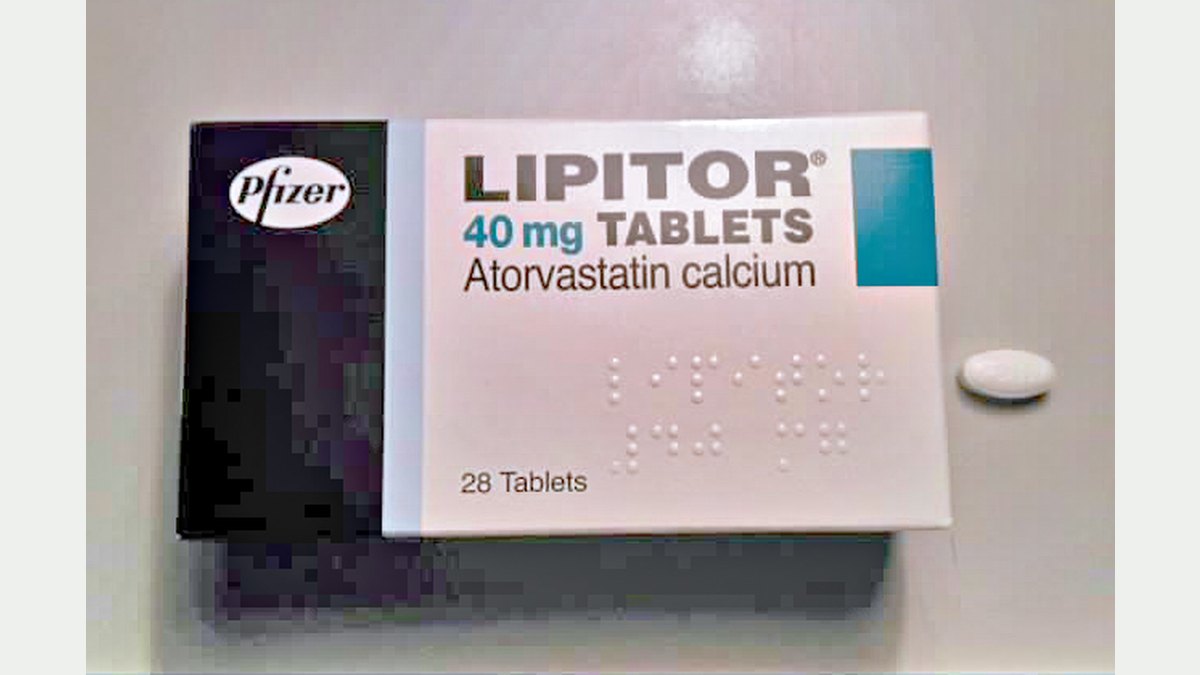
An atorvastatin product, an example of a statin. Image licence.