Antihistamines in Ireland | Histamine signalling and why some tablets cause drowsiness
Histamine signalling and why some tablets cause drowsiness.
 Health / The Compound journal
Photo: Mk2010 · 2016 · CC BY-SA 4.0 · framed · Illustrative image.
At a glance
H1 antihistamines help relieve symptoms such as sneezing, itching and hives driven by histamine. Check which active ingredient is in the pack, as sleepiness and duration differ across products. HSE guide
The Science Behind the Drug
Histamine signalling and why some tablets cause drowsiness
Histamine released during an allergic response activates H1 receptors, contributing to itchy nerves and changes in small blood vessels. H1 antihistamines reduce that signalling. Older agents generally enter the brain more readily, where H1 signalling helps support wakefulness. Some newer products can still cause drowsiness. HSE source
What the evidence measures
Record which symptoms improve. Relief of itching or sneezing does not automatically mean blocked-nose symptoms have resolved. Studies and labels often measure separate symptoms and compare different formulations and exposure periods.
Check two lines on the label
| What to check | Why it matters |
|---|---|
| Active ingredient | look for duplication in cold, allergy or sleep products |
| Alertness | check the product-specific driving and alcohol advice |
What if the product says less drowsy?
The chance of drowsiness depends on the particular medicine and individual response. Check the leaflet and describe any sleepiness to a pharmacist, especially if taking other sedatives.
When to ask for help or a medication review
Breathing difficulty, throat swelling or collapse after an allergen needs emergency care. Antihistamines have a limited role in that emergency and should never delay the person’s emergency plan. HSE patient guidance
Why an allergy tablet can help itching more than congestion
Allergic inflammation involves more than one chemical signal. Histamine is especially important for itch, sneezing and some of the early effects of allergies on eyes and nose. Blocked nose has several contributors, including inflammation and swelling. Record which symptoms actually improve. If sneezing is better and congestion remains, that is useful information when a pharmacist considers a different type of treatment or an additional explanation for the symptoms. HSE antihistamine guidance · HSE allergic rhinitis guidance
Compare products on two separate questions
First check whether the active ingredient is already in a cold, allergy or night-time product. Then ask about drowsiness and what effect the product may have on driving or work that requires alertness. Some antihistamines reach the brain more readily, and even products described as less sedating can affect some people. A history of drowsiness from an earlier product is worth mentioning by name. HSE antihistamine guidance
For a nasal symptom, compare the target of a steroid nasal spray with an antihistamine. For a person using cetirizine, the dedicated guide explains the product-specific questions. Breathing difficulty or collapse after an allergen needs emergency care. HSE antihistamine guidance
Related guides
Cetirizine · Steroid nasal sprays · How to find the Irish patient leaflet
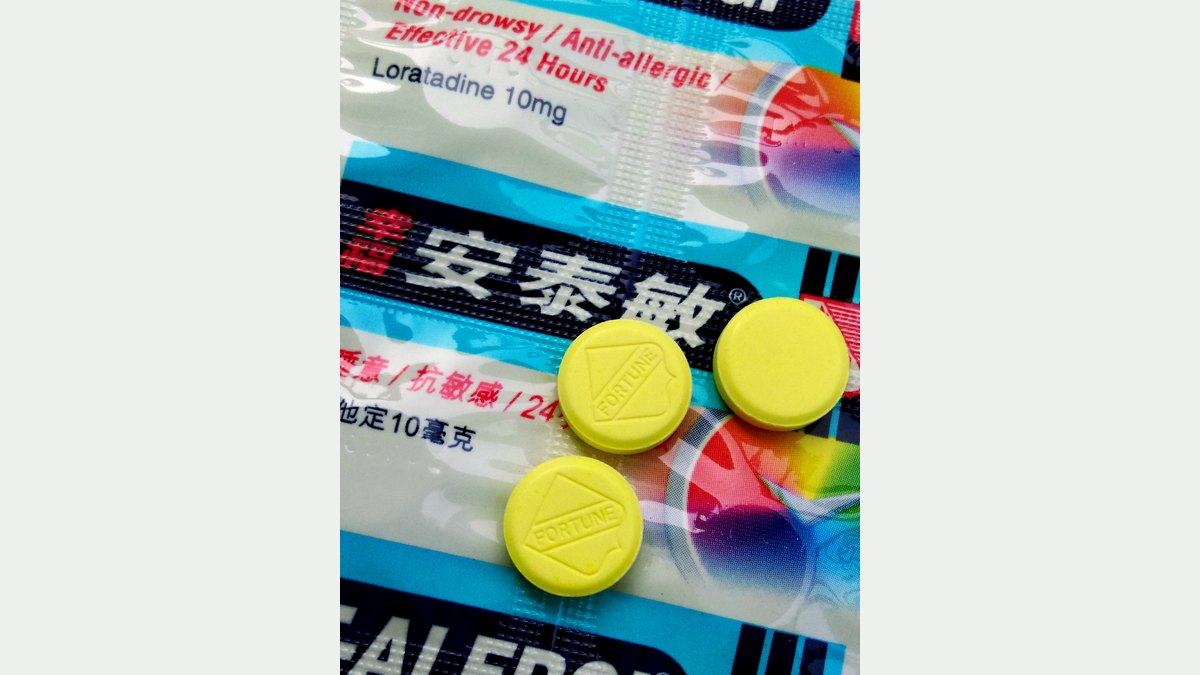
An example of loratadine antihistamine tablets. Image licence.