Creatine in Ireland: what it does, how to take it and what to watch
A useful training supplement deserves a clear explanation. The evidence on strength, dosing, kidneys, hair loss and brain health, plus what to check before buying.
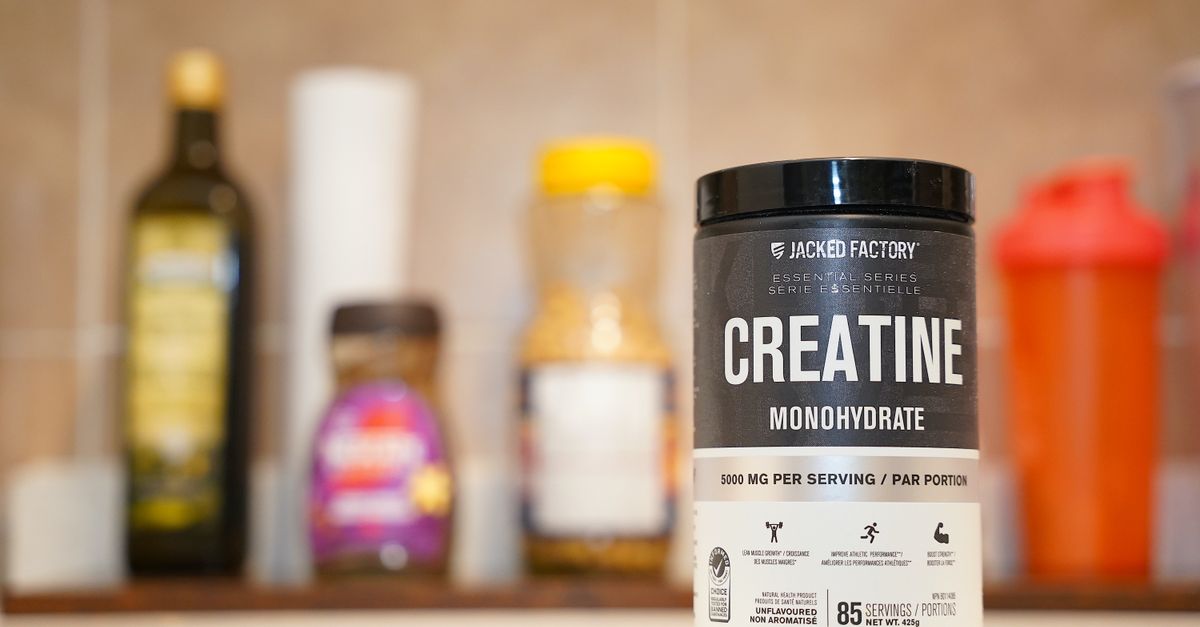 Health / The Compound journal
Photo: Gupta Sahil on Pexels · Illustrative image.
Creatine is an unusual supplement: there is a substantial research base behind some of its claims. That makes it worth understanding—and makes the claims that go beyond the evidence easier to miss.
For an adult lifting weights or doing repeated hard efforts, creatine monohydrate can be a useful addition to training. It is less convincing as an all-purpose answer to tiredness, a way to burn fat or a guarantee of sharper thinking. The benefit depends on what you expect it to do. NIH: creatine and exercise performance.
This guide is for adults in the Republic of Ireland. Sources were checked on 17 September 2026. It explains general evidence and study protocols, not an individual prescription. The safety section below sets out when to get advice before starting.
What does creatine actually do?
Your body makes creatine, and foods such as meat and fish supply some too. Much of it is stored in muscle. In its phosphocreatine form, it helps replenish ATP, the molecule muscle cells use to release energy for contraction.
That is particularly relevant when you ask a muscle to work hard, recover briefly and work hard again. Supplementation increases the available creatine stores; it does not replace the training that gives those stores a job to do. ISSN position stand: mechanism and protocols.
Creatine is not protein powder, and it is not an anabolic steroid. Think of it as supporting a muscle’s rapid energy supply, rather than providing the protein needed to build that muscle. Our macronutrients and micronutrients guide explains where protein fits into the wider diet. Creatine questions review.
Where the benefits are strongest
Best established
Strength and repeated hard efforts
There is a good case for an additional training benefit when creatine is combined with resistance exercise.
More context needed
Healthy ageing
Muscle and strength outcomes are more encouraging than broad claims about reversing ageing or protecting bones.
Still developing
Memory and brain health
Some findings are promising. Consistent everyday benefits and prevention of dementia are not established.
These are editorial summaries of the evidence discussed below, not formal clinical evidence grades.
Strength training and muscle
A 2024 meta-analysis of 12 studies in adults under 50 found that adding creatine to resistance training produced about 1.14 kg more lean body mass, on average, than resistance training alone; the 95% confidence interval was 0.69–1.59 kg. That is a pooled result across different study programmes, not a promise about your next month in the gym. Desai and colleagues.
“Lean body mass” also includes water. It should not be presented as an equivalent amount of newly built muscle tissue. Early changes on the scales deserve particular caution, as explained below.
A separate 2024 review found additional strength gains with creatine and resistance training. Most participants were men; the female evidence base was much smaller. A result in a male-dominated set of studies should not be converted into a claim that women cannot benefit. Strength review.
For someone playing Gaelic football, hurling or rugby, the relevant research concerns repeated intense efforts and strength work. It does not establish that a scoop of powder improves every aspect of match performance. For steady endurance exercise, benefits are less consistent, and extra body mass can be a disadvantage. NIH: performance evidence.
Women, menopause and getting older
Women do not need a separately branded “female creatine”. The practical question is whether the ingredient and evidence fit the person’s goals.
A 2026 review of seven trials in postmenopausal women found small average improvements in lean mass and some strength outcomes, especially in programmes combining supplementation with resistance training. Bone density was unchanged overall. Several studies had limitations, and the review was not prospectively registered. This is a reason for measured interest, not a basis for promising treatment of menopause symptoms or osteoporosis. Postmenopausal-women review.
The wider goal is to maintain useful strength: getting out of a chair, carrying shopping and staying capable. The health guide for a longer life puts strength work alongside the other habits that support that goal.
How much should an adult take?
The two approaches below come from commonly studied creatine monohydrate protocols. They describe options used in healthy adults; they are not suitable for everyone.
| Approach | Typical study protocol | What to expect |
|---|---|---|
| Gradual approach | 3–5 g each day, without a loading phase. | Stores rise gradually. Around four weeks is a useful reference point, not an exact deadline for everyone. |
| Optional loading phase | About 20 g per day, divided into four 5 g portions, for 5–7 days; then 3–5 g daily. | Stores rise faster. More powder and larger daily amounts can mean more stomach discomfort and a quicker change in body weight. |
Loading is not required. A slower start is a reasonable option when there is no deadline to reach full muscle stores. The daily maintenance pattern includes rest days. Follow the product’s instructions and any professional advice that applies to you. ISSN protocols and the original gradual-versus-loading study.
Check what a scoop contains. A scoop measures volume, not a universal number of grams. Also distinguish the weight of a flavoured blend from the amount of creatine monohydrate inside it. A larger serving of a mixed product is not necessarily a larger creatine dose.
Before training, after training or with breakfast?
Research has not established a clear, important advantage for taking creatine immediately before rather than after a workout. A routine you remember is more useful than chasing a narrow timing window. Timing review.
Creatine is not an instant pick-me-up. Do not judge whether it “works” by whether you feel different shortly after drinking it. Compare your training over time while keeping the programme and other habits reasonably consistent.
If you miss a day, resume the normal routine rather than doubling up. Elevated muscle stores decline over weeks, not overnight. There is no established requirement to cycle on and off to keep it working. ISSN supplementation review.
Water weight, stomach upset and the scales
An early increase in weight can reflect changes in body water, including water inside muscle. It does not mean that the same amount of fat has appeared. Equally, it is not proof of rapid new muscle growth. Longer-term body-composition changes are a separate question. Water-retention review.
That distinction matters if you monitor your weight closely or compete in a weight category. It is another reason to avoid introducing a new supplement immediately before an important event. Our BMI calculator and guide explains why body weight alone has limits as a health measure.
Some people experience bloating, diarrhoea or stomach discomfort, particularly with larger single doses. More is not automatically better. Persistent symptoms are a reason to stop and seek advice, rather than force a loading phase. Controlled studies do not support the common claim that usual creatine use inherently causes dehydration or muscle cramps; normal hydration and sensible training still matter. Safety review.
Does creatine damage your kidneys?
The evidence in generally healthy adults is reassuring at studied doses, but “safe for absolutely everyone” goes further than the research.
A 2026 meta-analysis of randomised trials found an increase in blood creatinine, without a statistically significant difference in urea or estimated filtration rate overall. Its authors also called for more trials extending beyond a year. That supports a measured safety message, not unlimited-dose or lifetime guarantees. Kidney-function review.
Creatine and creatinine are different
Creatinine is a breakdown product used in many kidney-function calculations. Supplementation can increase its level and make a creatinine-based estimate of kidney filtration look lower. A separate 2026 review found that results differed depending on whether filtration was estimated from creatinine or measured using another method. Measured versus estimated kidney function.
Tell the clinician arranging blood tests that you take creatine, including the product and amount. They can interpret the result in context and decide whether another assessment is needed. Do not dismiss an abnormal result yourself as “just the supplement”.
Sources for these cautions: pregnancy and safety review, LactMed on breastfeeding and Sport Ireland’s guidance.
What about hair loss?
The claim that creatine causes baldness is not established. A 2025 randomised trial directly assessed hair and hormone outcomes over 12 weeks using 5 g daily. Among the 38 men who completed the study, there were no significant differences between the creatine and placebo groups in DHT, hair density or the other measured hair outcomes. Lak and colleagues.
That is reassuring, but a small, short trial in resistance-trained men is not a lifetime guarantee for every person. New or persistent hair loss deserves assessment on its own merits.
Does creatine help memory or brain health?
There is a plausible biological reason to investigate it: the brain also uses the creatine energy system. The clinical question is whether taking a supplement produces a reliable, meaningful improvement.
A 2024 meta-analysis reported benefits on some measures, including memory, while finding no significant improvement in overall cognitive function or executive function. The included studies varied in participants, doses and tests. Cognition meta-analysis.
In a separate 2024 assessment, EFSA concluded that the evidence submitted for a cognitive-function health claim had not established a cause-and-effect relationship. That is a useful check on confident “brain booster” marketing. It does not mean every possible cognitive effect has been ruled out. EFSA assessment.
Newer research remains interesting. A 2026 sleep-deprivation trial with 29 participants found less deterioration on some cognitive tasks after a single weight-based dose. This was a small study under experimental conditions using a dose above an ordinary daily maintenance amount. It does not establish a routine high-dose plan, show that it is safe to drive while tired, or make sleep optional. Sleep-deprivation trial.
For older adults, a 2026 review contained only two supplementation interventions alongside four observational studies. An association between dietary intake and cognition is not proof that a supplement prevents dementia. Older-adult cognition review.
For now, the case for using creatine to support strength training is clearer than the case for buying it solely for everyday concentration. Our adult sleep guide addresses a more established starting point for persistent tiredness.
Which creatine is worth buying in Ireland?
Plain creatine monohydrate is the evidence-based reference point. Alternative forms such as hydrochloride, buffered creatine and ethyl ester have not established a general superiority that justifies assuming they work better. “Micronised” describes particle size; it is not proof of a greater training effect. Forms of creatine review.
Compare products on things you can verify:
- The ingredient and amount: how much creatine monohydrate is actually in a serving? Does the label report monohydrate or creatine content? Compare like with like.
- The format: powder, capsules and gummies need different serving counts. A convenient format does not make its contents or claims independently verified.
- Traceability: look for a named supplier, an identifiable batch and clear contact details.
- Testing: check what a certification actually tests and whether it covers your exact product and batch.
- The total cost: include delivery and compare the same daily quantity, rather than choosing by the headline price of the tub.
If you compete in sport
Sport Ireland takes a cautious position: it recommends against sports supplements, highlights contamination and strict liability, and advises seeking a professional sports dietitian’s help to assess need. If an athlete chooses to use one, it identifies batch testing through programmes such as Informed Sport as a way to reduce risk. Testing reduces risk; it does not remove it. Check the batch, not just a logo on the shop page. Sport Ireland.
A few practical questions
Can I take it with coffee?
There is no good basis for saying a normal coffee automatically cancels creatine’s effect. Research on taking caffeine and creatine together is mixed, particularly with larger caffeine amounts and loading protocols, and stomach tolerance can differ. A combination product also makes it harder to change one ingredient without changing the others. Caffeine and timing review.
Is it only useful if I eat meat?
No. Vegetarians tend to have lower muscle creatine stores, so the response to supplementation can differ. That does not mean that everyone eating a vegetarian or vegan diet needs a supplement. If a product must be vegan, check the whole formulation, including capsule shells and gummy ingredients. NIH: individual responses.
Can I use it without going to the gym?
You do not have to train in a gym, but the strongest evidence for improving strength and lean mass involves resistance exercise. That could mean an appropriately progressed programme elsewhere. Do not expect the supplement to reproduce the effects of training while you remain inactive. Resistance-training evidence.
Make the decision around your goal
If the goal is to get stronger and you already train consistently, creatine monohydrate is worth considering after checking the safety and product questions. If the goal is simply to feel less exhausted, lose weight or insure yourself against dementia, the sales pitch can be much stronger than the evidence.
Choose a clear purpose, keep the routine manageable and judge progress through useful outcomes: training performance, how you feel and what you can do. A supplement earns its place by helping that plan.