What Happens If You Die Without a Will in Ireland?
A practical guide to intestacy in Ireland: who inherits if there is no valid will, what spouses, civil partners, children, parents, siblings and cohabitants receive, who administers the estate and what happens to jointly owned property.
 Wealth / The Compound journal
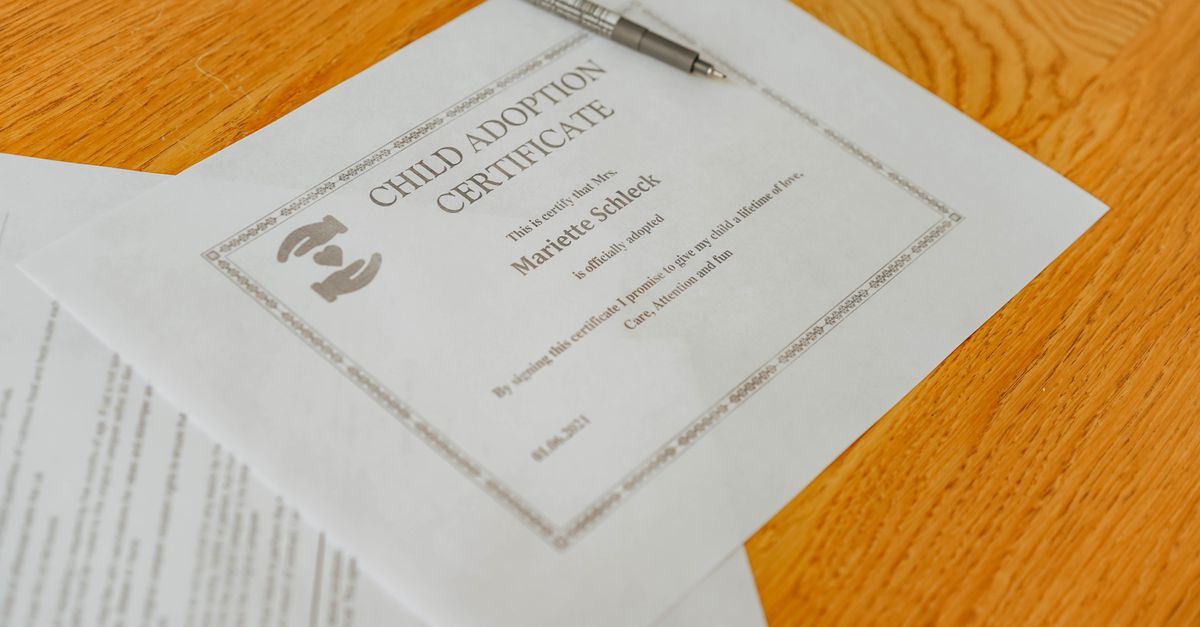
Photo: Kampus Production on Pexels · Illustrative image.
Dying without a will does not mean the State immediately takes everything.
It means you lose the right to decide who inherits your estate.
Instead, the Succession Act applies a fixed order of inheritance.
That can produce outcomes very different from what the person would have chosen.
Quick answer
If you die without a valid will in Ireland, you die intestate.
If you leave a spouse or civil partner but no children, they generally inherit the whole estate. If you leave a spouse/civil partner and children, the spouse/civil partner receives two-thirds and the children share the remaining one-third.
If you are not married or in a civil partnership, a cohabiting partner has no automatic right to a share of your estate under the intestacy rules, no matter how long you have lived together.
For the other side of the decision, see How to Make a Will in Ireland.
This guide reflects Irish succession and probate rules checked on 5 October 2026.
What does “intestate” mean?
A person dies intestate where they die without leaving a valid will that disposes of the estate.
Intestacy can arise because:
- no will was ever made;
- the will was invalid;
- a successful legal challenge invalidated the will;
- or part of the estate was not effectively disposed of by the will.
That last case is known as partial intestacy.
So a person can technically have a will and still have part of their estate distributed under intestacy rules.
Who inherits if there is no will?
The answer depends on which relatives survive the deceased.
| Who survives? | Who inherits? |
|---|---|
| Spouse/civil partner, no children | Spouse/civil partner gets 100% |
| Spouse/civil partner + children | Spouse/civil partner gets 2/3; children share 1/3 |
| Children, no spouse/civil partner | Children share 100% |
| No spouse/civil partner or children; parent(s) alive | Parents inherit; two parents share equally, one surviving parent takes all |
| No spouse, children or parents; siblings survive | Brothers and sisters share, with representation for certain children of a deceased sibling |
| No closer family | Nearest next-of-kin under the statutory order |
| No qualifying relatives | Estate ultimately passes to the State |
The intestacy rules do not ask:
“Who was closest emotionally?”
They ask:
“Which statutory relationship category applies?”
That distinction is especially important for unmarried partners, stepchildren, friends and charities.
Spouse or civil partner, but no children
If the deceased leaves a spouse or civil partner and no children or other descendants, the surviving spouse/civil partner generally receives the entire intestate estate.
This is different from the position under a valid will.
With a valid will and no children, the spouse/civil partner normally has a legal-right share of one-half, but the will can leave them more.
Under complete intestacy, they generally get everything.
Spouse or civil partner and children
Where both a spouse/civil partner and children survive:
- spouse/civil partner receives two-thirds;
- children share one-third.
Example:
Estate available for distribution after debts, expenses and tax:
€450,000
Spouse/civil partner:
€300,000
Children collectively:
€150,000
If there are three children alive in the same degree:
€50,000 each
The actual estate administration can be more complicated where property, joint ownership or earlier deaths are involved.
Children only
If there is no surviving spouse or civil partner, the children generally share the estate.
Where all children are alive and in the same degree of relationship to the deceased, they inherit equally.
Example:
Net estate:
€300,000
Three surviving children:
€100,000 each
What if one child died before the parent?
The Succession Act uses rules of representation — often described as distribution per stirpes — in relevant cases.
In practical terms, descendants of a child who died before the deceased can take the share their parent would have taken.
Example:
A parent dies intestate with no spouse.
They had two children:
- Child A survives.
- Child B died earlier, leaving two children.
If the estate is €300,000:
- Child A may take €150,000.
- Child B’s branch receives €150,000.
- Child B’s two children share that €150,000.
This is a simplified example; unusual family structures can require legal advice.
Do adopted children inherit?
Irish succession law does not simply distinguish children based on whether their parents were married.
Citizens Information states that marital and non-marital children have equal inheritance rights from their parents.
Adoption and legal parentage can affect succession relationships in specific ways.
Where parentage, adoption or family status is unusual or disputed, obtain legal advice rather than assuming the ordinary family-tree answer.
What about stepchildren?
A stepchild is not automatically the deceased’s child for intestacy simply because the families lived together.
That can be a major issue in blended families.
If you want a stepchild to inherit, making a valid will is particularly important.
Do not assume the intestacy rules will reproduce the family relationships you consider emotionally equivalent.
No spouse or children: parents inherit next
If there is no spouse/civil partner and no issue, the parents are next in the statutory order.
If both parents survive:
they share equally.
If only one parent survives:
that parent takes the entire estate.
There are specialised rules in certain parentage situations, including amendments introduced under later legislation.
For a normal estate, the practical message is simple:
parents come before siblings where there is no spouse/civil partner or issue.
What if the parents have died?
Brothers and sisters become relevant.
Where the deceased leaves:
- no spouse/civil partner;
- no children or other issue;
- no surviving parent;
the estate can pass to brothers and sisters.
If a brother or sister died before the deceased, their children can inherit through the statutory representation rules in specified circumstances.
What if there are only nieces and nephews?
Where there is no closer entitled family member and no surviving brother or sister, nieces and nephews can inherit under the statutory order.
Citizens Information summarises this as the estate being divided equally among the surviving nieces and nephews where that is the relevant category.
What if there are no close relatives?
The statutory order continues to more remote next-of-kin.
The Courts Service priority list for administration proceeds through relatives including:
- spouse/civil partner;
- children;
- descendants of a predeceased child;
- parents;
- brothers/sisters;
- descendants of a predeceased brother/sister;
- nephews/nieces;
- grandparents;
- uncles/aunts;
- more remote next-of-kin.
The inheritance rules and the priority to apply for administration are related but not identical concepts.
For unusual kinship, use a probate solicitor.
What if there are no relatives at all?
The State is the ultimate intestate successor where there is no entitled next-of-kin.
This is sometimes described as the estate passing bona vacantia.
This is not what happens simply because somebody forgot to make a will and has ordinary family.
The State is at the end of the statutory chain, not the beginning.
What happens to an unmarried partner?
This is one of the biggest practical traps in Irish succession law.
If you are cohabiting but:
- not married; and
- not in a civil partnership,
your partner has no automatic entitlement to a share of your estate under intestacy, regardless of how long you have lived together.
That can produce a severe result where:
- one partner owns the house in their sole name;
- one partner has much larger savings;
- the couple has no will;
- the survivor assumed “common-law marriage” would protect them.
Ireland does not simply treat a long-term cohabitant as a spouse for intestacy.
If you want a cohabiting partner to inherit, making a will is extremely important.
Can a cohabiting partner make a claim?
Potentially.
A qualifying cohabitant who is financially dependent may be able to apply to court for provision from the deceased partner’s estate under the statutory redress scheme.
Citizens Information explains that qualifying status can depend on factors such as the length and nature of the relationship and whether there is a dependent child.
That is a court application, not an automatic intestacy entitlement.
It is not a substitute for making a will.
Jointly owned property can pass differently
Not every asset necessarily enters the intestate estate.
This is particularly important with jointly owned assets.
Certain property held under a joint ownership structure can pass automatically to the surviving joint owner rather than under the will or intestacy rules.
Citizens Information notes that jointly owned property can pass outside the deceased’s estate depending on how ownership is structured.
This can apply to:
- a family home;
- joint bank accounts;
- other jointly held assets.
Do not look only at intestacy percentages.
First establish which assets actually form part of the estate.
Joint tenancy versus tenancy in common
This distinction can fundamentally change the result.
Joint tenancy
The deceased’s interest can pass automatically to the surviving joint owner by survivorship.
Tenancy in common
The deceased owns a defined share.
That share can form part of the estate and pass by will or intestacy.
This means two unmarried couples living in apparently identical homes can have completely different outcomes depending on the legal ownership structure.
Check the title rather than guessing.
What about a mortgage?
Death does not make debts disappear.
Before the estate is distributed, the personal representative has to deal with liabilities.
A mortgage may be affected by:
- mortgage-protection insurance;
- joint borrowing;
- life cover;
- ownership;
- estate assets.
Where insurance clears the mortgage, the property position can be very different from an uninsured estate with significant debt.
Intestacy percentages apply to the estate after the administration process deals with debts and liabilities.
Who deals with the estate if there is no executor?
There is no executor because there is no will appointing one.
Instead, the person who administers the estate is called an administrator.
The Courts Service refers to both executors and administrators as personal representatives.
The grant issued for a wholly intestate estate is a:
Grant of Administration Intestate.
Who can apply to be administrator?
The Courts Service gives the priority order for a Grant of Administration Intestate.
Broadly, priority begins with:
- spouse or civil partner;
- child;
- descendants of a predeceased child;
- parent;
- brother or sister;
- descendants of a predeceased brother or sister;
- nieces and nephews;
- grandparents;
- uncles and aunts;
- more remote next-of-kin.
The detailed court rules govern competing or unusual applications.
What does the administrator actually do?
The administrator has a similar estate-administration role to an executor.
They may need to:
- establish the family tree;
- identify the intestacy beneficiaries;
- locate assets;
- identify debts;
- arrange valuations;
- deal with Revenue;
- apply for the grant;
- collect estate assets;
- sell property where required;
- pay liabilities;
- keep records;
- distribute the estate correctly.
The difference is that the administrator follows the intestacy rules rather than instructions in a will.
Is probate still required without a will?
People often use the word probate loosely to describe all estate administration.
Technically:
- where there is a will and executor, the grant is normally a Grant of Probate;
- where there is no will, the relevant grant is normally a Grant of Administration Intestate.
Both are forms of Grant of Representation.
The grant gives the personal representative legal authority to deal with relevant estate assets.
Do all estates need a grant?
Not always.
Some assets can be dealt with without a formal grant depending on:
- joint ownership;
- financial institution thresholds/processes;
- asset type;
- estate size.
The Courts Service advises contacting the institution involved to confirm what it requires.
A house in the deceased’s sole name will normally make formal estate administration much more important.
What happens to the family home?
The answer depends on:
- ownership;
- mortgage;
- surviving spouse/civil partner;
- children;
- whether the home forms part of the estate;
- estate debts.
If the house was jointly owned under survivorship, it may pass outside intestacy.
If it was solely owned by the deceased, it forms part of the estate and the intestacy shares matter.
That can leave several family members entitled to economic shares in the same property.
A sale or family arrangement may then be required.
Can children force the house to be sold?
Intestacy can create shared beneficial interests in an estate.
Whether a particular house must be sold depends on:
- debts;
- ownership;
- spouse/civil-partner rights;
- administration;
- ability of one person to take the property in satisfaction of their share;
- agreement between beneficiaries.
Do not assume every inherited house must automatically be sold.
But equally, do not assume a family member living there can simply keep it without dealing with the other beneficiaries’ entitlements.
What about a spouse keeping the family home?
Succession law contains provisions that can allow a surviving spouse or civil partner to seek appropriation of the family/shared home toward their entitlement.
The practical result depends on the house value relative to their share and the wider estate.
This can become technical and is an area where probate advice is valuable.
What if the deceased was separated?
Separation can affect inheritance rights.
An informal separation does not necessarily eliminate the surviving spouse’s position.
A formal separation agreement or court order may contain a valid renunciation or extinguishment of succession rights.
Do not assume:
“They had not lived together for years, so the spouse gets nothing.”
Review the actual legal position.
What if the deceased was divorced?
A divorced former spouse does not normally remain the deceased’s spouse for automatic intestacy succession.
But divorce orders and family-law claims can still matter to the overall estate.
If a deceased person had:
- an ex-spouse;
- maintenance obligations;
- children from multiple relationships;
use a solicitor.
Do friends inherit?
Not under the ordinary intestacy order simply because they were close to the deceased.
A lifelong friend can receive nothing while a distant statutory relative inherits.
That is one of the clearest examples of why a will matters.
If you want friends to inherit:
put it in a valid will.
Do charities inherit?
Not automatically.
If you want to leave money to:
- a charity;
- club;
- community organisation;
- religious organisation;
- educational body;
you need to make an appropriate will.
Intestacy distributes to statutory family relations, not to the organisations you supported during life.
Does an unmarried partner’s child inherit?
It depends on whether that child is legally the deceased’s child.
A partner’s child who is not also the deceased’s legal child does not automatically become an intestacy beneficiary simply because they lived as one family.
This is another major issue for blended families.
What about half-siblings?
The Succession Act contains rules dealing with half-blood relationships.
These rules can be technical in extended-family intestacies.
Where the estate has reached siblings, half-siblings and more remote relations, a probate solicitor can help establish the correct entitlement.
How is inheritance tax calculated?
Intestacy decides who receives the estate.
Capital Acquisitions Tax determines whether the beneficiary owes tax on what they receive.
Those are separate questions.
The tax outcome depends on matters including:
- beneficiary’s relationship to the deceased;
- value inherited;
- prior taxable gifts/inheritances;
- exemptions;
- reliefs.
Use Inheritance Tax in Ireland for the current CAT rules.
Estimate the tax
Inheritance & Gift Tax Calculator
Once you know who receives the inheritance, model the beneficiary's relationship group, earlier taxable benefits and current inheritance value.
Why intestacy can create unexpected tax
Imagine an unmarried person intends their long-term partner to inherit everything.
They never make a will.
Under intestacy, the partner has no automatic share.
The estate may instead go to:
- children;
- parents;
- siblings;
- or other relatives.
That changes both:
- who gets the assets;
- and potentially the tax treatment.
Estate planning and tax planning are connected.
Can the family just agree to ignore the intestacy rules?
Beneficiaries may sometimes be able to rearrange or vary entitlements through legal arrangements after death.
That can have:
- legal;
- tax;
- family;
- creditor;
- benefit;
consequences.
Do not distribute the estate informally on the theory that:
“Dad would have wanted it this way.”
The administrator has legal duties.
Get legal and tax advice before trying to redirect statutory inheritances.
What if a will exists but is invalid?
A will can fail because of problems such as:
- improper execution;
- lack of capacity;
- successful challenge;
- revocation.
If the whole will is invalid, the estate can fall into intestacy.
If only part of the will fails, partial intestacy can arise.
This is why execution formalities matter.
Read How to Make a Will in Ireland.
What is partial intestacy?
Partial intestacy occurs where a valid will does not effectively dispose of the entire estate.
One common cause is a failed or missing residuary clause.
Example:
A will says:
- €20,000 to Child A;
- car to Child B.
It says nothing about:
- the house;
- savings;
- investments;
- everything else.
The undisposed assets can fall into intestacy.
A will therefore needs to deal with the residue, not just specific gifts.
Why cohabitants are particularly exposed
For married couples, intestacy contains automatic spouse protections.
For cohabiting couples, it does not.
That means a person can:
- live with a partner for 20 years;
- raise children;
- share household costs;
and still have no automatic intestacy right to the partner’s solely owned estate.
A qualified cohabitant’s potential court redress is not the same as automatic inheritance.
This is probably the single strongest reason for an unmarried couple to make wills.
A simple intestacy example
Assume:
- married couple;
- two children;
- deceased owns €600,000 net estate assets that actually fall into the estate;
- no valid will.
The intestacy shares are:
Spouse: €400,000
Children collectively: €200,000
Each child: €100,000
That is the statutory answer.
It does not matter that the deceased had verbally said:
“Everything goes to my wife.”
Without an effective will or other ownership arrangement, the statutory rules control the estate.
Another example: unmarried couple
Assume:
- unmarried couple;
- no children of the deceased;
- house owned solely by deceased;
- deceased’s parents survive;
- no will.
The surviving partner does not automatically inherit the estate.
Under the ordinary intestacy hierarchy, the surviving parents can be entitled.
That can be dramatically different from what everyone assumed would happen.
Another example: single parent
Assume:
- no spouse/civil partner;
- three children;
- one child died earlier leaving two children;
- no will.
The estate is divided through the children’s branches.
The deceased child’s descendants can step into that branch under the representation rules.
Family-tree details matter.
How long does administration take?
There is no universal intestacy timeline.
It depends on:
- complexity;
- property;
- tax;
- debts;
- missing relatives;
- family-tree evidence;
- disputes;
- grant application;
- sales;
- foreign assets.
An intestate estate can sometimes take longer than a comparable estate with a clear valid will because somebody first has to establish who is entitled to administer and inherit.
Our Probate in Ireland: Complete Guide covers grant types, Revenue’s SA.2, fees, processing times and what happens after a grant issues.
Is dying without a will cheaper?
Not necessarily.
People sometimes avoid making a will to save a small legal fee.
That can transfer much larger costs to the family later through:
- additional legal work;
- genealogy/family-tree issues;
- beneficiary disputes;
- administration complexity;
- tax inefficiency;
- property problems.
A straightforward professionally prepared will is often one of the least expensive pieces of serious estate planning.
When intestacy may still produce the intended result
For a very simple family:
- married;
- no children;
- spouse is intended to inherit everything;
intestacy may happen to produce that broad outcome.
But even then, a will can still be useful because it appoints an executor and gives clarity around administration and backup scenarios.
Estate planning is about more than the percentage shares.
Frequently asked questions
What happens if you die without a will in Ireland?
Your estate is distributed under the Succession Act intestacy rules rather than according to your personal wishes.
Does your spouse get everything if you die without a will?
If there are no children or descendants, generally yes. If there are children, the spouse/civil partner generally receives two-thirds and the children share one-third.
What do children get if there is no will?
If there is a spouse/civil partner, children collectively receive one-third. If there is no spouse/civil partner, the children generally share the entire estate.
Does an unmarried partner inherit automatically?
No. A cohabiting partner has no automatic intestacy share merely because of the relationship, although a qualifying cohabitant may have a court-redress route in certain circumstances.
Who applies for probate if there is no will?
Technically, the grant is normally a Grant of Administration Intestate rather than a Grant of Probate. The Courts Service gives priority beginning with spouse/civil partner, then children and other next-of-kin.
What happens if there are no family members?
If there is no entitled next-of-kin, the State is the ultimate intestate successor.
Does jointly owned property follow the intestacy rules?
Not always. Property held under a joint ownership structure with survivorship can pass directly to the surviving joint owner.
The Compound wills, probate & inheritance cluster
Start with:
Then use this page for the no-will scenario.
The next satellites will cover:
- Probate in Ireland: Complete Guide;
- Executor of a Will in Ireland: Duties & Responsibilities;
- Probate costs and fees;
- How long probate takes;
- applying personally versus using a solicitor;
- spouse/civil-partner succession rights;
- Section 117 claims by children;
- finding a will and probate records;
- inheriting a house.
For the tax consequence of receiving an inheritance, use Inheritance Tax in Ireland.
The bottom line
Intestacy is not a punishment.
It is a default rulebook.
The problem is that the rulebook cannot know:
- who you were closest to;
- whether you wanted a friend to inherit;
- whether your unmarried partner depends on you;
- which child should receive the family business;
- whether you wanted money left to charity;
- who you trusted to administer everything.
If the statutory inheritance order matches exactly what you want, intestacy may accidentally produce the right percentages.
If it does not, the solution is straightforward:
make a valid will while you still can.