Rent Tax Credit in Ireland: Who Can Claim It and How
The Rent Tax Credit is worth up to €1,000 a year for a single renter and €2,000 for a jointly assessed couple, but you have to claim it yourself. Here is who qualifies, what the RTB (Residential Tenancies Board) registration rule really means, how to claim in myAccount (Revenue's online service for individuals) or on Form 11, and why the 2022 year disappears on 31 December 2026.
 Wealth / The Compound journal
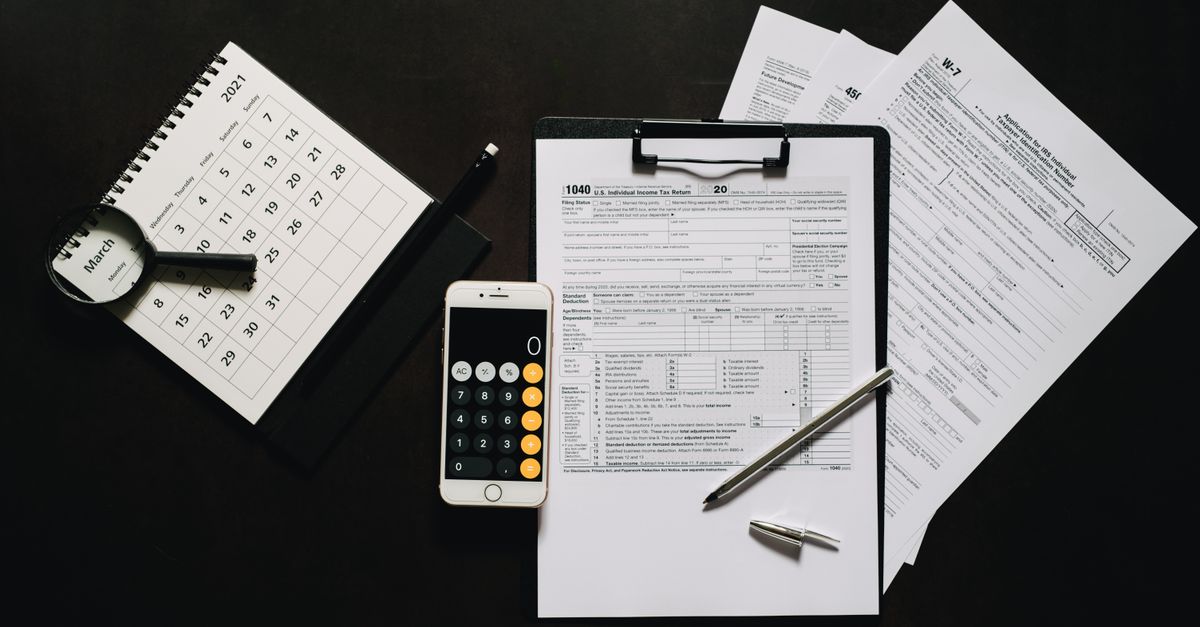
Photo: Jakub Zerdzicki on Pexels · Illustrative image.
If you pay rent for a home in Ireland, you can probably knock up to €1,000 a year off your income tax bill, or €2,000 if you are a married couple or civil partners taxed jointly (Revenue). That is the Rent Tax Credit. It is not paid automatically. You have to claim it, and you can claim it for every year back to 2022.
The catch is the four-year rule. Revenue only lets you go back four years, so the 2022 credit must be claimed by 31 December 2026 or it is gone for good (Revenue). If you have been renting since 2022 and never claimed, this is the year to sort it.
If you want to check the amount rather than just the eligibility rules, use Compound’s Rent Tax Credit Calculator. For the wider PAYE picture, see Tax Credits in Ireland Explained, and follow the Budget 2027 tracker for any change to the credit after 2026.
What is the Rent Tax Credit and how much is it worth in 2026?
The Rent Tax Credit is available for the tax years 2022 to 2028 and reduces the amount of income tax you owe for the year (Revenue). A tax credit comes straight off your tax bill, so €1,000 of credit means €1,000 less tax, not €1,000 less taxable income.
The maximum depends on the year. For 2022 and 2023, it was €1,000 for jointly assessed married couples or civil partners and €500 in all other cases, including single people (Revenue). For 2024 to 2028, it is €2,000 for jointly assessed couples and €1,000 in all other cases (Revenue). The maximum has not gone up for 2026. The 2024 to 2028 figures are the ones that apply this year.
You do not automatically get the full amount. Relief is granted at 20% of the rent you paid (Revenue). Revenue’s worked examples use a “specified amount” of €5,000 in rent for a single person and €10,000 for a jointly assessed couple, which is what you need to pay in the year to reach the maximum credit (Revenue). Most renters paying market rent are well past those figures.
There is a second cap. If the credit due is more than your income tax bill for the year, you cannot use all of it (Revenue). It comes off income tax only, not USC (Universal Social Charge, a separate tax on income) or PRSI (Pay Related Social Insurance, the payment that funds state benefits). Revenue’s own example is a single renter whose income tax bill was €120: their credit was €120, even though 20% of their rent came to €320 (Revenue). A student with a part-time job or a low earner who pays little or no income tax will get less than the headline figure, and possibly nothing.
Who can claim it — and who is shut out?
The basic conditions are simple. The property must be a residential property located in the State, meaning the Republic of Ireland (Revenue). The rent must have been due and paid during the tax year, and the tenancy must have been entered into with the landlord’s consent (Revenue).
The property is usually your own home. A second rented home also qualifies if you rent it to take part in your employment, office holding, trade, profession or an approved course (Revenue). A room rented near work during the week counts. A holiday home does not.
Supported tenants are shut out. If you receive HAP (the Housing Assistance Payment, where the council pays your landlord), Rent Supplement or RAS (the Rental Accommodation Scheme, where the council leases the home and you pay rent to the council), you cannot claim (Revenue). That applies even if you pay a top-up to the landlord yourself.
Housing body tenants are shut out. You cannot claim if your landlord is a Housing Association or Approved Housing Body, a not-for-profit landlord providing social housing (Revenue).
Parents and children are shut out. The credit is never available if you and the landlord are parent and child, or the other way round (Revenue).
Other relatives, sometimes. If you rent from an aunt, sibling or cousin, you can still claim, but only if the tenancy is of a type that must be registered with the RTB (the Residential Tenancies Board, the state body that regulates private renting and keeps the national register of tenancies) and the landlord has actually registered it (Revenue).
Does my landlord have to be registered with the RTB?
For most renters, yes. Most residential tenancies in Ireland must be registered with the RTB, including those with private landlords, Approved Housing Bodies, student specific accommodation and cost rental homes (RTB). Landlords must register within 30 days of a new tenancy starting, and again every year on the anniversary (RTB).
Revenue’s rule is blunt. Certain tenancies must be registered with the RTB, and if that registration is not complete, the claimant will not be eligible for the Rent Tax Credit (Revenue). So for an ordinary private rental, your landlord needs to have registered.
Two things soften this in practice. First, some arrangements do not need registering at all, most importantly renting a room in your landlord’s own home (RTB). Those arrangements can still qualify for the credit. Second, Revenue says you should take all reasonable steps to obtain the RTB number for your tenancy, where applicable, but that if you cannot provide it at the time of your claim you will not be prevented from making a claim (Revenue).
The honest way to read those two pages together: a missing number will not block the form, but a tenancy that should be registered and is not will defeat your entitlement if Revenue checks. You can look up whether your tenancy is registered on the RTB’s public register, and you can report an unregistered tenancy to the RTB (RTB). Ask your landlord for the number. It is theirs to provide.
Can I claim for a child in student accommodation, or for digs?
Yes, with conditions. A parent paying rent for a child’s accommodation can claim the credit where the child is on an approved course. An approved course has the same meaning as for tax relief on third-level tuition fees, and Revenue publishes an approved list of college courses to check against (Revenue).
The age rule matters. The child must have been under 23 at the start of the tax year in which they first began the approved course (Revenue). A mature student’s parents cannot claim.
Digs count too. Budget 2024 brought “rent-a-room” or “digs” type arrangements, where a student rents a room in someone’s home, within the credit, and following Budget 2025 that change applies to claims for the years 2022 to 2028 (Revenue). So a parent who paid digs in 2022 or 2023 and was told at the time it did not qualify can now go back and claim.
Purpose-built student accommodation must be registered with the RTB like any other tenancy (RTB), so the registration rule above applies. The relationship rule is stricter for a child’s accommodation: no credit if you or your child and the landlord are related in any way (Revenue).
How do I actually claim — myAccount, or Form 11 if I’m self-assessed?
For PAYE workers, meaning employees whose tax is deducted by their employer under Pay As You Earn, the current year is claimed in myAccount, Revenue’s online service for individuals (Revenue):
- Sign into myAccount and go to “PAYE Services”.
- Click “Manage your tax for the current year”, then “Add new credits”.
- Under “You and Your family”, claim the Rent Tax Credit.
Claiming in-year adjusts your tax credits, so you see the benefit through your payslip for the rest of the year rather than as a lump sum later.
For previous years, PAYE workers click “Review your tax for the previous 4 years” in PAYE Services, request a Statement of Liability for the year in question, then complete the Income Tax Return for that year and add the Rent Tax Credit under “You and your family” in the tax credits section (Revenue). Any refund due is then paid to your bank account.
If you are self-assessed, for example a sole trader or someone with rental or investment income, you claim on Form 11, the annual self-assessment income tax return, filed through ROS (Revenue Online Service, the online system for businesses and the self-employed). Sign into ROS, click “File Return”, select “Income Tax” and the year, then find the Rent Tax Credit section of the return and enter the details asked for (Revenue). If you are not sure how to complete the rest of the return, talk to an accountant before filing. A Form 11 is a full declaration of your income, and mistakes there cost more than a missed credit.
Whichever route you use, have these ready: the address of the property, the landlord’s name and address, the RTB registration number if you have it, and the rent paid in the year. Keep your lease, rent receipts or bank statements. Revenue says you should keep all records related to your rental arrangement so you can provide them if requested (Revenue).
Can I still claim for 2022, 2023, 2024 and 2025?
Yes. The credit runs from 2022 (Revenue), and every one of those years is still open right now under the four-year rule, which only lets you request reviews or claim refunds for the last four years (Revenue).
The 2022 year is the urgent one. Claims for 2022 must be made by 31 December 2026, and claims made after that cannot be repaid (Revenue). Each later year drops off at the end of the fourth year after it. A single renter who qualified for the full credit in every year from 2022 to 2025 and has claimed nothing is sitting on up to €3,000 in refunds. A jointly assessed couple could be owed up to €6,000.
What stops a claim from being paid?
The common reasons a claim fails or pays less than expected:
- Your tenancy should be registered with the RTB and is not (Revenue).
- You are on HAP, Rent Supplement or RAS, or your landlord is an Approved Housing Body (Revenue).
- Your landlord is your parent or child (Revenue).
- Your income tax bill for the year is smaller than the credit, so the credit is limited to what you actually owe (Revenue).
- You paid less than €5,000 in rent as a single person or €10,000 as a couple, so 20% of your rent comes to less than the maximum (Revenue).
- The year has passed the four-year limit (Revenue).
None of these are reasons not to check. Log into myAccount, look at 2022 first, and work forward. It takes minutes per year, and the 2022 money is only there until the end of December.
Related Compound guides
Before claiming, use the Rent Tax Credit Calculator to estimate the maximum credit your rent and Income Tax liability could support. For the wider system, see Tax credits in Ireland explained. Budget 2027 may also change the credit, so the latest position is tracked in Rent Tax Credit and Budget 2027.
Figures used in this piece
| Figure | What it means | Source |
|---|---|---|
| €1,000 | Maximum credit, single person, 2024 to 2028 | Source ↗ |
| €2,000 | Maximum credit, jointly assessed couple, 2024 to 2028 | Source ↗ |
| €500 | Maximum credit, single person, 2022 and 2023 | Source ↗ |
| 2022 | First tax year the credit applies to | Source ↗ |
| 2028 | Last tax year the credit applies to | Source ↗ |
| 2023 | Second year of the lower maximum | Source ↗ |
| 2024 | First year of the higher maximum | Source ↗ |
| 2025 | Tax year within the 2022 to 2028 range still open to claim | Source ↗ |
| 2026 | Current tax year and year the 2022 claim window closes | Source ↗ |
| 31 December 2026 | Deadline for 2022 claims under the four-year rule | Source ↗ |
| four years | Look-back limit for refunds and reviews | Source ↗ |
| 20% | Rate of relief on rent paid | Source ↗ |
| €5,000 | Specified rent amount for a single person to reach the maximum | Source ↗ |
| €10,000 | Specified rent amount for a jointly assessed couple to reach the maximum | Source ↗ |
| €120 | Revenue example: credit limited to a €120 income tax bill | Source ↗ |
| €320 | Revenue example: 20% of rent paid before the income tax cap | Source ↗ |
| 30 days | Time limit for a landlord to register a new tenancy with the RTB | Source ↗ |
| 23 | Child must have been under 23 at the start of the tax year the course began | Source ↗ |
| Budget 2024 | Budget that brought digs and rent-a-room arrangements into the credit | Source ↗ |
| Budget 2025 | Budget that back-dated the digs change to 2022-2028 | Source ↗ |
| 4 | myAccount menu option: Review your tax for the previous 4 years | Source ↗ |
| €3,000 | Arithmetic: single person's maximum for 2022 to 2025 (€500 + €500 + €1,000 + €1,000), derived from Revenue's maxima | Source ↗ |
| €6,000 | Arithmetic: jointly assessed couple's maximum for 2022 to 2025 (€1,000 + €1,000 + €2,000 + €2,000), derived from Revenue's maxima | Source ↗ |