Planning Application Process Ireland: Timeline, Fees and What Happens Next
A step-by-step guide to making a planning application in Ireland: public notices, documents, fees, validation, the five-week submission period, eight-week decision target, further information and final grant.
 Wealth / The Compound journal
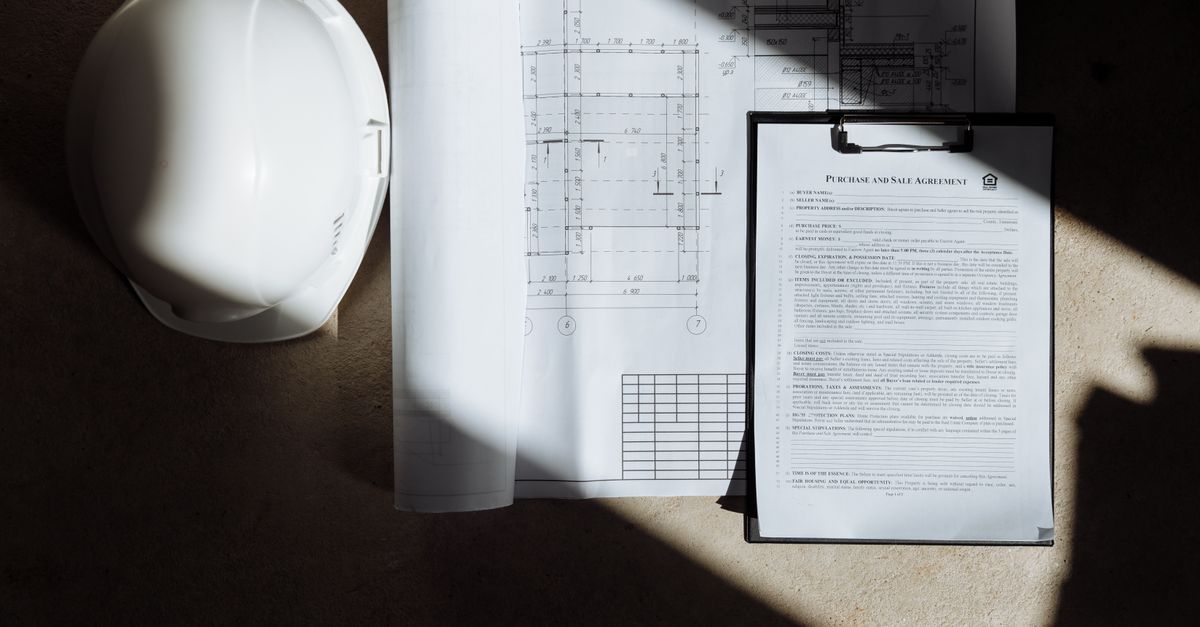
Photo: Thirdman on Pexels · Illustrative image.
A planning application is not just a set of drawings.
It is a statutory process.
That means an application can fail before the planning authority even considers whether the design is good if the notices, maps, forms or other required information are not valid.
Quick answer
For a standard local-authority planning application, you normally publish a newspaper notice and erect a site notice, lodge the application within the required time, pass validation, allow a five-week public-submission period, and wait for the planning authority's decision.
Where no further information is required, the planning authority generally makes its decision within eight weeks of receiving a valid application. A four-week appeal period then follows the decision.
For the wider rules on when permission is needed, start with Planning Permission in Ireland: The Complete Guide.
Step 1: establish what you are applying for
Before producing the final application, define the actual development.
That sounds obvious, but vague projects create weak applications.
For a house, the proposal might include:
- the dwelling;
- domestic garage;
- site entrance;
- driveway;
- wastewater treatment system;
- well or water connection;
- boundary treatment;
- landscaping;
- and associated site works.
For an extension, it can include:
- demolition;
- floor-area increase;
- new roof form;
- windows;
- changes to elevations;
- drainage;
- and external works.
The application should describe the whole development accurately.
Step 2: check the development plan
Before spending heavily on a finished design, read the relevant development plan.
The plan can contain policies on:
- zoning;
- rural housing;
- settlement strategy;
- design;
- building height;
- residential amenity;
- density;
- parking;
- protected structures;
- flood risk;
- landscape;
- roads and access;
- wastewater;
- biodiversity;
- and many other issues.
For rural one-off housing, development-plan policy can be especially important.
A technically polished application cannot fix a proposal that fundamentally conflicts with policy.
Step 3: consider pre-planning advice
For significant or difficult proposals, a pre-planning consultation can help identify issues before a full application is lodged.
It is particularly worth considering for:
- a new house;
- a rural site;
- unusual access;
- protected structures;
- difficult extensions;
- flood-risk areas;
- sites with wastewater constraints;
- or development that may conflict with local policy.
Pre-planning advice is not a guarantee of permission.
The final decision has to be made through the statutory process.
Step 4: prepare the drawings and technical material
The exact documents vary.
Common residential application material can include:
- site location map;
- site layout plan;
- floor plans;
- elevations;
- sections;
- existing/proposed drawings;
- application form;
- public notices;
- ownership information;
- planning fee;
- and supporting reports.
Depending on the site, additional work can include:
- site-characterisation / wastewater information;
- traffic or sightline assessment;
- flood-risk assessment;
- ecological information;
- Appropriate Assessment screening;
- archaeology;
- conservation reports;
- landscaping;
- drainage;
- or planning statements.
The planning authority needs enough information to assess the development.
Step 5: publish the newspaper notice
Before lodging the application, you normally have to publish a notice in an approved newspaper.
Your planning authority can tell you which publications satisfy the local requirements.
The wording has to match the application.
Errors can make the application invalid.
The planning application must generally be received by the planning authority within two weeks of publication of the newspaper notice.
Do not publish the notice and then allow the application to drift for several weeks.
Step 6: erect the site notice
A site notice must also be erected in the required location and format.
It must be clearly visible and legible.
The notice normally remains in place for at least five weeks from the date the planning authority receives the application.
The period from 24 December to 1 January can affect statutory time calculations.
Follow your local authority’s current notice template and requirements.
Step 7: lodge the application
Applications can be made to the relevant planning authority, and the national Local Government Online Planning portal supports online applications across participating authorities.
The portal lets applicants:
- create an application;
- upload documents;
- submit;
- provide further material later where required;
- and view status information.
Whether submitting online or otherwise, check the local authority’s current checklist.
Step 8: pay the application fee
Current statutory examples include:
- €65 for provision of a dwelling;
- €34 for a domestic extension or other qualifying domestic improvement.
The statutory fee is not the same thing as the total cost of getting a project through planning.
Professional and supporting costs can be much larger.
For retention permission, higher fees apply.
Read Retention Planning Permission Ireland.
Step 9: validation
Once received, the application is checked for validity.
Validation is procedural.
The authority is checking whether the application has been properly made and contains the required information.
Common validation problems can involve:
- incorrect notice wording;
- mismatches between newspaper/site notice and application;
- missing documents;
- incorrect maps;
- missing signatures;
- wrong fee;
- or other formal defects.
If the application is invalid, it is normally returned and must be corrected.
That resets your timetable.
Step 10: the five-week public period
A valid application becomes open to public participation.
Anyone can generally make a submission or observation during the statutory period, subject to the required fee and process. Our Planning Objections & Submissions guide explains the €20 fee, five-week deadline, planning grounds and why participation matters for later appeal rights.
The normal local-authority submission fee is €20.
The first five weeks are important.
This is when:
- neighbours;
- community groups;
- interested persons;
- prescribed bodies;
- and others
may raise planning issues.
The planning authority must consider valid submissions.
Step 11: the planning authority assesses the proposal
The authority assesses the development against matters such as:
- development-plan policy;
- proper planning and sustainable development;
- site context;
- design;
- access and traffic;
- drainage;
- amenity;
- environmental issues;
- heritage;
- and the valid submissions received.
The planner may recommend:
- grant;
- refusal;
- or a request for further information.
The eight-week decision target
For a valid ordinary application where no further information is required, the planning authority generally makes its decision within eight weeks from receipt.
The process is often described as:
Weeks 1–5: public submission period and assessment begins.
Weeks 5–8: authority completes assessment and issues its decision.
That is the clean path.
Many real applications take longer because of further information.
What is a request for further information?
A request for further information — often called an FI request — means the planning authority needs additional material before deciding.
It can ask for matters such as:
- revised drawings;
- sightlines;
- wastewater information;
- drainage;
- design changes;
- ecology;
- flood risk;
- additional reports;
- or clarification.
This can materially extend the process.
Galway City Council notes that an applicant generally has six months to respond to a further-information request before the application is deemed withdrawn, with a possible additional three-month extension where properly sought.
Check the exact request and current statutory rules applying to your case.
Significant further information
Sometimes a response to further information changes the proposal substantially.
Where new material is considered significant, additional public notice or participation steps may be required.
This is another reason the process can extend beyond the initial eight weeks.
What decisions can the council make?
The authority can decide to:
- grant permission;
- grant permission subject to conditions;
- refuse permission.
A grant with conditions is extremely common.
Conditions can be significant.
They may affect:
- design;
- materials;
- landscaping;
- drainage;
- access;
- wastewater;
- development contributions;
- pre-commencement requirements;
- or other project details.
Read every condition before committing to construction.
Notice of decision versus final grant
This distinction causes confusion.
If the planning authority decides to grant permission, that decision is followed by a statutory appeal period.
A planning appeal can be lodged within four weeks beginning on the date the planning authority makes its decision.
If no valid appeal is made, the final grant can issue.
So:
decision to grant ≠ final grant
Do not start construction simply because the decision looks favourable.
Planning appeals
The applicant can appeal a refusal or conditions.
A person who made a valid submission at planning-authority stage can generally appeal as a third party.
The four-week deadline is strict.
Current ordinary residential first-party and third-party appeal fees are generally €220.
Read Planning Appeals in Ireland.
How long should you allow in a project programme?
For a very clean application:
- preparation time;
- notice period;
- 8-week decision period;
- 4-week appeal period;
already creates a meaningful lead time.
For a more realistic project, allow contingency for:
- invalidation;
- further information;
- revised design;
- specialist reports;
- appeals;
- and pre-commencement condition compliance.
Do not book construction around an optimistic eight-week assumption.
What happens after permission is final?
Planning permission is only one project gate.
Before construction, you may still need to address:
- conditions;
- development contributions;
- Commencement Notice;
- building-control documents;
- disability/fire requirements where relevant;
- utility approvals;
- wastewater;
- roads/access requirements;
- and professional certification.
For domestic construction, the Building Control Management System can be an important next step.
How long does permission last?
Planning permission normally has a five-year duration.
The expiry date is important when:
- buying a site with permission;
- delaying construction;
- selling a site;
- financing a project;
- or considering an extension of duration.
Do not assume an old permission remains valid forever.
Common application mistakes
Treating the eight weeks as the entire process
It is the ordinary council decision period, not a guarantee of a final buildable permission at week eight.
Getting the notice wrong
Public notices are part of validation.
Ignoring the development plan
Policy problems should be identified before lodging.
Underestimating reports
A difficult site may require more than architectural drawings.
Booking a builder before the final grant
An appeal can change the timetable and outcome.
Ignoring conditions
Some must be addressed before work starts.
Frequently asked questions
How long does a planning application take in Ireland?
A planning authority generally makes a decision within eight weeks of receiving a valid standard application where no further information is required. The four-week appeal period follows.
How much is a planning application for a house?
The current statutory fee is €65 per dwelling for the standard class.
How much is an extension planning application?
The standard domestic extension/improvement fee is currently €34.
How long can further information delay planning?
It can add months. Applicants generally receive a statutory period in which to respond, and the authority then has another decision period after receiving a valid response.
Can I apply online?
Yes. The Local Government Online Planning system supports electronic planning applications across local authorities using the national portal.
Can I start work once the council says it intends to grant permission?
No. Wait for the final grant and make sure any pre-commencement conditions and building-control requirements are dealt with.
The bottom line
A planning application is easiest to manage when you separate it into four stages:
- design and policy
- validation
- planning assessment and public participation
- final grant, conditions and construction compliance
The biggest time savings often happen before the application is lodged.
A complete, policy-aware application is far more valuable than rushing into the statutory clock with unresolved problems.