Aptiv Spun Off Its Wiring Business. Did the Remaining Company Get Better?
Aptiv is smaller after spinning off its wiring business. The investment test is whether the remaining segments can deliver better margins and cleaner cash generation.
 Wealth / The Compound journal
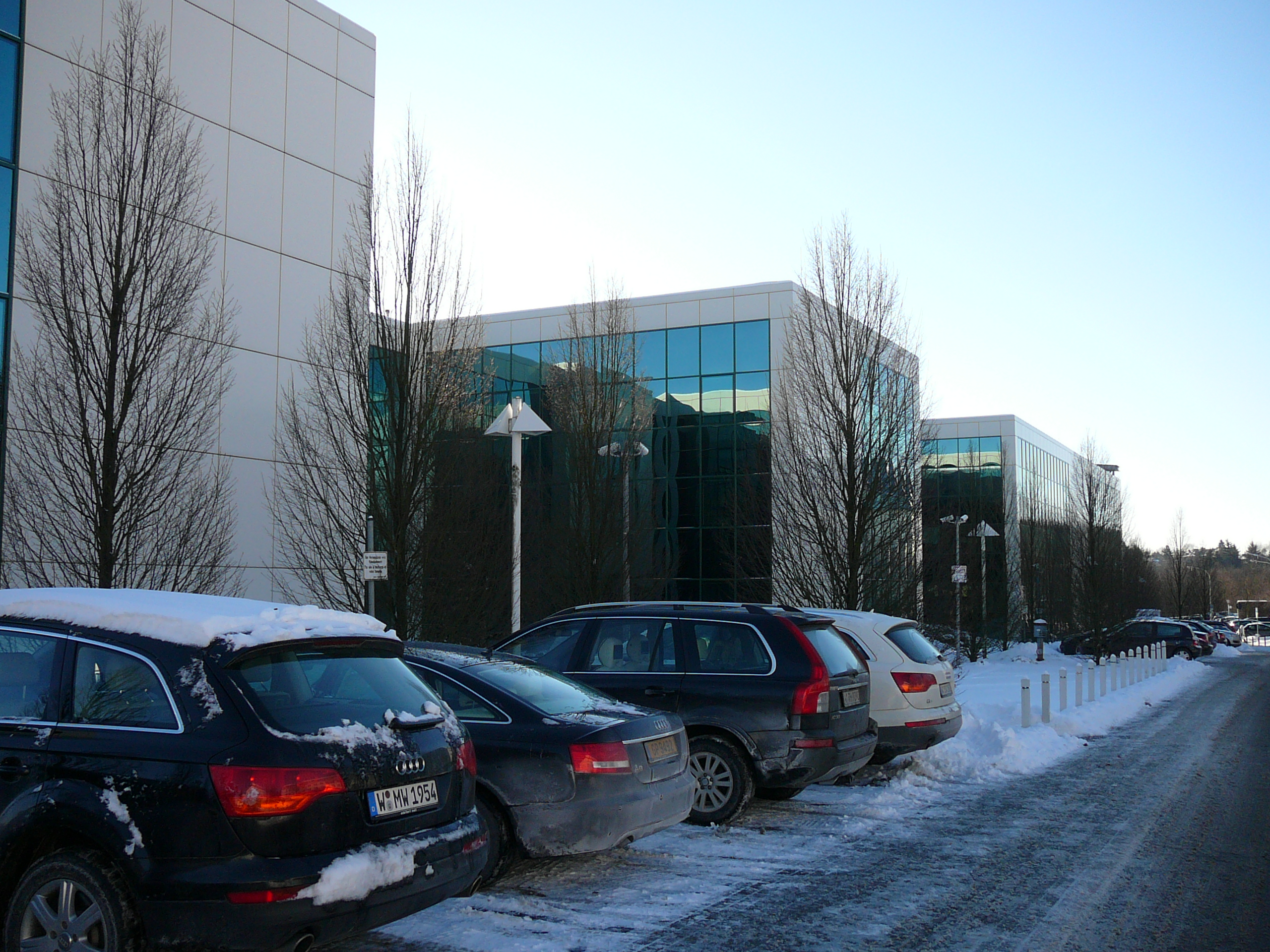
Photo: Atamari / Wikimedia Commons, CC BY-SA 3.0. Archival photograph taken 6 January 2009; cropped for publication. · Illustrative image.
Aptiv’s spin-off has made it a smaller company with a sharper technology story. The harder question is whether the remaining business is actually becoming better.
On 1 April 2026, Aptiv separated its Electrical Distribution Systems business as Versigent. Historical results for that business are now treated as discontinued operations. What remains is split between Engineered Components and Intelligent Systems: connectors and power-distribution products on one side, sensors, compute, software and services on the other.
That sounds like a cleaner portfolio. Yet the first full quarters after a separation can flatter or obscure the economics. Debt moves, stranded costs and separation charges complicate comparisons. Investors need to examine the two continuing segments rather than assume that a spin-off automatically improved quality.
For the maintained financial record, see Aptiv’s stock profile. This analysis asks whether “new Aptiv” is producing stronger segment economics and cash.
The dependable segment is not the obvious technology story
In the Q3 filing, Engineered Components generated $1.835 billion of sales, up 7% from $1.710 billion. Segment adjusted operating income rose to $303 million from $267 million.
That implies a margin of about 16.5%, compared with 15.6% a year earlier. This is Compound’s calculation from Aptiv’s reported segment figures.
Intelligent Systems moved the other way. Sales fell 3% to $1.402 billion, while segment adjusted operating income declined to $124 million from $137 million. Its calculated margin slipped to roughly 8.8% from 9.5%.
The detail makes the investment question more interesting. Within Intelligent Systems, Sensors and Compute revenue fell to $1.299 billion from $1.325 billion. Software and Services also declined, to $119 million from $134 million. The broader “technology” label does not by itself guarantee faster growth or higher margins.
At group level, revenue increased 2% to $3.199 billion. Continuing-operations income was $194 million, compared with a $488 million loss in the prior-year quarter, which included a $648 million goodwill impairment. That swing should not be mistaken for an equivalent operating improvement.
The balance sheet changed for a reason
Aptiv ended September with $670 million of cash, down from $1.575 billion at the end of 2025. Long-term debt fell to $5.332 billion from $7.467 billion.
Those movements are tied to the separation. Aptiv received a $1.893 billion cash distribution from Versigent and used separation proceeds to repay roughly $2.054 billion of senior notes. It also transferred $282 million of cash with the spun-off business.
Debt reduction is useful, but this was not ordinary operating cash generation. It was portfolio financing. The distinction matters because it cannot be repeated every quarter.
Aptiv also returned capital. It spent $233 million repurchasing shares in Q3 and $558 million over the first nine months. Diluted weighted-average shares fell to 206.3 million from 217.4 million. Per-share growth can therefore exceed growth in the underlying business, and investors should check both.
Cash conversion is the next proof point
The results release reports $320 million of Q3 operating cash flow from continuing operations and $194 million of company-defined free cash flow. For the first nine months, continuing operating cash flow was $402 million while capital expenditure was $404 million under the GAAP cash-flow statement.
The full-year outlook calls for $625 million to $675 million of adjusted free cash flow. Reaching that range would require a much stronger final quarter. Seasonality may help, but the gap makes cash conversion a better test than headline earnings alone.
Guidance also points to full-year revenue of $12.65 billion to $12.75 billion and adjusted EBITDA of $2.31 billion to $2.37 billion. These are management’s non-GAAP measures, not guaranteed outcomes.
What would confirm the thesis?
Three things would strengthen the case. Engineered Components would keep converting volume into higher segment margins. Intelligent Systems would return to growth without sacrificing profitability. And operating cash flow would fund investment and buybacks without another portfolio transaction doing the heavy lifting.
The counter-case is that the “higher technology” portfolio remains cyclical, Intelligent Systems stays sluggish and cash conversion disappoints. In that outcome, the spin-off would have simplified the story more than it improved the economics.
Aptiv has removed a large wiring business and paid down debt. It has not yet proved that the remaining company deserves a structurally better economic profile. The next evidence should come from segment margins and cash, not the label attached to the portfolio.
Explore Compound’s earnings hub and our guide to investment diversification.
Reported figures are in US dollars and relate to Q3 2026 unless stated otherwise. Facts come from Aptiv’s results release and Form 10-Q; calculations and interpretation are Compound’s. General information, not personal investment advice.
Cover: Atamari, Wikimedia Commons, under CC BY-SA 3.0. Archival photograph taken 6 January 2009; cropped for publication and not presented as a current operating image.