Irish milk prices set to fall 18.1% as fertiliser costs rise, CSO estimates
The CSO expects Irish farm milk prices to fall 18.1% in 2026 and fertiliser prices to rise 18%. What those changes could mean for a dairy household’s cash flow.
 News / Wealth
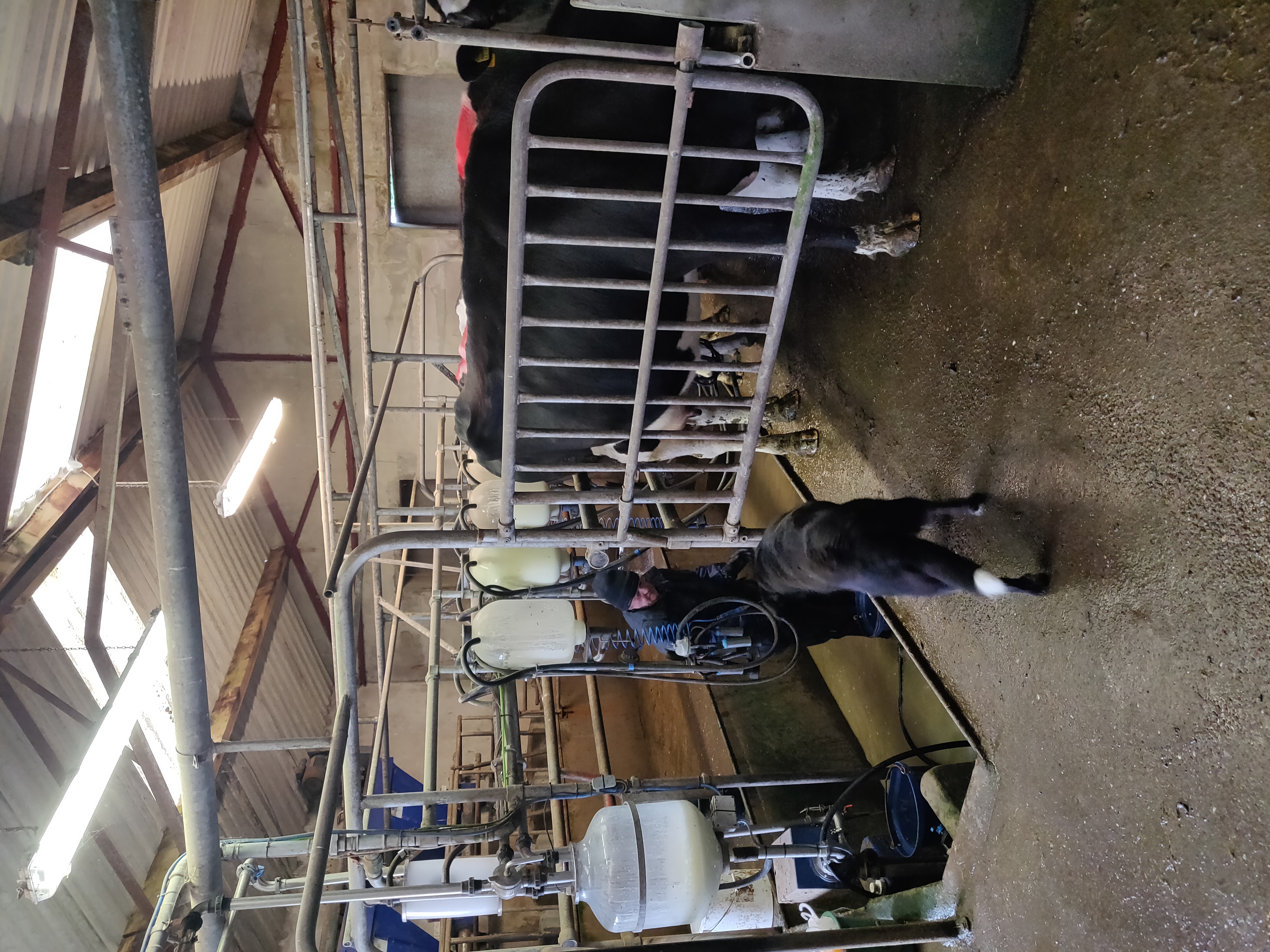
Photo: Tim Sheerman-Chase, Milking parlour, Carrigcleena, 28 June 2024, via Wikimedia Commons, CC BY 2.0 · Illustrative image.
An Irish dairy household could sell the same volume of milk as last year and still have substantially less cash available for bills. In preliminary estimates published on 6 November, the CSO puts the average 2026 price farmers receive for milk 18.1% below 2025. At the same time, it expects fertiliser prices to rise 18.0% and farm energy prices to rise 17.9%.
What the two price changes look like on one farm
Suppose a farm sold €50,000 of milk last year. If it sells the same quantity and its price follows the national estimate, the cheque falls to €40,950 (€50,000 × 0.819). Now take a €5,000 fertiliser purchase. Buying the same quantity at a price 18% higher costs €5,900.
Together those two lines leave the farm €9,950 worse off before changes in energy, feed, other receipts or tax. The milk price accounts for €9,050 of that difference and fertiliser for €900. These are illustrative amounts. A milk statement gives a family its own realised price, including the effect of composition and bonuses. Comparing litres delivered as well as the cheque helps separate a price change from a change in output.
Why a 15.8% fall in the terms of trade matters
Across Irish agriculture, the CSO expects output prices to fall 10.3% while input prices rise 6.5%. Its terms-of-trade measure divides the output price index by the input price index. On the CSO’s estimate that ratio falls 15.8%. In practical terms, the sale of a fixed basket of produce buys fewer farm inputs than it did a year ago.
Farm profit also depends on quantities, the mix of enterprises and other income. The CSO methodology combines observed monthly prices with estimates for the remainder of the year. These are provisional full-year figures for farming in Ireland. A supermarket shopper cannot apply the 18.1% farm-gate estimate to the price of a litre on the shelf.
For a household drawing money from the business, start with the next milk receipts and the dates the farm’s input bills fall due. Then separate the amount available for household essentials. The emergency fund calculator can help size that personal cash reserve using monthly spending.
Archive photograph: Tim Sheerman-Chase, Milking parlour, Carrigcleena, 28 June 2024, via Wikimedia Commons, CC BY 2.0. Licence. Social previews crop this photograph to fit.