A Buddhist monk has begun 12 years on a mountain. What can it teach us about the modern mind?
A Japanese Buddhist monk has begun a 12-year period of mountain confinement. The practice is extreme, but it raises useful questions about meditation, attention, routine, solitude and mental wellbeing.
 News / Life
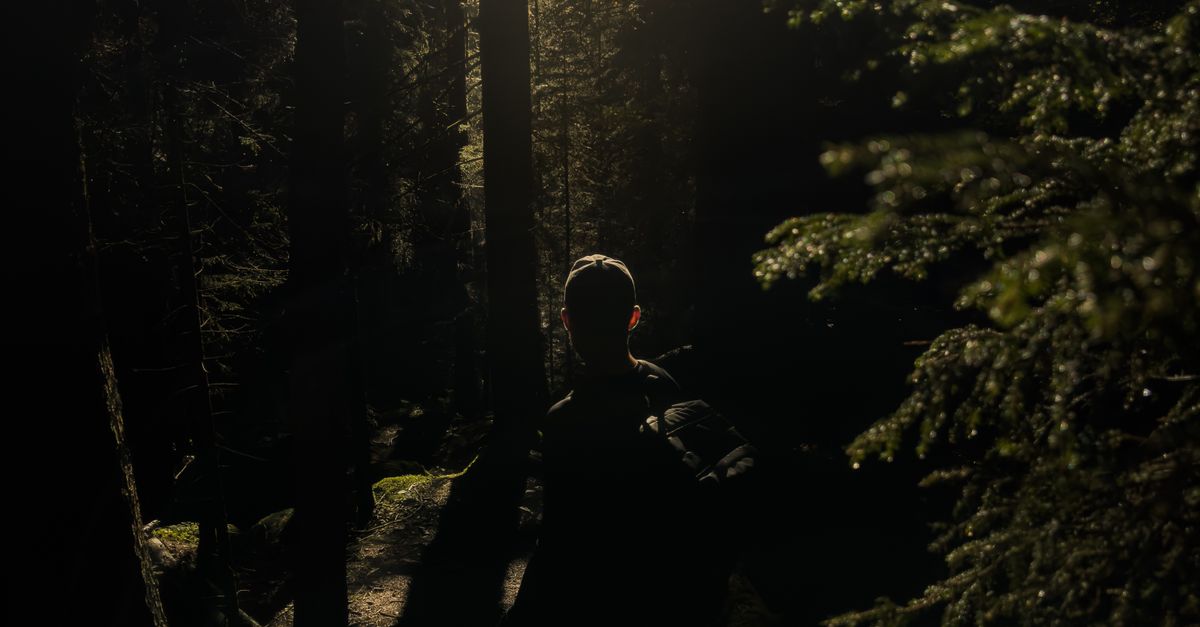
Photo: Madhan Kanagavel on Pexels · Illustrative image.
Life analysis · 29 September 2026. This article discusses meditation and mental wellbeing for general information. Meditation can be useful for some people, but it is not a substitute for professional mental-health care when that is needed.
A Japanese Buddhist monk has begun one of the most extraordinary religious commitments still practised today:
twelve years on Mount Hiei, largely cut off from ordinary life.
The headline sounds almost impossible in 2026.
No normal career. No ordinary social life. No constant stream of notifications. No checking what happened overnight before getting out of bed.
Instead, the monk takes on the role of jishin, sometimes translated as the “true watcher”, at Jodo-in on Mount Hiei near Kyoto.
According to the Japan Tourism Agency, Jodo-in is the mausoleum of Saicho, the founder of Japan’s Tendai Buddhist tradition. A jishin serves Saicho’s spirit as though he were still alive, while following an exceptionally strict monastic routine.
The monk cleans the grounds, performs religious services, studies and maintains the discipline of mountain ascetic practice.
And, crucially:
he does not leave Mount Hiei for twelve years.
That does not make the practice a twelve-year meditation session. Nor should it be romanticised as an experiment proving that extreme isolation is good for mental health.
It is a structured religious life with ritual, purpose, tradition and responsibilities.
But the story raises a fascinating question for everyone living at the opposite end of the attention spectrum:
What happens to the mind when much of the noise competing for it disappears?
The modern mind rarely gets to be still
Consider an ordinary morning.
Your alarm goes off on your phone.
There may already be notifications waiting.
Email. WhatsApp. News. Work messages. Instagram. Sport. Markets. Weather.
You can receive information from dozens of people before you have even left the bedroom.
Technology has given us extraordinary access to information and other people.
But it has also made genuine periods of doing very little surprisingly rare.
Waiting for a bus once meant waiting.
Now it often means scrolling.
A walk can become an opportunity for a podcast.
Lunch can be accompanied by YouTube.
Even the few minutes before sleep may be filled with one final check of the phone.
None of these behaviours is automatically harmful.
The more interesting point is that we have become exceptionally good at eliminating empty space.
Meditation deliberately creates some of it again.
What meditation actually asks you to do
There is often unnecessary mysticism surrounding meditation.
At its simplest, many forms involve intentionally directing attention towards something occurring in the present moment — perhaps your breathing, bodily sensations or sounds — and noticing what happens when your attention wanders.
Then you return it.
And repeat.
The aim is not necessarily to “empty your mind”.
Thoughts appearing are not evidence that you are bad at meditating.
The act of noticing that your attention has wandered and deliberately bringing it back is a large part of the practice.
That sounds almost trivial.
Try it for five minutes and it becomes much more interesting.
What does the evidence say?
Meditation is sometimes presented online as if it can solve almost anything.
The evidence is more measured.
The US National Center for Complementary and Integrative Health says mindfulness and meditation have been studied for anxiety, stress, depression, sleep and other health outcomes.
Some analyses suggest mindfulness-based approaches can improve symptoms of anxiety and depression compared with no treatment, and certain structured programmes have produced outcomes comparable with established treatments in some study populations.
But the research is heterogeneous.
Different studies use different techniques, populations and outcome measures, and NCCIH cautions that results have sometimes been interpreted too optimistically.
There is also an important safety point.
Meditation is generally considered low risk, but it is not universally pleasant. NCCIH cites a review in which about 8% of participants reported a negative effect, most commonly anxiety or depression.
So the useful conclusion is not:
“Meditation fixes your mental health.”
It is closer to:
Meditation is a trainable way of working with attention and awareness that appears helpful for some people, particularly when used within well-designed programmes.
Attention may be the more interesting story
One of the most striking things about the Mount Hiei practice is how completely it reverses the incentives of modern digital life.
Much of the internet is designed around capturing attention.
Another video.
Another notification.
Another headline.
Another refresh.
The monk’s life is organised around something very different: repeated duties, study, ritual and an intentionally constrained environment.
Ordinary people do not need anything remotely this extreme to notice the same underlying problem.
If you find yourself:
- automatically reaching for your phone;
- unable to watch something without checking another screen;
- struggling to read for more than a few minutes;
- filling every quiet moment with audio;
- or repeatedly checking apps without deciding to do so;
the issue may not be a lack of information.
It may be that your attention rarely gets a chance to settle.
Meditation gives you a simple way to observe that directly.
Try five minutes
You do not need special equipment.
Sit somewhere reasonably comfortable.
Put your phone out of reach and set a timer for five minutes.
Breathe normally.
Notice the physical sensation of breathing.
You might focus on the air at your nose, the movement of your chest or your abdomen.
Eventually you will start thinking about work.
Or dinner.
Or tomorrow.
Or an argument from six years ago.
Or whether the five minutes are nearly finished.
When you notice that your attention has wandered, bring it back to breathing.
Then do it again.
That is the exercise.
You may discover that the difficult part is not sitting still.
It is choosing what your own mind pays attention to.
For people dealing with persistent rumination rather than ordinary distraction, our guide to how to stop worrying and overthinking goes further into practical evidence-based approaches.
Solitude is not the same thing as loneliness
This distinction is essential.
A twelve-year monastic retreat should not be used as evidence that people would be mentally healthier if they simply withdrew from society.
The Mount Hiei practice is voluntary, highly structured, purposeful and embedded in a long-standing religious institution.
Unwanted loneliness is very different.
The World Health Organization estimates that around one in six people globally experience loneliness.
WHO’s Commission on Social Connection describes loneliness and social isolation as significant health issues associated with poorer mental and physical health.
So there are two ideas that can both be true:
chosen periods of solitude can provide useful space for reflection;
and
meaningful human connection is important for health and wellbeing.
Being alone and feeling lonely are not identical experiences.
You can be alone without feeling disconnected.
You can also feel profoundly lonely in a room full of people.
If the issue is unwanted isolation rather than a desire for deliberate quiet, see our guide to loneliness in Ireland: how common it is and what helps.
Purpose changes the meaning of repetition
Imagine performing broadly the same set of duties for years.
From the outside, that might sound monotonous.
Within a monastic tradition, repetition can have a very different meaning.
The jishin is not simply “stuck” on the mountain.
The routine is the practice.
Cleaning matters.
Study matters.
Ritual matters.
Turning up tomorrow matters.
There is a useful lesson here that requires no religious belief.
A surprisingly large part of wellbeing is built through actions that look unimpressive on any individual day.
One walk does very little.
One early night does very little.
One conversation with a friend does very little.
One meditation session may do very little.
But repeated behaviours accumulate.
The same is true in the opposite direction.
One evening of poor sleep is usually manageable.
Months of it are different.
One stressful day is normal.
Chronic stress is different.
If stress rather than distraction is the main problem, see stress symptoms: what helps and when to get support.
There may be value in reducing decisions
Another feature of strict monastic life is that many ordinary decisions disappear.
Where will I go today?
What should I wear?
What should I do first?
Should I check my phone?
Should I go to the gym?
Should I work late?
Should I watch another episode?
Modern life offers huge freedom.
That freedom also creates continual negotiation.
A structured routine removes some of it.
That does not mean copying monastic rigidity.
It might mean deciding in advance that:
- your phone does not enter the bedroom;
- you walk after dinner;
- notifications are disabled during focused work;
- you meditate for five minutes after brushing your teeth;
- or one evening each week is deliberately left unscheduled.
Good routines can reduce the number of times you have to persuade yourself to do something useful.
This is one reason a break does not always feel restorative when the mind remains constantly stimulated. We explored that more directly in why time off doesn’t always feel like a break.
The lesson is not “disconnect from everything”
There is a temptation to turn stories like this into an attack on modernity.
Phones are bad.
Social media is bad.
Cities are bad.
The monk on the mountain has discovered the answer.
That would miss the point.
Technology gives us extraordinary advantages.
It lets families stay connected across countries.
It gives us access to education, healthcare information, work, entertainment and communities that previous generations could barely imagine.
The useful question is not whether modern technology is good or bad.
It is:
Are you using your attention deliberately, or is everything else deciding where it goes?
That is a much more practical question.
A realistic version for ordinary life
Nobody reading this needs a twelve-year retreat.
A more useful experiment might last twelve minutes.
For the next week, pick one small period each day and remove incoming stimulation.
You could:
- sit quietly for five to ten minutes and follow your breathing;
- walk without headphones;
- eat one meal without looking at a screen;
- leave your phone in another room while reading;
- turn off non-essential notifications;
- or spend the first ten minutes after waking without consuming news or social media.
Do not expect a revelation.
Pay attention instead to how strong the urge is to fill the silence.
That observation may tell you more about your relationship with attention than another productivity app ever could.
Meditation is not a test of toughness
The extremity of the Mount Hiei tradition also creates a risk of drawing the wrong lesson.
More meditation is not automatically better.
Long retreats and intensive practice are not appropriate for everybody.
If meditation consistently makes you substantially more anxious, distressed or detached, there is no prize for forcing yourself through it.
Structured support from a suitably qualified professional may be more appropriate, particularly for someone already experiencing significant mental-health symptoms.
Mental wellbeing is not an endurance competition.
The point of borrowing an idea from monastic practice is not to recreate the austerity.
It is to identify the part that may be useful.
In this case, that may simply be the deliberate creation of periods where nothing is demanding your attention.
Twelve years of ordinary days
Twelve years is difficult to comprehend.
A monk entering the practice in 2026 will still be living it in 2038.
AI will change.
Phones will change.
Governments will change.
Companies will appear and disappear.
Entire online trends will emerge, dominate culture and be forgotten.
On Mount Hiei, many days will continue to revolve around old practices: cleaning, ritual, study, attention and repetition.
There is no need to romanticise such an extreme commitment.
But there is something striking about it in 2026.
Most of us live in an environment where somebody or something is almost always asking for our attention.
A notification.
A message.
A recommendation.
A breaking-news banner.
A video selected by an algorithm.
A Buddhist monk choosing twelve years of disciplined mountain life represents almost the exact opposite.
The lesson for the rest of us probably is not to escape society.
It is much smaller:
Occasionally stop feeding the mind more information and see what happens when you give it some space instead.
And perhaps start with five minutes.