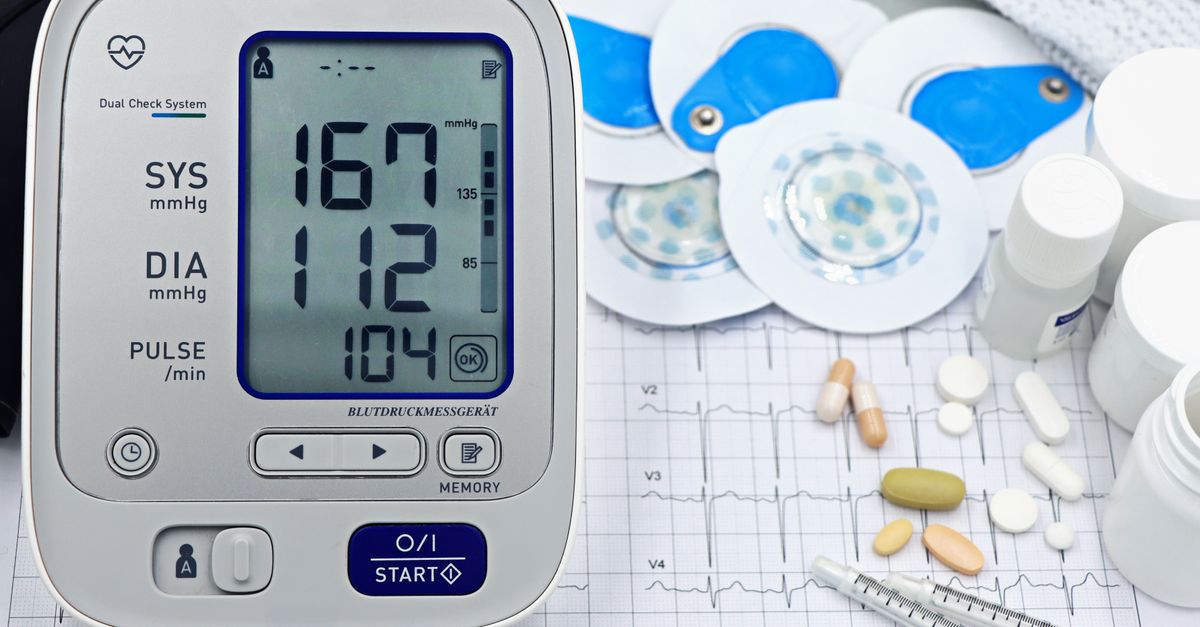
How to lower cholesterol: what actually moves LDL, and by how much
Two changes have a measured LDL effect in the trials behind this piece: daily oats, worth about 0.19 mmol/l, and swapping solid fats for liquid vegetable oils, worth 0.23 to 0.42 mmol/l when you replace a tenth of your calories. Exercise and weight loss point the right way, but this evidence puts no number on them, which is why a GP may still raise statins.
 Health / The Compound journal
Photo: Towfiqu barbhuiya on Pexels · Illustrative image.
If you have just had a cholesterol reading and want to know what to do before the next test, two changes have a measured effect on LDL cholesterol in the trials behind this piece. Eating oats daily lowered LDL by about 0.19 mmol/l — millimoles per litre, the unit on an Irish lab report — in a pooled analysis of fifty-eight randomised trials (British Journal of Nutrition). Replacing solid fats such as butter with liquid vegetable oils lowered LDL by 0.23 to 0.42 mmol/l in a network meta-analysis of fifty-four trials (Journal of Lipid Research) — though that figure comes from modelling an exchange of 10% of your total calories from one fat to the other, which is a far bigger change than switching what you fry in.
Exercise and losing some weight belong in the plan too, on general health grounds. But be straight about the evidence: the exercise research assembled here ranks types of training against each other rather than measuring millimoles, and none of these studies is a weight-loss trial. They point in the right direction; they do not come with a number. And every one of these changes was tested on its own, so nobody can tell you from this evidence what the whole package would do to your reading. That is the honest reason a GP may still raise medication with someone who is doing everything right.
One caveat before the detail. If you are already on a statin, if you have existing heart disease or have had a heart attack or stroke, or if familial hypercholesterolaemia — an inherited condition that pushes cholesterol very high from birth — is suspected in you or your family, none of this is a reason to defer, delay or stop treatment. These changes sit alongside whatever your GP has already decided, not instead of it.
What do the numbers on a cholesterol test actually mean, and which one matters?
A standard lipid panel gives you four lines. Total cholesterol is everything added together and is the least useful on its own. LDL cholesterol is the one that drives artery disease and the one every trial below is trying to shift. HDL cholesterol is the fraction that is not harmful in the same way; notably, the big Cochrane review of saturated fat found little or no effect on HDL from cutting saturated fat, so it is not a lever that diet change pulls. Triglycerides are a separate fat that responds mostly to alcohol, sugar and weight.
Two other terms show up on some Irish reports. Non-HDL cholesterol is total minus HDL, and apoB counts the number of harmful particles rather than the cholesterol inside them. Both moved in the same direction as LDL in the oat trials.
There is no single number that is “fine” for everybody. What your GP treats depends on your age, blood pressure, smoking, diabetes and family history as much as on the reading itself, so ask what your personal target is rather than comparing your figure to someone else’s.
Which food changes lower LDL cholesterol the most, and by roughly how much?
The clearest finding is about what you cook with. A network meta-analysis of fifty-four trials compared oils and solid fats head to head, modelling what happens when 10% of total calories is exchanged from one to another (Journal of Lipid Research). On that scale of swap, safflower, sunflower, rapeseed, flaxseed, corn, olive, soybean, palm and coconut oil — and even beef fat — all lowered LDL compared with butter, by 0.23 to 0.42 mmol/l. Safflower oil ranked top, with rapeseed just behind it. Rapeseed is the cheap one in every Irish supermarket, which makes it the easy practical choice. A smaller swap than a tenth of your calories should be expected to do proportionally less.
Palm oil needs reconciling, because the two studies here say different things about it. In the comparison above, palm oil came out better than butter. But a separate meta-analysis comparing palm oil directly against oils rich in monounsaturated or polyunsaturated fat found palm oil raised LDL by 0.20 mmol/l against the monounsaturated oils and by 0.44 mmol/l against the polyunsaturated ones — and that second result only just clears statistical significance, with a range compatible with the data running from 0.01 to 0.88 mmol/l. The authors rated most of the evidence as low to moderate quality (Asia Pacific Journal of Clinical Nutrition). Read together: palm oil beats butter, and loses to liquid oils. It is worth watching because it hides in biscuits, spreads and pastry rather than in your cooking.
Does any of this translate into fewer heart attacks? Modestly, probably. The Cochrane review pooled 15 randomised trials with 56,675 participants, all running at least 24 months, and found that cutting saturated fat reduced combined cardiovascular events by 17% (risk ratio 0.83, 95% confidence interval 0.70 to 0.98) (Cochrane, 2020). An earlier published version of the same review put it at 21% (Cochrane, 2020). The gap between the two, and the width of that confidence interval, are a useful reminder that these are estimates with wide margins rather than measurements. In plain terms, 56 people in primary prevention need to cut saturated fat for about four years for one of them to avoid a cardiovascular event. The same review found little or no effect on overall deaths, and only small reductions in total and LDL cholesterol. The one encouraging pattern across trials: the bigger the cut in saturated fat, the bigger the drop in cholesterol and in events.
One honest counterweight. In adults who were already overweight or obese, eight trials of 663 people running between 4 and 28 weeks found that replacing saturated with unsaturated fat lowered total cholesterol by 10.68 mg/dL — about 0.28 mmol/l once you convert the units for an Irish report — but the result was not statistically significant (p = 0.06), and the authors concluded there was no strong evidence of benefit in that group (Annals of Nutrition & Metabolism). Swapping fats is sound advice; it is not guaranteed to show up on your own next result.
Do oats, beans and other soluble fibre really work?
Oats have the strongest evidence of any single food here. A meta-analysis of fifty-eight randomised trials found that a median dose of 3.5 g a day of oat beta-glucan — the soluble fibre in oats — lowered LDL by 0.19 mmol/l, with a 95% confidence interval of 0.14 to 0.23 mmol/l, meaning that narrow band is the range compatible with the pooled data (British Journal of Nutrition). Non-HDL cholesterol and apoB fell too, so it is showing up on the measures that track harmful particles, not just on one line.
Two caveats. Individual trials varied a lot — the inconsistency measure for LDL was 79%, which is high, and the authors called it considerable unexplained heterogeneity — so your own response could be bigger or smaller than the average. And the trials used measured doses of beta-glucan, not bowls of porridge; if you want to hit the dose reliably, check the grams of beta-glucan on the pack rather than guessing.
Beans, barley and psyllium contain the same type of soluble fibre and are reasonable on that basis, but the pooled evidence above is specifically about oats. Treat oats as the proven one and the rest as sensible company.
How much does exercise and weight loss change your cholesterol?
Exercise helps, but nothing in this evidence tells you by how much. A network meta-analysis of 24 studies in people with prediabetes compared seven different exercise prescriptions and found that moderate-intensity aerobic exercise combined with low-to-moderate-load resistance training ranked best for body weight, total cholesterol and LDL (Frontiers in Endocrinology). That is a ranking, not an effect size, and the people studied had prediabetes — so it tells you which shape of exercise to choose, not how many millimoles it takes off your reading. Walking or cycling most days plus two sessions of weights or bands is the shape of it.
Weight loss is in every set of cholesterol advice, including this one, and it is reasonable on general grounds. It is not in the evidence assembled here: none of these studies is a weight-loss trial, so this piece can offer no figure for what losing a few kilos does to LDL.
On supplements sold alongside exercise, one was tested. Ten randomised trials of green tea plus exercise versus exercise alone found a small extra effect on weight, BMI and fat, but no additional benefit on triglycerides, LDL, HDL or total cholesterol (Journal of the International Society of Sports Nutrition). If you are taking green tea extract for your cholesterol specifically, that trial evidence does not support it.
If lifestyle only moves it so far, when do statins come into it?
The changes above were tested separately, in separate trials, against separate control diets. No study here combined them, so the size of the total effect on your reading is not known from this evidence — and adding the individual figures together would be inventing a number. A GP looking at your actual reading, your blood pressure, your age and your family history is the only person who can say whether the gap between where you are and where you should be is one that diet is likely to close.
If your LDL is well above target, or your overall risk is high, medication gets weighed, and that is not a verdict on your diet. None of the trials summarised here tested statins, so there are no numbers in this piece for what one would do to your LDL, or for whether the food changes add anything on top of a tablet. Both are fair questions to put to your GP.
How long until a retest shows a difference, and what should you ask your GP?
The diet trials here measured lipid changes over windows starting from about three weeks, and the fat-swap trials in overweight adults ran between 4 and 28 weeks. A couple of months of genuinely consistent change is a fair minimum before a retest means anything. Anything sooner mostly measures noise. Agree the timing with your GP rather than booking it yourself.
Worth asking at that appointment:
- What is my LDL, not just my total cholesterol, and what number are we aiming for in my case?
- What is my overall cardiovascular risk, taking blood pressure, smoking, diabetes and family history into account?
- Is there a family history pattern that suggests familial hypercholesterolaemia, where diet will not be enough?
- If I make these changes properly, when should we retest, and what would count as enough of a change?
- If we do start a statin, do I keep the diet changes going?
Go in with the changes already started and a date for the retest. That is a more useful conversation than arriving with a list of foods and no sense of what any of them are worth.
Figures used in this piece
| Figure | What it means | Source |
|---|---|---|
| 0.19 mmol/l | LDL reduction from oat beta-glucan, pooled meta-analysis | Source ↗ |
| 3.5 g | Median daily dose of oat beta-glucan in the trials | Source ↗ |
| 0.14 to 0.23 mmol/l | 95% confidence interval for the oat beta-glucan LDL effect | Source ↗ |
| fifty-eight | Number of randomised trials in the oat beta-glucan meta-analysis | Source ↗ |
| 79% | Heterogeneity (I²) across trials for the LDL result | Source ↗ |
| 0.23 to 0.42 mmol/l | LDL reduction of oils and other fats compared with butter | Source ↗ |
| 10% | Size of the isocaloric fat exchange modelled in the network meta-analysis | Source ↗ |
| fifty-four | Number of trials in the oils and solid fats network meta-analysis | Source ↗ |
| 0.20 mmol/l | LDL increase from palm oil versus oils rich in monounsaturated fat | Source ↗ |
| 0.44 mmol/l | LDL increase from palm oil versus oils rich in polyunsaturated fat | Source ↗ |
| 0.01 to 0.88 mmol/l | 95% confidence interval for palm oil versus polyunsaturated oils on LDL | Source ↗ |
| 17% | Reduction in combined cardiovascular events from cutting saturated fat (later published version) | Source ↗ |
| 0.83 | Risk ratio for combined cardiovascular events | Source ↗ |
| 0.70 to 0.98 | 95% confidence interval for the cardiovascular event risk ratio | Source ↗ |
| 15 | Number of randomised controlled trials in the Cochrane review | Source ↗ |
| 56,675 | Participants in the Cochrane saturated fat review | Source ↗ |
| 24 months | Minimum intervention duration for included trials | Source ↗ |
| 56 | Number needed to treat in primary prevention | Source ↗ |
| four years | Duration over which the number needed to treat applies | Source ↗ |
| 21% | Reduction in combined cardiovascular events in the earlier published version of the review | Source ↗ |
| 10.68 mg/dL | Total cholesterol reduction from replacing saturated with unsaturated fat in overweight adults | Source ↗ |
| 0.28 mmol/l | The same 10.68 mg/dL total cholesterol reduction converted to the unit used on Irish lab reports | Source ↗ |
| p = 0.06 | Statistical significance of the unsaturated fat replacement result | Source ↗ |
| eight | Number of randomised trials of fat replacement in overweight and obese adults | Source ↗ |
| 663 | Participants in the fat replacement trials | Source ↗ |
| between 4 and 28 weeks | Duration of the fat replacement trials | Source ↗ |
| three weeks | Minimum follow-up for trials included in the oat beta-glucan meta-analysis | Source ↗ |
| 24 studies | Studies in the exercise network meta-analysis in prediabetes | Source ↗ |
| seven | Exercise prescriptions compared in the network meta-analysis | Source ↗ |
| Ten | Randomised trials of green tea plus exercise versus exercise alone | Source ↗ |